Wrist Breakdown: How to Fix Wrist Breakdown in Your Golf Swing
Putting·Reviewed April 20, 2026·By Coach Harvey - AI Golf Coach
Wrist breakdown flips the face and kills consistency
Wrists break down or flip through impact instead of staying firm, causing inconsistent face angle and poor distance control. To fix it: keep wrists firm through impact. The stroke should be driven by a shoulder rock, not wrist action. Maintain the triangle formed by shoulders and arms.
Wrist breakdown happens when the wrists flip or hinge through impact instead of staying firm. In putting, this changes the face angle mid-stroke, sending putts offline. In chipping, it adds unpredictable loft and causes fat/thin contact. The stroke should be powered by the shoulders and body, not the hands.
The lead wrist should stay flat (or even slightly bowed) through impact. When it cups or breaks down, the putter face opens or closes depending on the timing of the flip. This introduces a variable that makes consistent start lines impossible.
Wrist breakdown is almost always caused by trying to manipulate the ball with the hands rather than letting the body power the stroke. The hands should be quiet passengers, not active drivers.
Coach Harvey identifies wrist breakdown automatically from your swing video and gives you one focused fix.
Analyze a swing →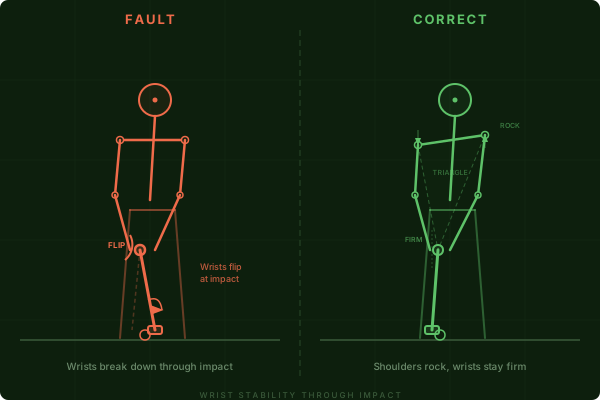
What Causes Wrist Breakdown
01Hands Driving the Stroke
The most common cause is using the wrists to power the putting stroke instead of the shoulders. When the shoulders rock, the putter moves on a consistent arc with a stable face. When the wrists drive the stroke, the face angle changes with every micro-movement of the hands.
The fix is retraining the stroke to be shoulder-driven. The hands hold the putter but do not move independently of the arms and shoulders.
02Excessive Grip Pressure
Paradoxically, gripping too tightly can cause wrist breakdown. When the grip is tense, the wrists and forearms become rigid and then release suddenly — like a spring. Light grip pressure allows the wrists to stay naturally stable without the tension-release cycle.
Try holding the putter at a 2 or 3 on a scale of 10. If it feels like the putter might fall out of your hands, you are in the right range.
03Trying to Guide the Ball
Golfers who try to steer the ball toward the hole often use their wrists to make last-second adjustments. This steering instinct is the enemy of a consistent stroke. The putter should swing on its natural arc — any last-second hand manipulation adds error.
Trust the setup and the stroke. Aim the putter at address and let the shoulders do the work. The ball goes where the face points, and the face stays stable when the wrists stay quiet.
How to Fix Wrist Breakdown — Step by Step
Feel — Ruler on Wrist Drill
Tape a ruler or popsicle stick to the back of your lead wrist. If the wrist breaks down during the stroke, the ruler digs into your forearm. This gives instant tactile feedback on any wrist movement.
Train — Shoulder Rock Only
Make putting strokes using only shoulder movement — lock the wrists and arms into a triangle. The putter moves because the shoulders rock, not because the hands manipulate. Hit 30 putts this way.
Load — Cross-Hand Putting
Switch to a cross-hand (left hand low) grip for practice. This grip physically prevents lead wrist breakdown because the lead arm is in a stronger position. Hit 20 putts cross-hand, then switch back to your normal grip.
Play — Quiet Hands
On the course, your only putting thought is quiet hands. The shoulders rock, the arms move, and the hands do nothing. The simpler the thought, the less the wrists interfere.
Do I Have Wrist Breakdown?
Answer these questions based on your most recent range session or video review.
When you tape a ruler to the back of your lead wrist, does it dig in during the stroke?
Do your putts miss on both sides of the hole with no consistent pattern?
Do you feel your hands trying to guide the ball during the stroke?
Is your putting stroke powered by your wrists rather than your shoulders?
Drills
01Ruler on Wrist Drill
- 1.Tape a ruler or popsicle stick along the back of your lead wrist, extending onto the forearm.
- 2.Grip the putter with the ruler in place.
- 3.Make putting strokes. If the wrist breaks down, the ruler will dig into your forearm — unmistakable feedback.
- 4.The lead wrist should stay flat through the entire stroke.
- 5.Hit 20 putts from 6 feet. If the ruler presses into your arm even once, slow down and focus on shoulder-driven movement.
The ruler staying flat against the back of your wrist throughout the stroke. No pressure change at impact.
Gripping tighter to prevent wrist movement. The wrists stay quiet because the shoulders drive the stroke, not because you are holding them rigid with muscle tension.
02Triangle Stroke Drill
- 1.At address, form a triangle with your shoulders and arms. The putter is an extension of this triangle.
- 2.Make strokes by rocking the shoulders. The triangle stays intact — arms and wrists do not move independently.
- 3.The putter moves only because the shoulders move. The hands are passengers.
- 4.Hit 10 putts from 3 feet, 10 from 6 feet, and 10 from 10 feet.
- 5.For longer putts, the shoulder rock gets bigger — the wrists still do not contribute.
A pendulum motion driven from the shoulders. The triangle swings as one unit, like a pendulum on a clock.
Adding wrist action for longer putts. Even on 30-footers, the stroke is shoulder-driven. Length comes from a bigger rock, not from hand action.
03Cross-Hand Practice
- 1.Grip the putter with your lead hand below your trail hand (cross-hand or left-hand-low for right-handers).
- 2.This grip puts the lead arm in a stronger position where the wrist naturally stays flat.
- 3.Hit 20 putts from 5-10 feet. Note how the lead wrist feels locked in position.
- 4.Switch back to your normal grip and try to replicate the same lead-wrist stability.
- 5.Many tour players putt cross-hand specifically to prevent wrist breakdown.
The lead wrist locked flat. The cross-hand grip makes breakdown physically difficult.
Gripping differently than you would on the course. The grip change is the drill — do not add extra grip pressure on top of it.
04Eyes Closed Putting
- 1.Set up a 5-foot putt and take your address position.
- 2.Close your eyes and make the stroke.
- 3.With eyes closed, you cannot steer the ball. The hands have no target to manipulate toward.
- 4.This trains a shoulder-driven stroke because the visual system — which triggers hand manipulation — is removed.
- 5.After 15 putts, open your eyes and putt normally. Note how much quieter your hands are.
A smooth, pendulum-like stroke with no hand interference. The contact should feel pure and centered.
Peeking. Keep the eyes closed for the entire stroke and follow-through. The point is to remove the visual trigger for hand manipulation.
Or enter your email and we will send you a formatted PDF with all 4 drills.
We will email you the PDF link. No spam, ever.
Wrist Breakdown — Drill Card
coachharvey.ai/faults/wrist-breakdown
1. Ruler on Wrist Drill
Equipment: Ruler or popsicle stick, tape · Reps: 20 putts from 6 feet
- Tape a ruler or popsicle stick along the back of your lead wrist, extending onto the forearm.
- Grip the putter with the ruler in place.
- Make putting strokes. If the wrist breaks down, the ruler will dig into your forearm — unmistakable feedback.
- The lead wrist should stay flat through the entire stroke.
- Hit 20 putts from 6 feet. If the ruler presses into your arm even once, slow down and focus on shoulder-driven movement.
Feel: The ruler staying flat against the back of your wrist throughout the stroke. No pressure change at impact.
Avoid: Gripping tighter to prevent wrist movement. The wrists stay quiet because the shoulders drive the stroke, not because you are holding them rigid with muscle tension.
2. Triangle Stroke Drill
Equipment: Putter · Reps: 30 putts from various distances
- At address, form a triangle with your shoulders and arms. The putter is an extension of this triangle.
- Make strokes by rocking the shoulders. The triangle stays intact — arms and wrists do not move independently.
- The putter moves only because the shoulders move. The hands are passengers.
- Hit 10 putts from 3 feet, 10 from 6 feet, and 10 from 10 feet.
- For longer putts, the shoulder rock gets bigger — the wrists still do not contribute.
Feel: A pendulum motion driven from the shoulders. The triangle swings as one unit, like a pendulum on a clock.
Avoid: Adding wrist action for longer putts. Even on 30-footers, the stroke is shoulder-driven. Length comes from a bigger rock, not from hand action.
3. Cross-Hand Practice
Equipment: Putter · Reps: 20 putts
- Grip the putter with your lead hand below your trail hand (cross-hand or left-hand-low for right-handers).
- This grip puts the lead arm in a stronger position where the wrist naturally stays flat.
- Hit 20 putts from 5-10 feet. Note how the lead wrist feels locked in position.
- Switch back to your normal grip and try to replicate the same lead-wrist stability.
- Many tour players putt cross-hand specifically to prevent wrist breakdown.
Feel: The lead wrist locked flat. The cross-hand grip makes breakdown physically difficult.
Avoid: Gripping differently than you would on the course. The grip change is the drill — do not add extra grip pressure on top of it.
4. Eyes Closed Putting
Equipment: Putter, 3 balls · Reps: 15 putts from 5 feet
- Set up a 5-foot putt and take your address position.
- Close your eyes and make the stroke.
- With eyes closed, you cannot steer the ball. The hands have no target to manipulate toward.
- This trains a shoulder-driven stroke because the visual system — which triggers hand manipulation — is removed.
- After 15 putts, open your eyes and putt normally. Note how much quieter your hands are.
Feel: A smooth, pendulum-like stroke with no hand interference. The contact should feel pure and centered.
Avoid: Peeking. Keep the eyes closed for the entire stroke and follow-through. The point is to remove the visual trigger for hand manipulation.
Common Misdiagnoses
You think it is wrist breakdown, but it might be deceleration
Both produce weak, offline putts. If the putter slows down before impact but the face stays square, it is deceleration. If the putter maintains speed but the face rotates, it is wrist breakdown. Film the stroke from above and watch the face angle through impact.
Read about Deceleration →You think it is wrist breakdown, but it might be grip pressure
Excessive grip pressure can cause wrist breakdown as a secondary effect — the tension builds and then releases through impact. If your forearms feel tense at address, try lightening the grip first. If the wrist breakdown stops, grip pressure was the root cause.
Read about Grip Pressure →How You Know It’s Fixed
The lead wrist stays flat through impact, face angle becomes consistent, and putts roll instead of skid.
Frequently Asked Questions
What is wrist breakdown in putting?
Wrist breakdown is the lead wrist cupping or flipping through impact, changing the putter face angle. Instead of staying flat and stable, the wrist bends, which opens or closes the face depending on timing. This makes consistent start lines impossible.
Should the wrists move at all in putting?
Ideally, no. The putting stroke should be driven by a shoulder rock, with the arms and wrists forming a stable triangle. The hands hold the putter but do not move independently. Some wrist movement is natural, but it should be passive, not active.
Does a claw grip help prevent wrist breakdown?
Yes. The claw grip removes the trail hand's ability to manipulate the face. Many tour players use claw or cross-hand grips specifically to keep the lead wrist flat through impact. If you struggle with wrist breakdown, experimenting with an alternative grip is worthwhile.
Can wrist breakdown cause pulled putts?
Yes. When the lead wrist cups through impact, the face closes (points left for right-handers). This sends the putt left of the intended line — a pull. If you are consistently pulling putts, wrist breakdown is a likely cause.
Related Faults
These flaws often appear alongside wrist breakdown and may share a root cause.
Find out if wrist breakdown is affecting your game
Upload a swing. Coach Harvey reads every frame, calls the fault driving everything else, and remembers the session for the next answer.
Analyze a swing →