Weak Grip: How to Fix Weak Grip in Your Golf Swing
Setup·Reviewed April 20, 2026·By Coach Harvey - AI Golf Coach
The hands are rotated too far to the left (for a right-handed golfer) on the club, promoting an open clubface at impact and a slice. To fix it: grip the club so you can see 2-3 knuckles on the lead hand. The V formed by thumb and forefinger should point to the trail shoulder.
A weak grip means the hands are rotated too far to the left on the club (for right-handers), making it difficult to square the clubface at impact. With a weak grip, you can typically see only one knuckle on your lead hand at address, the V between your thumb and forefinger points at your chin instead of your trail shoulder, and the clubface tends to be open at impact.
A weak grip forces compensations throughout the swing. The golfer must either dramatically rotate the forearms through impact to square the face (which is hard to time consistently) or accept an open face, which produces pushes and slices. Most amateurs with a weak grip fight the ball going right their entire golfing life.
The grip is the only connection between your body and the club. Fixing it is the single highest-leverage change most amateur golfers can make. A grip change feels awkward for a few sessions but becomes natural within a week of practice.
Coach Harvey identifies weak grip automatically from your swing video and gives you one focused fix.
Analyze a swing →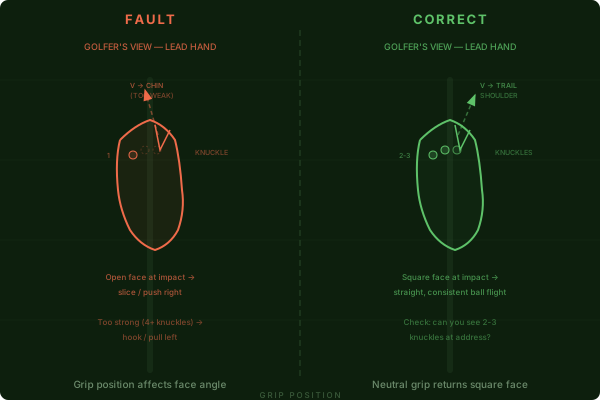
What Causes Weak Grip
01Learned From a Weak Starting Position
Most golfers grip the club the way it feels natural when they first pick it up. For many people, especially those who shake hands with the club, this results in a weak position. Without instruction, the hands settle into a position that looks neutral to the golfer but is actually weak by golf standards.
The fix is simple but feels wrong at first: rotate both hands slightly clockwise (for right-handers) until you see 2-3 knuckles on the lead hand. The strong position feels exaggerated initially because the weak position has become normal.
02Placing the Club in the Palm
When the club sits deep in the palm of the lead hand rather than diagonally across the fingers, the hand naturally falls into a weak position. A palm grip restricts wrist hinge and makes it physically awkward to rotate the hand into a strong position.
The club should run from the base of the index finger diagonally to just below the pad of the palm. This finger grip allows the hand to rotate into a stronger position naturally and preserves wrist mobility for hinge and release.
03Fear of Hooking
Golfers who once had a hook problem sometimes weakened their grip intentionally to prevent the ball from going left. While this can temporarily stop hooks, it trades one problem for another — the weak grip produces slices and pushes unless the golfer makes compensation moves.
A neutral-to-strong grip is correct for almost all golfers. If you are hooking with a proper grip, the fix is in the swing path or face control, not the grip. Weakening the grip masks the real issue.
How to Fix Weak Grip — Step by Step
Feel — Knuckle Count Check
At address, look down at your lead hand. Count the knuckles you can see. You should see 2-3 knuckles. If you see only 1, rotate the hand clockwise (for right-handers) until 2-3 are visible. This is your new grip baseline.
Train — V-Line Checkpoint
The V formed between your thumb and forefinger on each hand should point at your trail shoulder, not at your chin or lead shoulder. Check the V after every shot during practice. This simple checkpoint prevents the grip from weakening over time.
Load — Hit 50 Balls With New Grip
Hit 50 balls with the corrected grip. Expect the first 20 to feel awkward and produce some hooks — this is normal. The hooks confirm that the grip change is working (the face is now closing). By ball 40-50, the body starts to adjust and the ball flight straightens.
Play — Grip Marker Alignment
Use the alignment marking on the grip or draw a line on the grip as a reference. Before every shot on the course, set the marking in the same position relative to your hands. This ensures the grip does not drift back to the weak position under pressure.
Do I Have Weak Grip?
Answer these questions based on your most recent range session or video review.
At address, can you see fewer than 2 knuckles on your lead hand?
Does the V between your thumb and forefinger point at your chin instead of your trail shoulder?
Is the ball consistently starting right of your target (for right-handers)?
Do you fight a slice more than any other miss?
Drills
01Knuckle Count Drill
- 1.Hold the club in front of you in your lead hand only.
- 2.Look down at the back of the lead hand.
- 3.Count the visible knuckles: 1 = weak, 2 = neutral, 3 = strong.
- 4.Rotate the hand clockwise (right-handers) until you see 2-3 knuckles.
- 5.Add the trail hand so the V points at the trail shoulder.
- 6.Practice gripping and re-gripping 10 times to build muscle memory for the new position.
The club sitting more in the fingers than the palm. The lead wrist may feel slightly bowed compared to your old grip. This is correct.
Rotating only the lead hand. Both hands should strengthen together. If the lead hand is strong but the trail hand is weak, the hands fight each other through impact.
02Marker Line Drill
- 1.Draw a line on the grip or apply a small piece of tape as a reference point.
- 2.At address, the marker should align with a specific point on your lead hand (e.g., between the index and middle finger).
- 3.Hit 20 balls, checking the marker alignment before every shot.
- 4.If the marker shifts between shots, you are regripping during the swing or adjusting unconsciously.
- 5.After 20 balls with consistent marker alignment, the correct grip position starts to feel normal.
The same hand position on every shot. The marker removes guesswork — you know the grip is correct because the marker is aligned.
Adjusting the marker to match your old grip. The point is to train a new position, not to codify the old one. Set the marker for 2-3 knuckles visible, not for comfort.
03Finger Grip Drill
- 1.Hold the club in front of you. Open your lead hand.
- 2.Place the club diagonally across the fingers — from the base of the index finger to just below the palm pad.
- 3.Close the hand around the club. The club should be held mainly by the fingers.
- 4.Check: you should be able to see the butt of the club clearly from the heel pad side.
- 5.If the club disappears into the palm, it is too deep. Start over.
- 6.Repeat 10 times until the finger position is automatic.
The club resting across the fingers with the hand wrapped around it. You should be able to hinge the wrist freely — if the wrist feels locked, the club is in the palm.
A death grip. A finger grip naturally feels less secure than a palm grip, which tempts golfers to squeeze harder. Keep the pressure at 3-4 out of 10. The fingers hold the club securely without tension.
04Hook-Then-Straighten Progression
- 1.Set your grip to 3 knuckles visible (slightly strong).
- 2.Hit 15 balls. Expect hooks or draws — this is correct. The strong grip closes the face.
- 3.If you are hooking, do not weaken the grip. Instead, adjust your aim slightly right.
- 4.Hit 15 more balls. The hooks should moderate as your body adjusts to the new face angle.
- 5.Hit the final 20 balls. The ball flight should be straightening to a draw or straight shot.
- 6.If still hooking after 50 balls, the grip may be too strong — back off to 2.5 knuckles.
A closed face at impact (initially producing hooks). This is the grip working correctly. The body will learn to stop the compensations it made for the weak grip.
Weakening the grip when hooks appear. Hooks are temporary — they are the transition phase. Weakening the grip puts you back to square one. Give the new grip 2-3 sessions before adjusting.
Or enter your email and we will send you a formatted PDF with all 4 drills.
We will email you the PDF link. No spam, ever.
Weak Grip — Drill Card
coachharvey.ai/faults/weak-grip
1. Knuckle Count Drill
Equipment: Any club · Reps: Check before every shot in practice
- Hold the club in front of you in your lead hand only.
- Look down at the back of the lead hand.
- Count the visible knuckles: 1 = weak, 2 = neutral, 3 = strong.
- Rotate the hand clockwise (right-handers) until you see 2-3 knuckles.
- Add the trail hand so the V points at the trail shoulder.
- Practice gripping and re-gripping 10 times to build muscle memory for the new position.
Feel: The club sitting more in the fingers than the palm. The lead wrist may feel slightly bowed compared to your old grip. This is correct.
Avoid: Rotating only the lead hand. Both hands should strengthen together. If the lead hand is strong but the trail hand is weak, the hands fight each other through impact.
2. Marker Line Drill
Equipment: Any club, marker or tape · Reps: 20 balls
- Draw a line on the grip or apply a small piece of tape as a reference point.
- At address, the marker should align with a specific point on your lead hand (e.g., between the index and middle finger).
- Hit 20 balls, checking the marker alignment before every shot.
- If the marker shifts between shots, you are regripping during the swing or adjusting unconsciously.
- After 20 balls with consistent marker alignment, the correct grip position starts to feel normal.
Feel: The same hand position on every shot. The marker removes guesswork — you know the grip is correct because the marker is aligned.
Avoid: Adjusting the marker to match your old grip. The point is to train a new position, not to codify the old one. Set the marker for 2-3 knuckles visible, not for comfort.
3. Finger Grip Drill
Equipment: Any club · Reps: 10 regrips
- Hold the club in front of you. Open your lead hand.
- Place the club diagonally across the fingers — from the base of the index finger to just below the palm pad.
- Close the hand around the club. The club should be held mainly by the fingers.
- Check: you should be able to see the butt of the club clearly from the heel pad side.
- If the club disappears into the palm, it is too deep. Start over.
- Repeat 10 times until the finger position is automatic.
Feel: The club resting across the fingers with the hand wrapped around it. You should be able to hinge the wrist freely — if the wrist feels locked, the club is in the palm.
Avoid: A death grip. A finger grip naturally feels less secure than a palm grip, which tempts golfers to squeeze harder. Keep the pressure at 3-4 out of 10. The fingers hold the club securely without tension.
4. Hook-Then-Straighten Progression
Equipment: 7-iron, range balls · Reps: 50 balls over one session
- Set your grip to 3 knuckles visible (slightly strong).
- Hit 15 balls. Expect hooks or draws — this is correct. The strong grip closes the face.
- If you are hooking, do not weaken the grip. Instead, adjust your aim slightly right.
- Hit 15 more balls. The hooks should moderate as your body adjusts to the new face angle.
- Hit the final 20 balls. The ball flight should be straightening to a draw or straight shot.
- If still hooking after 50 balls, the grip may be too strong — back off to 2.5 knuckles.
Feel: A closed face at impact (initially producing hooks). This is the grip working correctly. The body will learn to stop the compensations it made for the weak grip.
Avoid: Weakening the grip when hooks appear. Hooks are temporary — they are the transition phase. Weakening the grip puts you back to square one. Give the new grip 2-3 sessions before adjusting.
Common Misdiagnoses
You think it is a weak grip, but it might be open clubface from poor rotation
Both produce an open face at impact. Check the grip first: if 2-3 knuckles are visible and the Vs point at the trail shoulder, the grip is fine. The open face is coming from lack of forearm rotation through impact. If the grip is already correct, work on the release, not the grip.
Read about Open Clubface →You think it is a weak grip, but it might be over the top
A weak grip produces a ball that starts right (open face). Over the top produces a ball that curves right (outside-in path adding cut spin). Check where the ball starts versus where it curves. If it starts on target but curves right, the grip may be fine and the path is the issue.
Read about Over the Top →How You Know It’s Fixed
The clubface returns square or slightly closed at impact, the slice goes away, and ball flight becomes a straight shot or draw.
Frequently Asked Questions
What is the difference between a weak, neutral, and strong grip?
Weak: 1 knuckle visible on lead hand, V points at chin. Neutral: 2 knuckles visible, V points between chin and trail shoulder. Strong: 3 knuckles visible, V points at trail shoulder. Most instructors recommend neutral to slightly strong (2-3 knuckles) for the majority of golfers.
Will a grip change fix my slice?
In most cases, yes. The grip is responsible for face angle, and the face is responsible for 75-85% of the ball's start direction (per TrackMan data). Strengthening a weak grip squares the face, which eliminates the slice for the majority of golfers. It is the first thing any instructor checks.
How long does it take to adjust to a new grip?
Most golfers report the new grip feeling natural within 3-5 practice sessions (roughly 1-2 weeks). The first session feels very awkward. The second session feels unusual. By the third session, the old grip feels wrong. Commit to the change for a full week before judging results.
Should I change my grip or my swing to fix a slice?
Change the grip first. It is simpler, faster, and more effective for most golfers. If the slice persists with a correct grip (2-3 knuckles visible), then address the swing path. Changing the swing with a weak grip is working against yourself — the grip undermines every swing fix you attempt.
Practice This Fault
Structured plans and routines that specifically target weak grip.
Related Faults
These flaws often appear alongside weak grip and may share a root cause.
Find out if weak grip is affecting your game
Upload a swing. Coach Harvey reads every frame, calls the fault driving everything else, and remembers the session for the next answer.
Analyze a swing →