Swing Plane: How to Fix Swing Plane in Your Golf Swing
Backswing·Reviewed April 20, 2026·By Coach Harvey - AI Golf Coach
The club is swinging on too steep or too flat a plane relative to the ideal angle set at address, causing inconsistent contact. To fix it: swing the club on the plane established by the shaft at address. The club should track back and through on a consistent angle.
Swing plane is the angle at which the club travels around your body during the swing. Too steep (upright) and the club chops down on the ball, causing deep divots and a loss of power. Too flat (shallow) and the club sweeps around the body, causing thin contact and hooks. The ideal plane matches the angle of the shaft at address.
Swing plane is one of the more complex faults because it affects everything downstream — path, face angle, contact, and ball flight. A plane that is off by just a few degrees changes the entire impact pattern.
The good news: swing plane is primarily set by your posture at address and your takeaway. Fix those two things and the plane often corrects itself through the rest of the swing.
Coach Harvey identifies swing plane automatically from your swing video and gives you one focused fix.
Analyze a swing →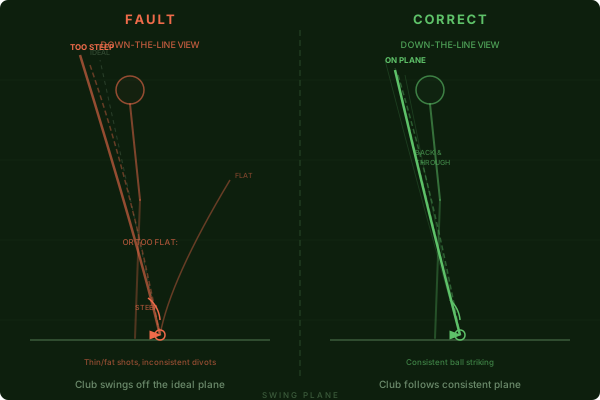
What Causes Swing Plane
01Arms Lifting Instead of Body Turning
The most common cause of a steep (too upright) plane is lifting the arms without turning the body. When the arms go up without rotation, the club gets steep. Proper backswing involves the body turning while the arms stay connected — the plane follows the body, not the arms.
A simple check: at the top of the backswing, the shaft should point roughly at the target line. If it points left of the target (for right-handers), the plane is too steep.
02Wrapping the Club Around the Body
The opposite error — a flat (too shallow) plane — happens when the arms wrap behind the body without lifting enough. The club gets trapped behind the golfer, making it difficult to get back on plane for the downswing.
At the top of the backswing, the shaft should not point right of the target (for right-handers). If it does, the backswing is too flat.
03Posture That Doesn't Match the Club
Different clubs have different lie angles, which require different posture. A driver requires a more upright posture than a short iron. If you use the same posture for every club, the plane will be wrong for some of them.
Longer clubs require standing farther from the ball with less forward bend. Shorter clubs require standing closer with more forward bend. The shaft angle at address dictates the plane.
How to Fix Swing Plane — Step by Step
Feel — Shaft Plane Check
Film your swing down the line. At the top of the backswing, the shaft should roughly parallel the target line. If it points left, you are too steep. If it points right, you are too flat. This gives you a reference point to adjust toward.
Train — Alignment Stick on Plane
Stick an alignment stick in the ground at the same angle as the club shaft at address. Make backswings keeping the club close to the stick's angle. This physical reference trains the correct plane.
Load — Half Swing Checkpoints
Make half backswings and stop at hip height. The shaft should be parallel to the target line and parallel to the ground. If it is not, adjust until it is. Then make full backswings from the correct half-swing position.
Play — One Thought: Turn, Don't Lift
On the course, think turn, don't lift on the backswing. This keeps the arms connected to the body rotation and prevents the steep plane that most amateurs default to under pressure.
Do I Have Swing Plane?
Answer these questions based on your most recent range session or video review.
When you film down the line, does the shaft point well left of the target at the top (too steep)?
Do you take deep, steep divots that point left of the target?
Do you struggle with consistency — sometimes great contact, sometimes terrible?
Does your ball flight vary dramatically from shot to shot (high cuts to low hooks)?
Drills
01Half Swing Checkpoint Drill
- 1.Set up your phone to film down the line.
- 2.Make a half backswing with a 7-iron and stop when your hands reach hip height.
- 3.Check the video: the shaft should be parallel to the target line and roughly horizontal.
- 4.If the shaft points above the target line, you are too steep. If below, too flat.
- 5.Adjust and repeat until the checkpoint is consistently correct.
- 6.Then extend to a full backswing while maintaining the correct plane through hip height.
The club tracking along the angle set at address. The arms and body work together — no independent arm lift.
Making corrections only with the arms. The plane should change because of posture and body turn adjustments, not arm manipulation.
02Alignment Stick Plane Guide
- 1.Push an alignment stick into the ground at the same angle as the shaft at address (roughly 45-60 degrees).
- 2.Position it so the stick extends along the shaft line when you are at address.
- 3.Make slow backswings. The club should track along or near the stick's angle.
- 4.If the club goes above the stick, you are too steep. Below, too flat.
- 5.Repeat 15 times, adjusting until the club naturally follows the stick's plane.
The club traveling on a consistent, predictable angle around your body. The plane should feel like a tilted circle.
Manipulating the club with your hands to stay on plane. The plane should be set by your body rotation and posture, not by hand steering.
03Glove Under Trail Arm Drill
- 1.Tuck a glove or headcover under your trail armpit.
- 2.Make half-speed swings keeping the glove in place through impact.
- 3.This prevents the arms from separating from the body, which is the primary cause of a steep plane.
- 4.If the glove falls on the backswing, the arms lifted independently. If it falls on the downswing, the trail elbow flew outward.
- 5.Once consistent at half speed, increase to three-quarter speed.
Arms and body moving together as a connected unit. The club swings on plane because the arms are connected to the rotation.
Pinching the glove so tightly that you restrict your turn. Light pressure — the correct movement keeps it in place naturally.
04Two-Plane Comparison Drill
- 1.Film from down the line. Hit 5 balls with a deliberately steep backswing (lift arms).
- 2.Hit 5 balls with a deliberately flat backswing (wrap arms behind you).
- 3.Hit 5 balls trying to find the middle — on plane.
- 4.Review the video and compare the three groups: contact, ball flight, and shaft angle at the top.
- 5.The on-plane group should produce the most consistent contact and neutral ball flight.
The extremes help you find the middle. Steep feels like chopping wood; flat feels like baseball. On plane feels like both, blended.
Practicing at one extreme for too long. This is a calibration drill — 5 at each extreme and 5 in the middle, then move on.
Or enter your email and we will send you a formatted PDF with all 4 drills.
We will email you the PDF link. No spam, ever.
Swing Plane — Drill Card
coachharvey.ai/faults/swing-plane
1. Half Swing Checkpoint Drill
Equipment: Any mid-iron, phone for video · Reps: 20 half swings, check each on video
- Set up your phone to film down the line.
- Make a half backswing with a 7-iron and stop when your hands reach hip height.
- Check the video: the shaft should be parallel to the target line and roughly horizontal.
- If the shaft points above the target line, you are too steep. If below, too flat.
- Adjust and repeat until the checkpoint is consistently correct.
- Then extend to a full backswing while maintaining the correct plane through hip height.
Feel: The club tracking along the angle set at address. The arms and body work together — no independent arm lift.
Avoid: Making corrections only with the arms. The plane should change because of posture and body turn adjustments, not arm manipulation.
2. Alignment Stick Plane Guide
Equipment: Alignment stick, ground to stick it in · Reps: 15 slow backswings
- Push an alignment stick into the ground at the same angle as the shaft at address (roughly 45-60 degrees).
- Position it so the stick extends along the shaft line when you are at address.
- Make slow backswings. The club should track along or near the stick's angle.
- If the club goes above the stick, you are too steep. Below, too flat.
- Repeat 15 times, adjusting until the club naturally follows the stick's plane.
Feel: The club traveling on a consistent, predictable angle around your body. The plane should feel like a tilted circle.
Avoid: Manipulating the club with your hands to stay on plane. The plane should be set by your body rotation and posture, not by hand steering.
3. Glove Under Trail Arm Drill
Equipment: Golf glove or headcover · Reps: 20 half-speed swings
- Tuck a glove or headcover under your trail armpit.
- Make half-speed swings keeping the glove in place through impact.
- This prevents the arms from separating from the body, which is the primary cause of a steep plane.
- If the glove falls on the backswing, the arms lifted independently. If it falls on the downswing, the trail elbow flew outward.
- Once consistent at half speed, increase to three-quarter speed.
Feel: Arms and body moving together as a connected unit. The club swings on plane because the arms are connected to the rotation.
Avoid: Pinching the glove so tightly that you restrict your turn. Light pressure — the correct movement keeps it in place naturally.
4. Two-Plane Comparison Drill
Equipment: Any iron, phone for video · Reps: 5 deliberately steep swings, 5 deliberately flat, then 5 on plane
- Film from down the line. Hit 5 balls with a deliberately steep backswing (lift arms).
- Hit 5 balls with a deliberately flat backswing (wrap arms behind you).
- Hit 5 balls trying to find the middle — on plane.
- Review the video and compare the three groups: contact, ball flight, and shaft angle at the top.
- The on-plane group should produce the most consistent contact and neutral ball flight.
Feel: The extremes help you find the middle. Steep feels like chopping wood; flat feels like baseball. On plane feels like both, blended.
Avoid: Practicing at one extreme for too long. This is a calibration drill — 5 at each extreme and 5 in the middle, then move on.
Common Misdiagnoses
You think it is swing plane, but it might be over the top
A steep backswing plane and an over-the-top downswing move are related but different. The backswing can be steep but the downswing can still drop into the slot (many tour players do this). Check the downswing independently — if the club shallows in transition, the backswing plane is not the problem.
Read about Over the Top →You think it is swing plane, but it might be flat shoulder turn
A flat shoulder turn naturally produces a flat swing plane. If you fix the shoulder tilt and the plane corrects, the shoulders were the root cause. Fix the turn first before independently addressing the plane.
Read about Flat Shoulder Turn →How You Know It’s Fixed
The club returns on the same plane it left, contact becomes consistent, and ball flight matches your intended shape.
Frequently Asked Questions
What is the correct swing plane?
The ideal swing plane approximately matches the angle of the shaft at address. For a 7-iron, this is roughly 60-65 degrees. For a driver, roughly 55-60 degrees. The exact angle depends on the club and your height, but the shaft at address is your reference.
Is a steep or flat plane worse?
Neither is inherently worse — both produce inconsistency. A steep plane tends to cause pulls, slices, and deep divots. A flat plane tends to cause pushes, hooks, and thin contact. The correct plane produces neutral ball flight and consistent contact.
Can posture fix swing plane?
Often, yes. If you are too upright at address, the plane will be steep. More forward bend creates a flatter plane. The reverse is also true. Adjusting posture to match the club's lie angle at address often fixes the plane without any swing change.
Does swing plane affect distance?
Yes. Off-plane swings lose energy to compensating movements. A steep plane chops into the ground, losing speed. A flat plane produces glancing contact that does not compress the ball. On-plane swings deliver maximum energy to the ball.
Related Faults
These flaws often appear alongside swing plane and may share a root cause.
Find out if swing plane is affecting your game
Upload a swing. Coach Harvey reads every frame, calls the fault driving everything else, and remembers the session for the next answer.
Analyze a swing →