Slide: How to Fix Slide in Your Golf Swing
Downswing·Reviewed April 20, 2026·By Coach Harvey - AI Golf Coach
Lateral slide replaces rotation and kills hip clearance
Excessive lateral hip movement toward the target on the downswing instead of rotation. To fix it: rotate hips toward the target rather than sliding. Lead hip clears behind you.
A slide is excessive lateral hip movement toward the target on the downswing — instead of rotating, the hips push sideways. The lead hip should clear behind you through impact, but in a slide, it moves laterally toward the target and stalls. The result: the hands flip, contact becomes inconsistent, and low pulls dominate the miss pattern.
Slide is different from proper weight transfer. Good weight transfer involves pressure moving to the lead foot via rotation. A slide moves the entire hip structure laterally without rotation. The distinction matters because the fixes are different.
Most golfers who slide are trying to shift weight forward — they have heard this cue and are executing it literally rather than rotationally. The fix is learning that the lead hip clears by turning behind you, not by pushing toward the target.
Coach Harvey identifies slide automatically from your swing video and gives you one focused fix.
Analyze a swing →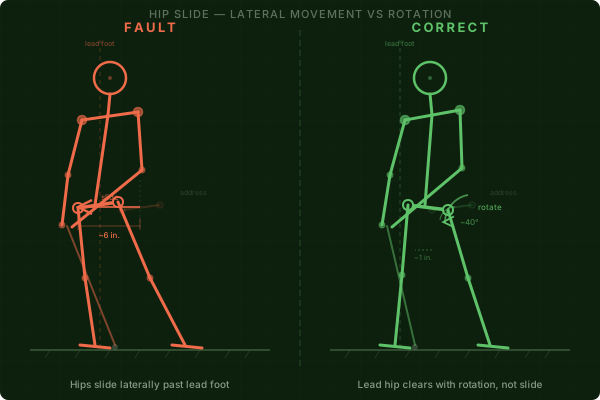
What Causes Slide
01Misinterpreting Weight Transfer
The most common cause of slide is taking the cue to shift weight to the lead side too literally. Golfers push their hips laterally toward the target instead of rotating them. Proper weight transfer happens as a result of hip rotation, not independent of it.
The lead hip should feel like it turns behind you (toward the target) while the pressure moves into the lead foot. It should not feel like a lateral push.
02Stalled Hip Rotation
When the hips stop rotating in the downswing, the body has to move somewhere to generate speed — and lateral sliding is the default compensation. The hips slide forward, the hands flip, and the result is inconsistent contact.
Tight hip flexors from sitting all day are a common physical cause of stalled rotation. Stretch the hip flexors and the rotation improves.
03Habit From Other Sports
Sports that require lateral push — basketball, tennis, skiing — can ingrain a lateral movement pattern that transfers to golf. The athletic instinct is to push off the back foot toward the target, which works in those sports but causes a slide in golf.
Retraining requires conscious practice of rotational movement, ideally with an external constraint like an alignment stick or wall.
How to Fix Slide — Step by Step
Feel — Alignment Stick Bumper
Drive an alignment stick into the ground just outside your lead hip at address. On the downswing, your hip should rotate behind the stick, not crash into it. If you bump the stick, you slid.
Train — Closed Stance Drill
Drop your lead foot back 4 inches from square. Hit balls from this closed stance. The closed position makes lateral movement toward the target uncomfortable and encourages rotation instead.
Load — Hip Rotation with Band
Place a resistance band around your knees. On the downswing, push the lead knee outward against the band. This activates the glute and forces the hip to rotate rather than slide.
Play — Clear the Left Hip
On the course, use one thought: the lead hip turns behind you, not toward the target. Feel the lead pocket of your pants rotating backward through impact.
Do I Have Slide?
Answer these questions based on your most recent range session or video review.
When you film your swing face-on, does your lead hip push laterally toward the target instead of rotating?
Do you frequently hit low pulls to the left (for right-handers)?
If you place an alignment stick outside your lead hip, do you bump it on the downswing?
At the finish, does your belt buckle point left of the target rather than at it?
Drills
01Alignment Stick Lead Hip Bumper
- 1.Push an alignment stick into the ground at a slight angle, positioned just outside your lead hip at address.
- 2.Hit balls with a mid-iron.
- 3.On the downswing, your lead hip should rotate behind the stick without touching it.
- 4.If you bump the stick forward, you slid laterally. Reset and focus on rotation.
- 5.Start at half speed and increase as you can clear the stick 10 times in a row.
Your lead hip opening up — rotating behind you — rather than pushing toward the target. The belt buckle faces the target at the finish.
Hanging back on the trail side to avoid the stick. You still need to transfer weight to the lead foot — just via rotation, not a lateral push.
02Closed Stance Rotation Drill
- 1.Set up to a ball and pull your lead foot back about 4 inches from square (closed stance).
- 2.Hit balls at three-quarter speed.
- 3.The closed stance makes lateral movement uncomfortable and encourages rotational movement.
- 4.Focus on the lead hip clearing behind you rather than pushing forward.
- 5.After 20 balls, return to a square stance and try to keep the rotational feeling.
The hips rotating open earlier in the downswing. The ball flight should be a draw or straight — if it is a pull, the rotation is working.
Aiming right to compensate for the closed stance. Aim at the target and let the draw happen.
03Chair Behind Lead Hip
- 1.Place a chair so it just touches your lead hip at address.
- 2.Make swings. Your lead hip should rotate around the chair, not push it forward.
- 3.If the chair moves, you slid. If the chair stays in place, you rotated.
- 4.Start without a ball at slow speed, then add a ball once the pattern is consistent.
The lead hip clearing behind you while maintaining contact with or near the chair. The rotation happens around a fixed point.
Leaning away from the chair to avoid it. Stay centered — only the hip action changes.
04One-Leg Finish Drill
- 1.Hit a ball at three-quarter speed.
- 2.At the finish, lift your trail foot completely off the ground and balance on your lead foot for 3 seconds.
- 3.If you cannot balance, your weight did not transfer correctly or you slid instead of rotating.
- 4.A proper rotation finish is balanced; a slide finish is unstable because the hips never cleared.
A balanced finish on the lead foot with the belt buckle facing the target. The lead hip has cleared behind you.
Forcing the balance by jumping onto the lead foot. The balance should come from proper rotation, not from a last-second correction.
Or enter your email and we will send you a formatted PDF with all 4 drills.
We will email you the PDF link. No spam, ever.
Slide — Drill Card
coachharvey.ai/faults/swaying-slide
1. Alignment Stick Lead Hip Bumper
Equipment: Alignment stick · Reps: 3 sets of 10 swings
- Push an alignment stick into the ground at a slight angle, positioned just outside your lead hip at address.
- Hit balls with a mid-iron.
- On the downswing, your lead hip should rotate behind the stick without touching it.
- If you bump the stick forward, you slid laterally. Reset and focus on rotation.
- Start at half speed and increase as you can clear the stick 10 times in a row.
Feel: Your lead hip opening up — rotating behind you — rather than pushing toward the target. The belt buckle faces the target at the finish.
Avoid: Hanging back on the trail side to avoid the stick. You still need to transfer weight to the lead foot — just via rotation, not a lateral push.
2. Closed Stance Rotation Drill
Equipment: Any mid-iron · Reps: 20 balls
- Set up to a ball and pull your lead foot back about 4 inches from square (closed stance).
- Hit balls at three-quarter speed.
- The closed stance makes lateral movement uncomfortable and encourages rotational movement.
- Focus on the lead hip clearing behind you rather than pushing forward.
- After 20 balls, return to a square stance and try to keep the rotational feeling.
Feel: The hips rotating open earlier in the downswing. The ball flight should be a draw or straight — if it is a pull, the rotation is working.
Avoid: Aiming right to compensate for the closed stance. Aim at the target and let the draw happen.
3. Chair Behind Lead Hip
Equipment: A chair or stool · Reps: 3 sets of 10 swings
- Place a chair so it just touches your lead hip at address.
- Make swings. Your lead hip should rotate around the chair, not push it forward.
- If the chair moves, you slid. If the chair stays in place, you rotated.
- Start without a ball at slow speed, then add a ball once the pattern is consistent.
Feel: The lead hip clearing behind you while maintaining contact with or near the chair. The rotation happens around a fixed point.
Avoid: Leaning away from the chair to avoid it. Stay centered — only the hip action changes.
4. One-Leg Finish Drill
Equipment: Any iron · Reps: 10 balls, hold each finish 3 seconds
- Hit a ball at three-quarter speed.
- At the finish, lift your trail foot completely off the ground and balance on your lead foot for 3 seconds.
- If you cannot balance, your weight did not transfer correctly or you slid instead of rotating.
- A proper rotation finish is balanced; a slide finish is unstable because the hips never cleared.
Feel: A balanced finish on the lead foot with the belt buckle facing the target. The lead hip has cleared behind you.
Avoid: Forcing the balance by jumping onto the lead foot. The balance should come from proper rotation, not from a last-second correction.
Common Misdiagnoses
You think it is a slide, but it might be sway
Sway is lateral movement on the backswing; slide is lateral movement on the downswing. They are different faults with different causes. Film your swing and note when the lateral movement happens. If it is going away from the target, it is sway. If it is going toward the target, it is slide.
Read about Sway →You think it is a slide, but it might be poor weight transfer
Poor weight transfer means weight stays on the trail foot. Slide means too much lateral movement toward the target. They are opposite problems. Check your finish: if you fall backward, it is poor weight transfer. If you fall forward or left, it is slide.
Read about Poor Weight Transfer →How You Know It’s Fixed
Your lead hip clears behind you through impact, lead-foot pressure spikes upward, and you stop hitting low pulls.
Frequently Asked Questions
What is the difference between slide and weight transfer?
Weight transfer is rotational — pressure moves to the lead foot because the hips rotate. A slide is lateral — the hips push sideways toward the target without rotating. Proper weight transfer clears the lead hip behind you. A slide pushes the lead hip toward the target.
Does lateral slide cause pulls?
Yes. When the hips slide forward without rotating, the club gets trapped behind the body. The hands flip to catch up, closing the face and sending the ball left. Low pulls are the signature miss of a lateral slide.
Can you slide and still hit good shots?
Occasionally, but not consistently. A slide forces timing-dependent hand compensation. On the days your timing is perfect, the shots are fine. On the days it is off, the misses are dramatic. Rotation produces a more repeatable motion.
How do I stop sliding my hips in the downswing?
Use the alignment stick bumper drill: place a stick just outside your lead hip and rotate without bumping it. Focus on the lead hip clearing behind you rather than pushing toward the target. The cue 'rotate, do not push' helps most golfers make the switch.
Related Faults
These flaws often appear alongside slide and may share a root cause.
Find out if slide is affecting your game
Upload a swing. Coach Harvey reads every frame, calls the fault driving everything else, and remembers the session for the next answer.
Analyze a swing →