Sway: How to Fix Sway in Your Golf Swing
Backswing·Reviewed April 20, 2026·By Coach Harvey - AI Golf Coach
Sway is the most common backswing fault in amateur golf
Lateral hip slide away from the target on the backswing instead of rotation, causing inconsistent low point. To fix it: load into the trail hip with rotation, not lateral movement. Feel pressure into the inside of the trail foot.
Sway is a lateral hip slide away from the target during the backswing instead of a rotational turn. When the hips slide, the swing center shifts, the low point becomes unpredictable, and the body has to make a compensating lateral move on the downswing to recover — often arriving too late or too early.
The telltale sign is inconsistent contact: fat shots when the sway is big, thin shots when you over-correct coming back. Sway also kills power because energy goes into lateral motion instead of rotational torque.
Many golfers sway because they misunderstand weight shift. The cue to load the back foot gets interpreted as sliding over it rather than rotating into it. The trail hip should turn behind you, not slide away from the target. Once you feel the difference, the fix clicks quickly.
Coach Harvey identifies sway automatically from your swing video and gives you one focused fix.
Analyze a swing →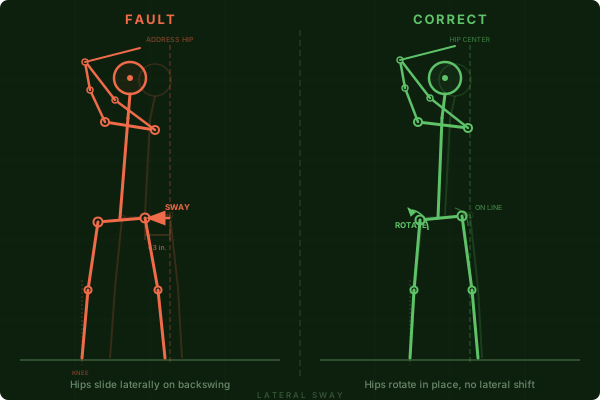
What Causes Sway
01Mistaking Lateral Movement for Rotation
The most common cause of sway is a misunderstanding of the backswing. Golfers hear load the trail side and interpret it as slide to the right. Proper loading means the trail hip rotates backward while pressure increases on the inside of the trail foot. The center of mass barely moves.
A simple test: make a backswing and freeze at the top. If your trail hip has moved outside your trail foot, you swayed. If your trail hip is still over or inside your trail foot, you rotated.
02Weak Trail-Side Glute Stability
The trail-side glute acts as a brake against lateral motion. When it is weak or inhibited, the hip slides past it. Golfers who sit all day often have glute amnesia — the muscle is there but does not fire when needed.
A few weeks of single-leg glute bridges and lateral band walks can wake up the trail glute. You will feel an immediate difference in your ability to load into the trail hip without sliding.
03Too-Wide Stance
A stance that is too wide encourages lateral movement because the body has to shift more to get weight to the trail side. With a narrower stance, rotation is the natural way to load — there is simply less room to slide.
Check your stance width: for a mid-iron, the insides of your feet should be roughly shoulder-width apart. Wider than that, and sway becomes more likely.
04Lack of Hip Hinge at Setup
Without proper hip hinge at address, the body cannot rotate efficiently around the spine. Instead, it slides. Golfers who stand too upright at address almost always sway because there is no rotational axis established.
Set up with a clear hip hinge — feel like you are sitting back slightly with your weight on the mid-foot. This establishes the rotational axis the backswing needs.
How to Fix Sway — Step by Step
Feel — Alignment Stick Bumper
Drive an alignment stick into the ground just outside your trail hip at address. Make backswings without bumping the stick. This gives you an immediate physical boundary that prevents lateral movement and forces rotation.
Train — Trail Foot Pressure Drill
Make backswings focusing on loading pressure into the inside of your trail foot, not the outside. If the pressure goes to the outside edge, you swayed. Practice this barefoot on grass to feel the pressure distribution clearly.
Load — Narrow Stance Swings
Hit balls with your feet only 6 inches apart. This stance makes sway physically impossible — you will fall over. The only option is to rotate. After 20 balls, widen to normal stance and keep the rotation feeling.
Play — Belt Buckle Checkpoint
On the course, make one practice swing before each shot and notice your belt buckle. It should rotate to face away from the target on the backswing, not shift laterally. That is your only swing thought.
Do I Have Sway?
Answer these questions based on your most recent range session or video review.
When you film your swing face-on, does your trail hip move outside your trail foot on the backswing?
Do you frequently hit fat shots, especially with longer clubs?
At the top of your backswing, do you feel pressure on the outside edge of your trail foot?
Do you struggle to start the downswing toward the target?
If you place an alignment stick just outside your trail hip, do you bump it on the backswing?
Drills
01Alignment Stick Bumper Drill
- 1.Push an alignment stick into the ground at a slight angle so it sits just outside your trail hip at address.
- 2.Take your normal stance with a 7-iron.
- 3.Make a backswing. Your trail hip should rotate behind you without bumping the stick.
- 4.If you bump the stick, you swayed. Reset and focus on turning the hip rather than sliding it.
- 5.Start at half speed and increase as you can make 10 consecutive swings without contact.
- 6.Once consistent, remove the stick and replicate the feeling.
Your trail hip turning behind you rather than sliding sideways. The stick acts as a wall that forces rotation.
Leaning your upper body away from the stick to avoid it. Your spine should stay centered — only the hip action changes.
02Trail Foot Pressure Drill
- 1.Remove your shoes and stand on grass in your golf posture.
- 2.Make a slow backswing and freeze at the top.
- 3.Notice where the pressure is on your trail foot.
- 4.It should be on the inside ball of the foot. If it is on the outside edge, you swayed.
- 5.Repeat 20 times, consciously loading the inside of the trail foot each time.
- 6.Put shoes back on and hit 10 balls keeping the same pressure feel.
Pressure loading into the inside arch of your trail foot. Your knee should feel like it is bracing inward, not drifting outward.
Rolling to the outside of the trail foot. If the ankle rolls out, the hip has slid past the foot — that is a sway.
03Narrow Stance Drill
- 1.Set up with your feet only about 6 inches apart.
- 2.Hit balls with a pitching wedge or 9-iron at three-quarter speed.
- 3.With a narrow stance, any lateral movement will make you lose balance.
- 4.The only way to make a full turn is to rotate around your center.
- 5.After 20 balls, widen to your normal stance and keep the same rotational feeling.
Pure rotation with no lateral movement. Your weight stays balanced between your feet because there is no room to slide.
Trying to hit full shots. This is a feel drill — three-quarter speed with a short iron is plenty. Swinging hard defeats the purpose.
04Wall Drill for Sway
- 1.Stand in golf posture with your trail hip about 2 inches from a wall.
- 2.Cross your arms over your chest.
- 3.Make a backswing turn. Your trail hip should barely touch the wall — not crash into it.
- 4.If your hip pushes hard into the wall, you are swaying.
- 5.Focus on turning your belt buckle away from the target while keeping the hip in place.
- 6.Repeat 15 times, then make practice swings away from the wall keeping the same feel.
Your core and hips rotating as a unit. The trail hip stays in its address position while the torso turns around it.
Restricting your turn to avoid the wall. You should still make a full rotation — just without the lateral slide.
Or enter your email and we will send you a formatted PDF with all 4 drills.
We will email you the PDF link. No spam, ever.
Sway — Drill Card
coachharvey.ai/faults/sway
1. Alignment Stick Bumper Drill
Equipment: Alignment stick · Reps: 3 sets of 10 swings
- Push an alignment stick into the ground at a slight angle so it sits just outside your trail hip at address.
- Take your normal stance with a 7-iron.
- Make a backswing. Your trail hip should rotate behind you without bumping the stick.
- If you bump the stick, you swayed. Reset and focus on turning the hip rather than sliding it.
- Start at half speed and increase as you can make 10 consecutive swings without contact.
- Once consistent, remove the stick and replicate the feeling.
Feel: Your trail hip turning behind you rather than sliding sideways. The stick acts as a wall that forces rotation.
Avoid: Leaning your upper body away from the stick to avoid it. Your spine should stay centered — only the hip action changes.
2. Trail Foot Pressure Drill
Equipment: None (barefoot on grass recommended) · Reps: 20 slow backswings
- Remove your shoes and stand on grass in your golf posture.
- Make a slow backswing and freeze at the top.
- Notice where the pressure is on your trail foot.
- It should be on the inside ball of the foot. If it is on the outside edge, you swayed.
- Repeat 20 times, consciously loading the inside of the trail foot each time.
- Put shoes back on and hit 10 balls keeping the same pressure feel.
Feel: Pressure loading into the inside arch of your trail foot. Your knee should feel like it is bracing inward, not drifting outward.
Avoid: Rolling to the outside of the trail foot. If the ankle rolls out, the hip has slid past the foot — that is a sway.
3. Narrow Stance Drill
Equipment: Any short iron · Reps: 20 balls with feet 6 inches apart
- Set up with your feet only about 6 inches apart.
- Hit balls with a pitching wedge or 9-iron at three-quarter speed.
- With a narrow stance, any lateral movement will make you lose balance.
- The only way to make a full turn is to rotate around your center.
- After 20 balls, widen to your normal stance and keep the same rotational feeling.
Feel: Pure rotation with no lateral movement. Your weight stays balanced between your feet because there is no room to slide.
Avoid: Trying to hit full shots. This is a feel drill — three-quarter speed with a short iron is plenty. Swinging hard defeats the purpose.
4. Wall Drill for Sway
Equipment: Wall or sturdy surface · Reps: 3 sets of 15 reps
- Stand in golf posture with your trail hip about 2 inches from a wall.
- Cross your arms over your chest.
- Make a backswing turn. Your trail hip should barely touch the wall — not crash into it.
- If your hip pushes hard into the wall, you are swaying.
- Focus on turning your belt buckle away from the target while keeping the hip in place.
- Repeat 15 times, then make practice swings away from the wall keeping the same feel.
Feel: Your core and hips rotating as a unit. The trail hip stays in its address position while the torso turns around it.
Avoid: Restricting your turn to avoid the wall. You should still make a full rotation — just without the lateral slide.
Common Misdiagnoses
You think it is sway, but it might be a reverse pivot
Sway and reverse pivot are opposites. Sway moves too much weight to the trail side; reverse pivot keeps weight on the lead side. Film face-on: if your head moves away from the target on the backswing, you sway. If your head moves toward the target on the backswing, you reverse pivot.
Read about Reverse Pivot →You think it is sway, but it might be head movement
The head follows the hips. If your hips sway, your head will appear to move laterally too. Fix the hip sway first and recheck the head — it often resolves on its own. If the head still moves after the hips are stable, address head movement separately.
Read about Head Movement →How You Know It’s Fixed
Pressure goes into the inside of the trail foot and your trail hip rotates back behind you instead of sliding away from the target.
Frequently Asked Questions
What is the difference between sway and weight shift?
Weight shift is rotational — pressure moves to the trail foot because the hips and torso turn. Sway is lateral — the hips slide sideways without rotation. In a proper weight shift, the trail hip stays over the trail foot. In a sway, the trail hip moves past the trail foot.
Can sway cause fat shots?
Yes. Sway shifts the low point of the swing arc behind the ball. If your body slides 3 inches to the right on the backswing, the club will bottom out 3 inches behind the ball unless you make a perfect compensating slide back. Fat shots are the most common result of sway.
Does sway cause a slice?
Sway itself does not directly cause a slice, but it often leads to one. When the body sways back, the downswing has to slide forward to recover. If the slide is late, the club face stays open through impact, producing a push or slice.
How do I know if I sway or rotate?
Film yourself face-on and draw a vertical line from your trail hip at address. If the hip moves outside that line on the backswing, you are swaying. If the hip stays on or inside the line while your shoulders turn 90 degrees, you are rotating correctly.
Can sway be caused by a stance that is too wide?
Yes. A very wide stance encourages lateral movement because rotation becomes restricted. Narrowing the stance to shoulder width often reduces sway immediately because the body has to rotate to make a full turn.
Practice This Fault
Structured plans and routines that specifically target sway.
Related Faults
These flaws often appear alongside sway and may share a root cause.
Find out if sway is affecting your game
Upload a swing. Coach Harvey reads every frame, calls the fault driving everything else, and remembers the session for the next answer.
Analyze a swing →