Stroke Path Inconsistency: How to Fix Stroke Path Inconsistency in Your Golf Swing
Putting·Reviewed April 20, 2026·By Coach Harvey - AI Golf Coach
The putter or club follows a different path on each stroke — sometimes inside-out, sometimes outside-in — causing unpredictable start lines. To fix it: develop a repeatable stroke path. For putting, a slight arc is natural but should be consistent stroke to stroke.
Stroke path inconsistency means the putter follows a different path on every stroke — sometimes inside-out, sometimes outside-in, sometimes straight. Without a repeatable path, the start line is unpredictable, and putts miss on alternating sides of the hole.
A slight arc in the putting stroke is natural and correct — the putter moves slightly inside on the backstroke, square at impact, and slightly inside on the follow-through. The problem is when this arc is different every time, or when the golfer manipulates the path with the hands instead of letting the shoulders control it.
The fix is removing the hands from the equation. When the stroke is driven by shoulder rock, the path is naturally consistent because shoulders move on a repeatable arc. Hand manipulation introduces variability.
Coach Harvey identifies stroke path inconsistency automatically from your swing video and gives you one focused fix.
Analyze a swing →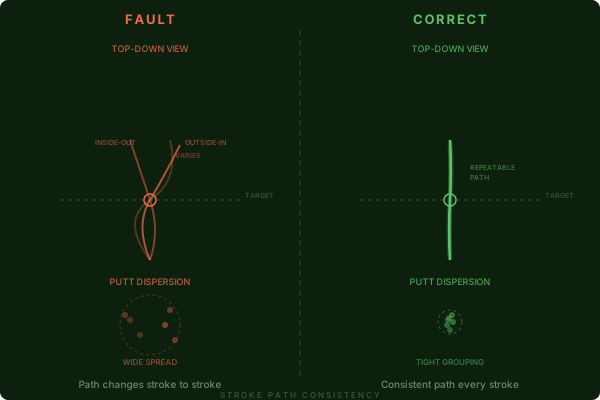
What Causes Stroke Path Inconsistency
01Manipulating the Path With Hands
The primary cause of path inconsistency is hand manipulation. When the hands steer the putter, the path changes with every micro-adjustment. A shoulder-driven stroke produces a consistent, repeatable arc because the shoulder joints move on a fixed axis.
Test this: make 10 strokes focused on moving the putter with your hands, then 10 strokes focused on rocking your shoulders. The shoulder strokes will be more consistent every time.
02No Consistent Setup
If your setup changes — eye position, distance from the ball, hand position — the stroke path changes with it. Every setup variable affects the arc. Standardizing your setup is the first step to a consistent path.
Use the same routine every time: set the putter behind the ball first, then build your stance around it. Same sequence, same positions.
03No Path Reference in Practice
Golfers who practice putting without a path reference (gates, alignment sticks, or rails) have no feedback on whether the path is correct. Without feedback, the same errors repeat indefinitely.
A gate drill — two tees just wider than the putter head — gives instant feedback on every stroke. Use it for at least 5 minutes of every putting practice session.
How to Fix Stroke Path Inconsistency — Step by Step
Feel — Gate Drill
Set two tees just wider than your putter head, 6 inches in front of the ball. Putt through the gate. If you clip a tee, the path is off. This gives you instant feedback on every stroke.
Train — Shoulder Rock Focus
Make 30 strokes focusing only on shoulder movement. Lock the wrists and arms into a triangle. The path becomes consistent because the shoulder joints move on a fixed arc.
Load — Rail Drill
Place two alignment sticks parallel on the ground, just wider than the putter head. Make strokes between the rails. The rails prevent any path deviation and train a straight-back, straight-through (or consistent arc) stroke.
Play — Trust the Setup
On the course, aim the putter at address and trust it. Do not steer with your hands during the stroke. The setup determines the line; the stroke just needs to be smooth.
Do I Have Stroke Path Inconsistency?
Answer these questions based on your most recent range session or video review.
Do your putts miss on alternating sides of the hole with no pattern?
When you set up a tee gate, do you clip the tees regularly?
Do you feel your hands steering the putter during the stroke?
Is your putting start line unpredictable even on straight putts?
Drills
01Tee Gate Drill
- 1.Place two tees in the ground 6 inches in front of the ball, just wider than your putter head.
- 2.Putt through the gate without clipping either tee.
- 3.If you hit the inside tee, your path went outside-in. If you hit the outside tee, your path went inside-out.
- 4.Hit 30 putts and count how many pass cleanly through the gate.
- 5.Aim for 25 out of 30 before moving the gate further from the ball.
The putter moving on a consistent path stroke after stroke. Shoulders drive the motion, hands do nothing.
Steering through the gate with your hands. The gate should be passed naturally with a shoulder-driven stroke.
02Alignment Stick Rail Drill
- 1.Place two alignment sticks on the ground parallel to each other, just wider than your putter head.
- 2.Set a ball between the sticks and putt.
- 3.The sticks prevent any lateral deviation in the path.
- 4.Make 20 strokes between the rails. The putter should not touch either stick.
- 5.Start with straight putts and add breaking putts once the straight path is consistent.
The putter moving in a groove. The rails create physical boundaries that train the correct path.
Setting the rails too tight. The putter needs about a quarter-inch of clearance on each side. Too tight creates tension; too wide gives no feedback.
03String Line Drill
- 1.Tie a string between two pencils stuck in the ground, about 2 inches above the ground, directly on the target line.
- 2.Set the ball under the string and putt.
- 3.The ball should roll along the string line if the path and face are correct.
- 4.If the ball starts left or right of the string, the path or face was off.
- 5.Hit 20 putts and aim for 15 that track directly under the string.
The ball rolling on a predictable line. The string gives you visual confirmation of a correct start line.
Using this drill on breaking putts initially. Start with dead-straight putts so you can isolate path from read.
04One-Arm Stroke Drill
- 1.Putt with your lead hand only for 10 putts.
- 2.Then putt with your trail hand only for 10 putts.
- 3.Note which arm produces a more consistent path.
- 4.If the trail hand produces more path variation, it is manipulating the stroke. The lead arm should dominate.
- 5.Return to a two-hand grip and let the more consistent arm lead.
Which hand contributes to consistency and which introduces variability.
Gripping too tightly with one hand. Use lighter pressure than normal — the drill is about path, not power.
Or enter your email and we will send you a formatted PDF with all 4 drills.
We will email you the PDF link. No spam, ever.
Stroke Path Inconsistency — Drill Card
coachharvey.ai/faults/stroke-path
1. Tee Gate Drill
Equipment: Two tees, putter · Reps: 30 putts from 5-6 feet
- Place two tees in the ground 6 inches in front of the ball, just wider than your putter head.
- Putt through the gate without clipping either tee.
- If you hit the inside tee, your path went outside-in. If you hit the outside tee, your path went inside-out.
- Hit 30 putts and count how many pass cleanly through the gate.
- Aim for 25 out of 30 before moving the gate further from the ball.
Feel: The putter moving on a consistent path stroke after stroke. Shoulders drive the motion, hands do nothing.
Avoid: Steering through the gate with your hands. The gate should be passed naturally with a shoulder-driven stroke.
2. Alignment Stick Rail Drill
Equipment: Two alignment sticks, putter · Reps: 20 putts
- Place two alignment sticks on the ground parallel to each other, just wider than your putter head.
- Set a ball between the sticks and putt.
- The sticks prevent any lateral deviation in the path.
- Make 20 strokes between the rails. The putter should not touch either stick.
- Start with straight putts and add breaking putts once the straight path is consistent.
Feel: The putter moving in a groove. The rails create physical boundaries that train the correct path.
Avoid: Setting the rails too tight. The putter needs about a quarter-inch of clearance on each side. Too tight creates tension; too wide gives no feedback.
3. String Line Drill
Equipment: String, two pencils or tees, putter · Reps: 20 putts on a straight putt
- Tie a string between two pencils stuck in the ground, about 2 inches above the ground, directly on the target line.
- Set the ball under the string and putt.
- The ball should roll along the string line if the path and face are correct.
- If the ball starts left or right of the string, the path or face was off.
- Hit 20 putts and aim for 15 that track directly under the string.
Feel: The ball rolling on a predictable line. The string gives you visual confirmation of a correct start line.
Avoid: Using this drill on breaking putts initially. Start with dead-straight putts so you can isolate path from read.
4. One-Arm Stroke Drill
Equipment: Putter · Reps: 10 putts per arm
- Putt with your lead hand only for 10 putts.
- Then putt with your trail hand only for 10 putts.
- Note which arm produces a more consistent path.
- If the trail hand produces more path variation, it is manipulating the stroke. The lead arm should dominate.
- Return to a two-hand grip and let the more consistent arm lead.
Feel: Which hand contributes to consistency and which introduces variability.
Avoid: Gripping too tightly with one hand. Use lighter pressure than normal — the drill is about path, not power.
Common Misdiagnoses
You think it is stroke path, but it might be wrist breakdown
Both cause putts to miss the target, but for different reasons. Path issues change the start direction; wrist breakdown changes the face angle. Film from above: if the putter moves on a consistent arc but the face opens or closes, it is wrist breakdown. If the arc itself changes, it is path.
Read about Wrist Breakdown →You think it is stroke path, but it might be poor alignment
If your path is consistent (verified with gate drills) but putts still miss, your aim might be off at address. The stroke is correct but the setup is wrong. Check alignment with a chalk line or alignment stick before diagnosing path.
Read about Poor Alignment →How You Know It’s Fixed
The putter swings on a repeatable arc, the start line is consistent, and you stop missing on opposite sides of the hole.
Frequently Asked Questions
Should the putting stroke be straight back and straight through?
Not necessarily. A slight arc — inside on the backstroke, square at impact, inside on the follow-through — is natural and correct for most putters. What matters is that the arc is consistent, not that it is perfectly straight. Some face-balanced putters promote a straighter path, while toe-hang putters promote an arc.
How do I know if my stroke path is consistent?
Use a tee gate drill: place two tees just wider than the putter head, 6 inches in front of the ball. If you can putt through the gate 25 out of 30 times without clipping a tee, your path is consistent. If you clip the tees randomly, the path varies.
Does putter type affect stroke path?
Yes. Face-balanced putters (like mallets) promote a straight-back, straight-through path. Toe-hang putters (like blades) promote an arc. Use a putter that matches your natural stroke. Fighting your putter's design creates inconsistency.
Can stroke path affect distance control?
Indirectly, yes. When the path is inconsistent, energy transfers to the ball at different angles, which changes the effective speed. A putt struck on the sweet spot with a consistent path rolls further and more predictably than one struck off-center with a variable path.
Practice This Fault
Structured plans and routines that specifically target stroke path inconsistency.
Related Faults
These flaws often appear alongside stroke path inconsistency and may share a root cause.
Find out if stroke path inconsistency is affecting your game
Upload a swing. Coach Harvey reads every frame, calls the fault driving everything else, and remembers the session for the next answer.
Analyze a swing →