Reverse Pivot: How to Fix Reverse Pivot in Your Golf Swing
Backswing·Reviewed April 20, 2026·By Coach Harvey - AI Golf Coach
Reverse pivot reverses the correct weight transfer sequence
Weight shifts toward the target on the backswing and away on the downswing — opposite of correct sequencing. To fix it: load weight into the trail side on the backswing, then shift to the lead side to start the downswing.
A reverse pivot is a weight shift that goes in the wrong direction: instead of loading weight onto the trail foot during the backswing and transferring to the lead foot on the downswing, the golfer does the opposite. Weight goes to the lead foot on the backswing and falls to the trail foot on the downswing.
The result is a swing that has no power source. Tour players generate speed by transferring weight from trail to lead through impact — like a pitcher stepping toward home plate. A reverse pivot golfer is stepping backward while trying to throw forward. Fat shots, topped balls, and weak high slices are the signatures.
Reverse pivot is often caused by trying to keep the head perfectly still. The golfer locks their head in place at address, and the only way to make a backswing without moving it is to lean the upper body toward the target — which shifts the weight onto the lead foot. The fix starts with allowing the head to move slightly away from the target on the backswing.
Coach Harvey identifies reverse pivot automatically from your swing video and gives you one focused fix.
Analyze a swing →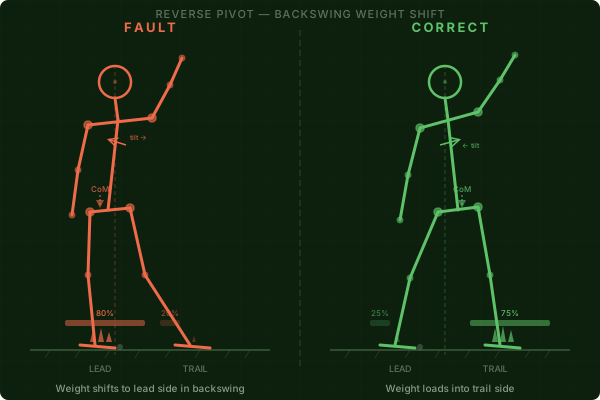
What Causes Reverse Pivot
01Over-Correcting Head Movement
The number-one cause of reverse pivot is taking the advice to keep your head still too literally. When a golfer locks their head in position, the upper body cannot turn properly. The only way to make a shoulder turn is to tilt the spine toward the target, which puts weight on the lead foot.
The fix is simple: allow your head to drift 1-2 inches away from the target on the backswing. This small concession lets the spine stay neutral and the weight load correctly onto the trail side.
02Misunderstanding the Backswing Turn
Some golfers think the backswing should feel like turning in a barrel — rotating without any weight shift. While the barrel analogy prevents sway, taken too far it prevents any weight transfer at all. The correct feel is turning AND loading, not just turning.
About 60-70% of pressure should be on the trail foot at the top of the backswing. If it is 50/50 or on the lead side, the backswing is incomplete.
03Lack of Trail-Side Strength
Loading into the trail hip requires the trail-side glute and core to accept and stabilize the weight. Golfers with weak trail-side muscles may subconsciously avoid loading because it feels unstable. The body defaults to the easier path: leaning toward the lead side.
Single-leg exercises like lunges and single-leg deadlifts build the stability needed to trust the trail side during the backswing.
04Ball Position Too Far Forward
When the ball is too far forward in the stance, the golfer instinctively leans toward it to make contact. This forward lean at address predisposes a reverse pivot because the weight is already on the lead side before the swing starts.
Check your ball position with alignment sticks. For a mid-iron, the ball should be center or slightly forward of center — not off the lead heel.
How to Fix Reverse Pivot — Step by Step
Feel — Step Drill
Take your backswing and literally step onto your trail foot at the top. Then step onto your lead foot as you swing through. This exaggerated weight shift teaches your body which direction the weight should move at each point in the swing.
Train — Pressure Board
Stand on a pressure board or simply place a golf ball under the outside of your lead foot at address. This makes it uncomfortable to load the lead side on the backswing and encourages correct trail-side loading.
Load — Trail Foot Only Drill
Hit half-speed shots with your lead foot pulled back and only lightly touching the ground. All your weight is on the trail foot at address and must transfer to the lead foot through impact. This makes a reverse pivot impossible.
Play — Finish on the Lead Foot
On the course, focus on one thing: finishing with 90% of your weight on the lead foot, belt buckle facing the target. If you can hold this finish for 3 seconds, you transferred correctly. If you fall backward, you did not.
Do I Have Reverse Pivot?
Answer these questions based on your most recent range session or video review.
At the top of your backswing, is most of your weight on your lead foot instead of your trail foot?
Do you feel like you are falling backward during the downswing?
Do you hit a lot of weak, high shots that lack penetrating flight?
When you hold your finish, is your weight still on your trail foot?
Do you have trouble getting the ball airborne with your irons (lots of topped or thin shots)?
Drills
01Step Drill
- 1.Take your normal address position.
- 2.On the backswing, lift your lead foot slightly and step it toward your trail foot. This forces weight onto the trail side.
- 3.At the top of the backswing, your weight should be almost entirely on the trail foot.
- 4.Start the downswing by stepping your lead foot back out toward the target.
- 5.Swing through and finish on the lead foot.
- 6.Start at half speed. The timing is awkward at first but becomes natural after 10-15 reps.
A distinct two-step rhythm: step back (load trail), step forward (swing through). Weight moves clearly from trail to lead.
Stepping too aggressively. The step should be small — a few inches. You are training direction of weight transfer, not distance.
02Trail Foot Only Drill
- 1.Set up to a ball with a pitching wedge.
- 2.Pull your lead foot back so only the toes lightly touch the ground. All weight is on the trail foot.
- 3.Make a half backswing and swing through to a full finish.
- 4.You must transfer onto the lead foot to hit the ball cleanly — a reverse pivot is impossible from this setup.
- 5.The ball flight does not matter. Focus on the weight transfer feel.
Weight moving from trail foot through to lead foot during the downswing. The finish should feel balanced on the lead side.
Falling backward after impact. If you cannot hold the finish, slow the swing down further.
03Back to Target Drill
- 1.Take your address position without a ball.
- 2.Make a backswing and freeze at the top.
- 3.Check: your back should face the target (full shoulder turn) and your weight should be on the trail foot.
- 4.If your weight is on the lead foot, you reverse-pivoted. Reset and try again.
- 5.Slowly increase speed once you can consistently reach the top with weight on the trail side.
Your back facing the target with pressure firmly on the inside of the trail foot. The spine should not be tilted toward the target.
Swaying to get weight onto the trail foot. The weight should transfer via rotation, not lateral slide.
04Finish Balance Test
- 1.Hit a ball with a mid-iron at normal speed.
- 2.Hold your finish position for a full 5 seconds.
- 3.Check: 90% of weight should be on the lead foot. You should be able to tap your trail toe without losing balance.
- 4.If you fall backward or cannot lift your trail foot, weight did not transfer correctly.
- 5.Repeat 10 times. Count how many finishes you can hold in balance.
A balanced, comfortable finish on the lead foot with the belt buckle facing the target. The trail foot is light enough to tap.
Forcing the finish position. If you cannot hold it, the problem is in the swing, not in the finish. Go back to the step drill.
Or enter your email and we will send you a formatted PDF with all 4 drills.
We will email you the PDF link. No spam, ever.
Reverse Pivot — Drill Card
coachharvey.ai/faults/reverse-pivot
1. Step Drill
Equipment: Any mid-iron · Reps: 20 balls at half speed
- Take your normal address position.
- On the backswing, lift your lead foot slightly and step it toward your trail foot. This forces weight onto the trail side.
- At the top of the backswing, your weight should be almost entirely on the trail foot.
- Start the downswing by stepping your lead foot back out toward the target.
- Swing through and finish on the lead foot.
- Start at half speed. The timing is awkward at first but becomes natural after 10-15 reps.
Feel: A distinct two-step rhythm: step back (load trail), step forward (swing through). Weight moves clearly from trail to lead.
Avoid: Stepping too aggressively. The step should be small — a few inches. You are training direction of weight transfer, not distance.
2. Trail Foot Only Drill
Equipment: Short iron · Reps: 15 balls at 50% speed
- Set up to a ball with a pitching wedge.
- Pull your lead foot back so only the toes lightly touch the ground. All weight is on the trail foot.
- Make a half backswing and swing through to a full finish.
- You must transfer onto the lead foot to hit the ball cleanly — a reverse pivot is impossible from this setup.
- The ball flight does not matter. Focus on the weight transfer feel.
Feel: Weight moving from trail foot through to lead foot during the downswing. The finish should feel balanced on the lead side.
Avoid: Falling backward after impact. If you cannot hold the finish, slow the swing down further.
3. Back to Target Drill
Equipment: Any mid-iron, no ball needed · Reps: 20 practice swings
- Take your address position without a ball.
- Make a backswing and freeze at the top.
- Check: your back should face the target (full shoulder turn) and your weight should be on the trail foot.
- If your weight is on the lead foot, you reverse-pivoted. Reset and try again.
- Slowly increase speed once you can consistently reach the top with weight on the trail side.
Feel: Your back facing the target with pressure firmly on the inside of the trail foot. The spine should not be tilted toward the target.
Avoid: Swaying to get weight onto the trail foot. The weight should transfer via rotation, not lateral slide.
4. Finish Balance Test
Equipment: Any club, range balls · Reps: 10 balls, hold each finish for 5 seconds
- Hit a ball with a mid-iron at normal speed.
- Hold your finish position for a full 5 seconds.
- Check: 90% of weight should be on the lead foot. You should be able to tap your trail toe without losing balance.
- If you fall backward or cannot lift your trail foot, weight did not transfer correctly.
- Repeat 10 times. Count how many finishes you can hold in balance.
Feel: A balanced, comfortable finish on the lead foot with the belt buckle facing the target. The trail foot is light enough to tap.
Avoid: Forcing the finish position. If you cannot hold it, the problem is in the swing, not in the finish. Go back to the step drill.
Common Misdiagnoses
You think it is a reverse pivot, but it might be sway
Reverse pivot and sway are opposite problems. Sway moves too much weight to the trail side (laterally); reverse pivot keeps weight on the lead side. Film face-on at the top of the backswing: if your hips have slid past your trail foot, you sway. If your spine tilts toward the target, you reverse pivot.
Read about Sway →You think it is a reverse pivot, but it might be poor ball position
A ball position that is too far forward in the stance can cause the golfer to lean toward it, mimicking a reverse pivot. Before diagnosing a swing fault, check your ball position with alignment sticks. If the ball is off the lead heel for a mid-iron, that is too far forward — move it back to center and recheck.
Read about Poor Ball Position →How You Know It’s Fixed
About 70% of pressure loads into the trail foot at the top of the backswing, then transfers to the lead foot through impact.
Frequently Asked Questions
What is a reverse pivot in golf?
A reverse pivot is a weight transfer that goes in the wrong direction. Weight moves to the lead foot on the backswing (it should go to the trail foot) and then falls to the trail foot on the downswing (it should go to the lead foot). This reverses the power sequence and costs distance, accuracy, and consistency.
Does a reverse pivot cause a slice?
Often, yes. When weight stays on the trail foot through impact, the swing arc bottoms out early and the clubface tends to stay open. The result is a weak, high slice. Fixing the weight transfer often reduces the slice significantly.
How do I know if I have a reverse pivot?
Film yourself face-on and pause at the top of the backswing. If your spine tilts toward the target (rather than slightly away from it) and your weight is clearly on the lead foot, you have a reverse pivot. Another test: can you hold a balanced finish on your lead foot for 5 seconds? If not, your weight transfer is likely reversed.
Can keeping your head still cause a reverse pivot?
Yes — this is the most common cause. When golfers lock their head in place, the only way to make a shoulder turn is to tilt the spine toward the target, which shifts weight to the lead foot. Allowing the head to drift 1-2 inches away from the target on the backswing solves this.
Is a reverse pivot the same as hanging back?
They are related but not identical. A reverse pivot specifically describes weight going to the wrong foot at the wrong time. Hanging back means weight stays on the trail foot through impact. A reverse pivot often leads to hanging back — the weight never makes it to the trail foot properly, so the downswing transfer never happens.
Related Faults
These flaws often appear alongside reverse pivot and may share a root cause.
Find out if reverse pivot is affecting your game
Upload a swing. Coach Harvey reads every frame, calls the fault driving everything else, and remembers the session for the next answer.
Analyze a swing →