Poor Weight Transfer: How to Fix Poor Weight Transfer in Your Golf Swing
Downswing·Reviewed April 20, 2026·By Coach Harvey - AI Golf Coach
Weight stays on the trail foot through impact instead of transferring to the lead side, causing fat shots, thin contact, and loss of power. To fix it: shift weight to the lead foot during the downswing. At impact, 70-80% of weight should be on the lead side with hips clearing.
Weight transfer is the engine of the golf swing. A proper swing shifts weight to the trail side on the backswing and then aggressively to the lead side on the downswing. When this transfer stalls or reverses — staying on the trail foot through impact or falling back — the result is fat shots, thin shots, and a dramatic loss of power.
Poor weight transfer is often described as hanging back or falling away from the target. At impact, 80% or more of a good golfer's weight is on the lead foot. Many amateurs have 50% or less on the lead foot at impact because they never shifted forward.
The root cause is usually fear-based: the golfer tries to help the ball into the air by leaning back, not realizing that a descending, forward-moving strike is what launches the ball. Once you feel what a proper weight shift does to contact quality, the fix reinforces itself.
Coach Harvey identifies poor weight transfer automatically from your swing video and gives you one focused fix.
Analyze a swing →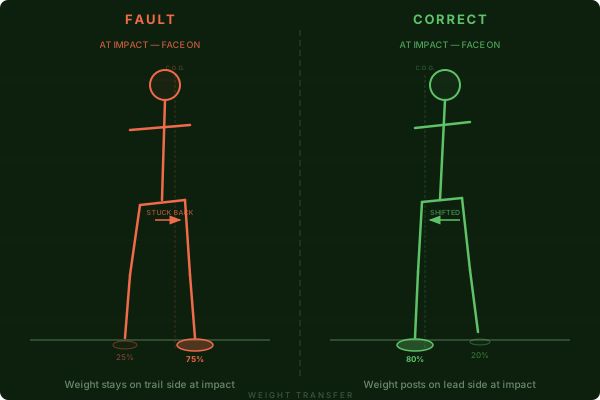
What Causes Poor Weight Transfer
01Trying to Help the Ball Up
The most common cause is the instinct to lean back and scoop the ball into the air. Golfers see the loft on the club and do not trust it to do the work. They lean back, add loft, and try to lift the ball — which produces fat contact, thin contact, or weak pop-ups.
The club's loft launches the ball. A forward-leaning shaft at impact with weight on the lead foot actually produces a higher, more penetrating ball flight than leaning back. Trust the club.
02No Lower Body Initiation
Weight transfer requires the lower body to lead the downswing. If the upper body fires first (arms and shoulders), the weight stays back because there is nothing pulling it forward. The downswing must start from the ground up: feet, knees, hips, then torso, arms, club.
A simple feel: on the downswing, push off the trail foot as if stepping toward the target. This initiates the weight transfer that the arms alone cannot create.
03Fear of the Lateral Slide
Some golfers were told not to sway laterally, so they overcorrect by eliminating all lateral movement. A proper golf swing has some lateral movement — the head moves slightly toward the trail foot on the backswing and then back past its starting position by impact. Eliminating this movement freezes the weight on the trail side.
The distinction: sway is excessive lateral movement without rotation. A proper weight transfer combines lateral shift with rotation. You need both.
How to Fix Poor Weight Transfer — Step by Step
Feel — Step Drill
Hit balls using the step drill: start with feet together, step toward the target with the lead foot as you start the downswing, then hit the ball. This forces a weight transfer because you physically move your body forward.
Train — Pressure Board Check
Stand on a balance board or simply pay attention to your feet. At the top of the backswing, 60% of the pressure should be on the trail foot. At impact, 80% should be on the lead foot. Practice shifting back and through without a ball until the feeling is natural.
Load — Trail Foot Lift Drill
Hit balls and finish with the trail foot completely off the ground, balanced on the lead foot. If you cannot finish this way, the weight did not transfer. Hit 20 balls making sure the trail toe taps the ground at the finish.
Play — Post Up at the Finish
On the course, hold your finish for 3 seconds after every shot. Check: are you balanced on the lead foot with the trail toe on the ground? If you are falling backward, the weight did not transfer. Use the finish as a diagnostic.
Do I Have Poor Weight Transfer?
Answer these questions based on your most recent range session or video review.
At the finish of your swing, is your weight mostly on your trail foot?
Do you frequently hit fat shots (striking the ground before the ball)?
Can you hold your finish balanced on your lead foot for 3 seconds?
Do you feel like you are falling backward after many swings?
When you try to hit the ball harder, do you lean back more?
Drills
01Step Drill
- 1.Start with your feet together, ball positioned normally.
- 2.Make a backswing and step the lead foot toward the target as you start the downswing.
- 3.Hit the ball after the lead foot plants.
- 4.The stepping motion forces the weight to transfer to the lead side.
- 5.Start with half swings and small steps, then progress to full swings.
- 6.Focus on the feel of the weight moving forward before the club reaches the ball.
The weight moving forward before the arms swing down. The sequence is step, then swing — not swing, then step.
Stepping and swinging simultaneously. The step must happen first, creating the forward weight shift that the arms then follow.
02Trail Foot Lift Drill
- 1.Hit balls with a normal swing.
- 2.On the follow-through, lift the trail foot completely off the ground.
- 3.Hold the finish balanced on the lead foot for 3 seconds.
- 4.If you cannot balance, the weight did not transfer enough.
- 5.Start with smooth, controlled swings and build up to full speed as balance improves.
Pressure firmly on the lead foot by impact. The finish should feel stable and controlled, not like you are falling forward.
Jumping or lunging forward to get the weight to the lead side. The transfer should be smooth and continuous, not sudden.
03Tennis Ball Under Trail Foot Drill
- 1.Cut a tennis ball in half and place the flat side down under the outside of your trail heel.
- 2.The rounded surface makes it uncomfortable to keep weight on the trail side.
- 3.Make half-speed swings, letting the instability push your weight to the lead side.
- 4.The tennis ball creates a physical cue: staying back feels unstable, moving forward feels stable.
- 5.Progress to three-quarter speed as the forward shift becomes natural.
The weight moving off the trail foot early in the downswing. You want to shift off the unstable surface as quickly as possible.
Hitting full-speed shots with the tennis ball under your foot. Keep it at half to three-quarter speed for safety. Use a halved tennis ball, not a golf ball — a golf ball is too small and hard, creating an ankle-roll risk.
04Wall Push Drill
- 1.Stand in your golf posture with your lead hip about 6 inches from a wall.
- 2.Make a simulated backswing turn, shifting weight to the trail side.
- 3.Start the downswing by pushing your lead hip into the wall.
- 4.Feel the pressure of the wall against your hip — this is the weight transfer you need.
- 5.Repeat 20 times, then take the same feeling to the range.
The lead hip pressing into the wall early in the downswing. The hip leads, the arms follow.
Bumping the hip into the wall without rotation. The move is a rotational push, not a pure lateral slide. The hip should push and then clear.
Or enter your email and we will send you a formatted PDF with all 4 drills.
We will email you the PDF link. No spam, ever.
Poor Weight Transfer — Drill Card
coachharvey.ai/faults/poor-weight-transfer
1. Step Drill
Equipment: Any iron, range balls · Reps: 20 balls
- Start with your feet together, ball positioned normally.
- Make a backswing and step the lead foot toward the target as you start the downswing.
- Hit the ball after the lead foot plants.
- The stepping motion forces the weight to transfer to the lead side.
- Start with half swings and small steps, then progress to full swings.
- Focus on the feel of the weight moving forward before the club reaches the ball.
Feel: The weight moving forward before the arms swing down. The sequence is step, then swing — not swing, then step.
Avoid: Stepping and swinging simultaneously. The step must happen first, creating the forward weight shift that the arms then follow.
2. Trail Foot Lift Drill
Equipment: Any iron, range balls · Reps: 20 balls
- Hit balls with a normal swing.
- On the follow-through, lift the trail foot completely off the ground.
- Hold the finish balanced on the lead foot for 3 seconds.
- If you cannot balance, the weight did not transfer enough.
- Start with smooth, controlled swings and build up to full speed as balance improves.
Feel: Pressure firmly on the lead foot by impact. The finish should feel stable and controlled, not like you are falling forward.
Avoid: Jumping or lunging forward to get the weight to the lead side. The transfer should be smooth and continuous, not sudden.
3. Tennis Ball Under Trail Foot Drill
Equipment: Halved tennis ball, any iron · Reps: 15 half-speed swings
- Cut a tennis ball in half and place the flat side down under the outside of your trail heel.
- The rounded surface makes it uncomfortable to keep weight on the trail side.
- Make half-speed swings, letting the instability push your weight to the lead side.
- The tennis ball creates a physical cue: staying back feels unstable, moving forward feels stable.
- Progress to three-quarter speed as the forward shift becomes natural.
Feel: The weight moving off the trail foot early in the downswing. You want to shift off the unstable surface as quickly as possible.
Avoid: Hitting full-speed shots with the tennis ball under your foot. Keep it at half to three-quarter speed for safety. Use a halved tennis ball, not a golf ball — a golf ball is too small and hard, creating an ankle-roll risk.
4. Wall Push Drill
Equipment: Wall or sturdy object · Reps: 20 reps without a club
- Stand in your golf posture with your lead hip about 6 inches from a wall.
- Make a simulated backswing turn, shifting weight to the trail side.
- Start the downswing by pushing your lead hip into the wall.
- Feel the pressure of the wall against your hip — this is the weight transfer you need.
- Repeat 20 times, then take the same feeling to the range.
Feel: The lead hip pressing into the wall early in the downswing. The hip leads, the arms follow.
Avoid: Bumping the hip into the wall without rotation. The move is a rotational push, not a pure lateral slide. The hip should push and then clear.
Common Misdiagnoses
You think it is poor weight transfer, but it might be scooping
Both cause fat and thin shots. Weight transfer is a full-body issue (weight stays on the trail foot). Scooping is a hand issue (wrists flip at impact). Film your swing: if the weight shifts forward but you still hit it fat, the wrists are the problem, not the weight.
Read about Scooping →You think it is poor weight transfer, but it might be early extension
Early extension pushes the hips toward the ball, which shifts weight to the toes rather than to the lead side. If your weight is forward on the toes but not on the lead foot, early extension is preventing proper rotational transfer. Check the hips from a face-on camera angle.
Read about Early Extension →How You Know It’s Fixed
You finish in balance on the lead foot, ball flight gets more penetrating, and fat shots disappear.
Frequently Asked Questions
How much weight should be on the lead foot at impact?
For a standard iron shot, approximately 80% of your weight should be on the lead foot at impact. With driver, it is slightly less (70-75%) because the ball is played forward and the swing is more level. Tour players consistently reach 85-95% lead foot pressure at impact.
Does poor weight transfer cause fat shots?
Yes. When weight stays on the trail foot, the swing arc bottoms out behind the ball. The club hits the ground before reaching the ball, producing a fat shot. Moving the weight forward moves the low point forward, producing ball-first contact.
Can I transfer weight too much?
It is possible but rare among amateurs. Excessive lateral slide (lunging past the ball) can cause blocks and pushes, but this is uncommon. Most golfers transfer far too little weight, not too much. If you are unsure, err on the side of more forward shift.
Does weight transfer affect distance?
Dramatically. Weight transfer is one of the primary sources of power in the golf swing — force-plate research consistently shows that the lead-side push (ground-reaction force into the lead leg through impact) is a major contributor to clubhead speed. Golfers who hang back leave that speed on the table.
Practice This Fault
Structured plans and routines that specifically target poor weight transfer.
Related Faults
These flaws often appear alongside poor weight transfer and may share a root cause.
Find out if poor weight transfer is affecting your game
Upload a swing. Coach Harvey reads every frame, calls the fault driving everything else, and remembers the session for the next answer.
Analyze a swing →