Poor Ball Position: How to Fix Poor Ball Position in Your Golf Swing
Setup·Reviewed April 20, 2026·By Coach Harvey - AI Golf Coach
Ball positioned too far forward or back in the stance, causing the club to contact the ball at the wrong point in the swing arc. To fix it: position the ball relative to the club: putts slightly forward of center, chips center to slightly back, irons center to forward, driver off the lead heel.
Ball position — where the ball sits relative to your stance — determines where the club contacts the ball in its arc. Too far forward and the club catches the ball on the upswing (thin shots, pulls). Too far back and the club is still descending steeply (fat shots, pushes). Getting it wrong by even one ball-width changes the strike dramatically.
Most amateurs use the same ball position for every club, which guarantees poor contact with at least some of them. The driver should be off the lead heel, a mid-iron at center, and wedges slightly back of center. Each club has a different low point in the swing arc.
The fix is straightforward: learn the correct position for each club category and verify it with alignment sticks before every practice session. Ball position is a setup fundamental — it does not require athletic ability to get right, just attention.
Coach Harvey identifies poor ball position automatically from your swing video and gives you one focused fix.
Analyze a swing →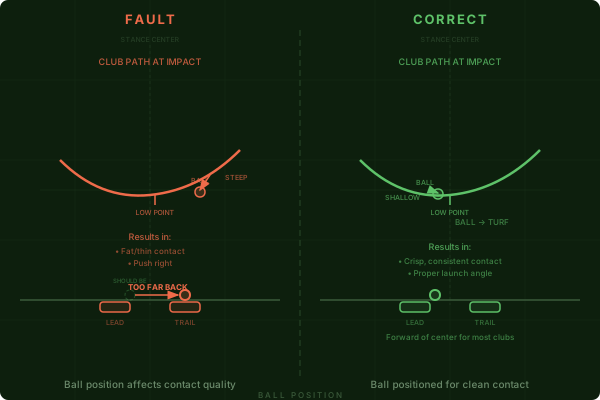
What Causes Poor Ball Position
01Same Position for Every Club
The most common error is using one ball position for every club. Golfers find a position that works for their 7-iron and use it for everything. But the driver has a wider stance and needs the ball farther forward; wedges have a narrower stance and need the ball more centered.
A simple rule: driver off the lead heel, fairway woods one ball back from there, mid-irons at center, short irons and wedges one ball back of center.
02Inconsistent Stance Width
If your stance width changes from swing to swing, ball position changes relative to your body even if the ball stays in the same spot on the ground. A wider stance moves the low point forward; a narrower stance moves it back.
Standardize stance width: shoulder width for irons, slightly wider for woods, slightly narrower for wedges. Then ball position becomes consistent.
03No Ball Position Check in the Routine
Without a systematic check, ball position drifts over time. It creeps forward during a round (toward the lead foot) as the golfer subconsciously reaches for the ball. By the back nine, the ball might be 2 inches forward of where it was on the first tee.
Including a ball position check in your pre-shot routine — even a quick glance at where the ball sits relative to your sternum — prevents this drift.
How to Fix Poor Ball Position — Step by Step
Feel — Alignment Stick T
Lay one stick on the target line and one perpendicular to it at the ball. The perpendicular stick shows where the ball is in your stance. Adjust until it matches the correct position for the club you are using.
Train — Club Category Practice
Hit 10 balls each with a wedge (ball back of center), 7-iron (center), and driver (lead heel). Verify position with sticks for each club change. This builds separate muscle memories for each category.
Load — Sternum Check
At address, note where the ball is relative to your sternum. For irons, it should be at or slightly forward of the sternum. For driver, clearly forward. This body reference travels with you to the course.
Play — Pre-Shot Position Check
Before every shot on the course, glance down and verify ball position relative to your sternum. It takes half a second and prevents the forward-creep that happens over a round.
Do I Have Poor Ball Position?
Answer these questions based on your most recent range session or video review.
Do you use the same ball position for your driver and your irons?
Do you hit fat shots with longer clubs but clean shots with wedges?
Does your ball position creep forward during a round?
Do you rarely verify ball position with alignment sticks?
Drills
01Alignment Stick T Drill
- 1.Lay one alignment stick on the ground along the target line.
- 2.Lay a second stick perpendicular to the first, pointing between your feet, at the ball position.
- 3.The perpendicular stick shows exactly where the ball sits in your stance.
- 4.For a 7-iron, the ball should be at the center of your stance.
- 5.For a driver, move the ball forward to the lead heel.
- 6.Adjust the perpendicular stick each time you change clubs.
Confidence that the ball is in the correct position. The sticks remove guesswork.
Eyeballing ball position without the sticks. The whole point of this drill is objective verification.
02Club Ladder Drill
- 1.Start with a pitching wedge. Ball position: one ball back of center.
- 2.Hit 10 balls, verifying position with sticks.
- 3.Switch to a 7-iron. Ball position: center of stance.
- 4.Hit 10 balls.
- 5.Switch to driver. Ball position: off lead heel.
- 6.Hit 10 balls. The goal is to feel the different positions for each club category.
Three distinct ball positions for three club categories. Each position feels different at address.
Using the same stance width for all three clubs. Widen slightly for the driver, narrow slightly for the wedge.
03Sternum Reference Drill
- 1.At address, hold the club against your sternum (chest bone) and let it hang straight down.
- 2.Where the club touches the ground is your sternum reference point.
- 3.For irons, the ball should be at or slightly forward of this point.
- 4.For driver, the ball should be clearly forward of this point (2-3 inches).
- 5.Use this check before every shot to calibrate ball position relative to your body.
A reliable body reference for ball position that you can use anywhere — range, course, or practice green.
Leaning your upper body to move the reference point. Stand naturally — the reference only works if your posture is consistent.
04Divot Position Check
- 1.Tee up a ball on a low tee with an iron.
- 2.Hit 10 shots and note where the divot starts relative to the tee.
- 3.The divot should start at or slightly in front of the tee (toward the target).
- 4.If divots start behind the tee, the ball is too far forward in your stance.
- 5.If divots start well in front, the ball may be too far back.
Ball-first contact followed by a divot. The tee gives you a fixed reference point.
Trying to take a divot. Let the divot happen naturally from a descending strike. Forcing it changes your swing.
Or enter your email and we will send you a formatted PDF with all 4 drills.
We will email you the PDF link. No spam, ever.
Poor Ball Position — Drill Card
coachharvey.ai/faults/poor-ball-position
1. Alignment Stick T Drill
Equipment: Two alignment sticks · Reps: Use for every range session
- Lay one alignment stick on the ground along the target line.
- Lay a second stick perpendicular to the first, pointing between your feet, at the ball position.
- The perpendicular stick shows exactly where the ball sits in your stance.
- For a 7-iron, the ball should be at the center of your stance.
- For a driver, move the ball forward to the lead heel.
- Adjust the perpendicular stick each time you change clubs.
Feel: Confidence that the ball is in the correct position. The sticks remove guesswork.
Avoid: Eyeballing ball position without the sticks. The whole point of this drill is objective verification.
2. Club Ladder Drill
Equipment: Wedge, 7-iron, driver, alignment sticks · Reps: 10 balls per club
- Start with a pitching wedge. Ball position: one ball back of center.
- Hit 10 balls, verifying position with sticks.
- Switch to a 7-iron. Ball position: center of stance.
- Hit 10 balls.
- Switch to driver. Ball position: off lead heel.
- Hit 10 balls. The goal is to feel the different positions for each club category.
Feel: Three distinct ball positions for three club categories. Each position feels different at address.
Avoid: Using the same stance width for all three clubs. Widen slightly for the driver, narrow slightly for the wedge.
3. Sternum Reference Drill
Equipment: Any club · Reps: 10 reps per club
- At address, hold the club against your sternum (chest bone) and let it hang straight down.
- Where the club touches the ground is your sternum reference point.
- For irons, the ball should be at or slightly forward of this point.
- For driver, the ball should be clearly forward of this point (2-3 inches).
- Use this check before every shot to calibrate ball position relative to your body.
Feel: A reliable body reference for ball position that you can use anywhere — range, course, or practice green.
Avoid: Leaning your upper body to move the reference point. Stand naturally — the reference only works if your posture is consistent.
4. Divot Position Check
Equipment: Any iron, tee · Reps: 10 shots
- Tee up a ball on a low tee with an iron.
- Hit 10 shots and note where the divot starts relative to the tee.
- The divot should start at or slightly in front of the tee (toward the target).
- If divots start behind the tee, the ball is too far forward in your stance.
- If divots start well in front, the ball may be too far back.
Feel: Ball-first contact followed by a divot. The tee gives you a fixed reference point.
Avoid: Trying to take a divot. Let the divot happen naturally from a descending strike. Forcing it changes your swing.
Common Misdiagnoses
You think it is poor ball position, but it might be poor alignment
Ball position and alignment errors can produce similar misses. If the ball starts on line but contact is poor (fat/thin), it is ball position. If contact is clean but the ball starts offline, it is alignment. Check alignment with sticks first, then ball position.
Read about Poor Alignment →You think it is poor ball position, but it might be poor weight transfer
Poor weight transfer changes where the club bottoms out, mimicking a ball position error. If your weight stays on the trail foot, the low point moves behind the ball — same result as the ball being too far forward. Check your finish: if you cannot hold a balanced finish on the lead foot, it is weight transfer, not ball position.
Read about Poor Weight Transfer →How You Know It’s Fixed
Your low point is consistent for each club, you stop hitting fats and thins, and irons compress correctly.
Frequently Asked Questions
Where should ball position be for each club?
Driver: off the lead heel. Fairway woods: one ball-width inside the lead heel. Long irons: one ball-width forward of center. Mid-irons: center of stance. Short irons and wedges: one ball-width back of center. Putting: slightly forward of center.
Does ball position affect ball flight?
Yes. A ball too far forward promotes a higher launch with less compression. A ball too far back promotes a lower, more compressed flight. Extreme positions cause dramatic changes: too far forward produces thin shots; too far back produces fat, steep contact.
Why does my ball position drift during a round?
The most common cause is subconscious reaching for the ball. As fatigue sets in, golfers stand slightly farther from the ball and position it more forward. Building a quick sternum-reference check into your pre-shot routine prevents drift.
Can wrong ball position cause a slice?
Yes. A ball too far forward means the club reaches it late in the arc, when the face has already started to close or the path has moved left. This can produce pulls and slices depending on face angle.
Related Faults
These flaws often appear alongside poor ball position and may share a root cause.
Find out if poor ball position is affecting your game
Upload a swing. Coach Harvey reads every frame, calls the fault driving everything else, and remembers the session for the next answer.
Analyze a swing →