Poor Alignment: How to Fix Poor Alignment in Your Golf Swing
Setup·Reviewed April 20, 2026·By Coach Harvey - AI Golf Coach
Body lines (feet, hips, shoulders) not aligned parallel to the target line, causing pushes, pulls, and compensations in the stroke. To fix it: feet, hips, and shoulders should all be parallel to the target line. Eyes directly over or just inside the ball.
Poor alignment means your body lines — feet, hips, and shoulders — are not parallel to the target line at address. Most golfers aim their body at the target instead of parallel-left of it (for right-handers), which causes the body to aim right. The swing then compensates with an outside-in path to get the ball back on line, producing pulls and slices.
Alignment is the most overlooked fundamental in golf because it feels correct when it is wrong. Your eyes are above and behind the ball, which creates a parallax effect — what looks straight is often 5-10 yards offline. This is why even tour players check alignment every practice session.
The fix is simple but requires discipline: use alignment sticks in every practice session, and build a pre-shot routine that verifies alignment before every shot on the course.
Coach Harvey identifies poor alignment automatically from your swing video and gives you one focused fix.
Analyze a swing →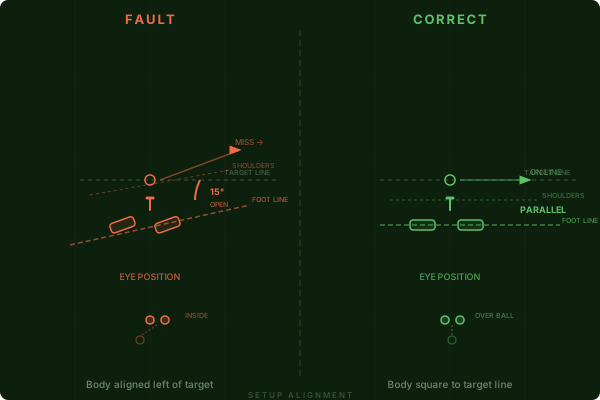
What Causes Poor Alignment
01Aiming Body at the Target
The most common alignment error is aiming the feet, hips, and shoulders directly at the target. This is wrong because you are standing to the side of the ball. Your body should be parallel to the target line, like a railroad track — the ball is on one rail and your feet are on the other.
This error consistently points the body to the right of the target (for right-handers), forcing an over-the-top compensation to redirect the ball.
02No Alignment Routine
Golfers who do not have a consistent pre-shot alignment routine aim differently every shot. Without a systematic process for picking an intermediate target and setting up to it, alignment becomes a guess — and humans are poor at estimating parallel lines from an oblique angle.
Building a routine that includes picking a spot 2-3 feet in front of the ball on the target line, then aligning your clubface to that spot, solves this permanently.
03Eyes Drifting at Address
Some golfers set up correctly but then shift their gaze or body at the last second before takeaway. This micro-adjustment — often caused by doubt about the line — can change alignment by several degrees, which translates to yards of error at the target.
The discipline is to commit to the line during the routine, then trust it at address. Once you are over the ball, the alignment decision is made. Do not second-guess.
How to Fix Poor Alignment — Step by Step
Feel — Alignment Stick Railroad
At the range, lay one alignment stick on the target line and another parallel at your toes. Hit every ball with the sticks in place. This trains your eyes to recognize correct parallel alignment.
Train — Intermediate Target
Before every shot, pick a spot on the ground 2-3 feet in front of the ball on the target line. Align the clubface to that spot, then set your body parallel. This breaks the full-distance alignment problem into a short-distance one that is much easier to get right.
Load — Alignment Check Routine
After setting up, step back and check your alignment from behind. Do this for 10 shots every practice session. Build the mental image of what correct alignment looks like from the player's perspective.
Play — Trust the Process
On the course, pick your intermediate target, align to it, and go. Do not second-guess at address. The routine is your alignment — once set, swing with confidence.
Do I Have Poor Alignment?
Answer these questions based on your most recent range session or video review.
When you lay an alignment stick across your toes at address, does it point at the target instead of parallel-left?
Do you hit pulls and slices without understanding why?
Do you skip alignment checks during practice?
Does your ball start offline even when the swing feels good?
Drills
01Railroad Track Drill
- 1.Lay one alignment stick on the ground pointing at your target (this is the ball line).
- 2.Lay a second stick parallel to the first, at your toe line.
- 3.Set up to each ball with your toes touching the toe-line stick.
- 4.The clubface aims down the ball-line stick; your body is parallel on the toe-line stick.
- 5.Hit all your range balls with the sticks in place.
- 6.After a few sessions, remove the sticks and check if your alignment holds.
Your body pointing slightly left of the target (for right-handers). This feels wrong at first because you are used to aiming your body at the target.
Setting the sticks and then ignoring them. Actively check that your toes, hips, and shoulders are parallel to the target line before each shot.
02Intermediate Target Drill
- 1.Stand behind the ball and pick the target.
- 2.Draw an imaginary line from the target back to the ball.
- 3.Find a spot on that line 2-3 feet in front of the ball — a discoloration, divot, or leaf.
- 4.Walk to the ball and aim the clubface at that intermediate spot.
- 5.Set your body parallel to the line between the ball and the spot.
- 6.This is now your pre-shot routine. Do it before every single shot.
Confidence in your aim. The intermediate target makes alignment a 3-foot problem instead of a 150-yard problem.
Picking an intermediate target that is too far away. The closer it is to the ball, the more accurate your alignment will be. Two to three feet is ideal.
03Feet Together Alignment Check
- 1.Set up to a ball with your feet together, aligned to the target.
- 2.Step your lead foot out to its normal position, then your trail foot.
- 3.This builds alignment from a centered position, reducing the tendency to aim right.
- 4.Hit the shot and check where the ball starts — it should start on your intended line.
- 5.If the ball starts offline, your alignment drifted during the foot placement.
A systematic, repeatable setup. Each step builds on the previous one, creating consistent alignment.
Rushing through the steps. Each foot placement should be deliberate, not automatic.
04Club Across Hips Check
- 1.Take your address position.
- 2.Without moving your feet, hold a club across your hip bones.
- 3.Step back and look at where the club points — it should be parallel-left of the target (for right-handers).
- 4.If it points at the target or right of it, your hips are misaligned.
- 5.Adjust and repeat until the hip line is consistently parallel.
A clear sense of where your body is pointing versus where the ball is going. They are not the same line.
Only checking feet alignment. Hips and shoulders matter just as much. A golfer with aligned feet but open shoulders will still hit pulls.
Or enter your email and we will send you a formatted PDF with all 4 drills.
We will email you the PDF link. No spam, ever.
Poor Alignment — Drill Card
coachharvey.ai/faults/poor-alignment
1. Railroad Track Drill
Equipment: Two alignment sticks · Reps: Every range session
- Lay one alignment stick on the ground pointing at your target (this is the ball line).
- Lay a second stick parallel to the first, at your toe line.
- Set up to each ball with your toes touching the toe-line stick.
- The clubface aims down the ball-line stick; your body is parallel on the toe-line stick.
- Hit all your range balls with the sticks in place.
- After a few sessions, remove the sticks and check if your alignment holds.
Feel: Your body pointing slightly left of the target (for right-handers). This feels wrong at first because you are used to aiming your body at the target.
Avoid: Setting the sticks and then ignoring them. Actively check that your toes, hips, and shoulders are parallel to the target line before each shot.
2. Intermediate Target Drill
Equipment: None · Reps: Every shot in practice and on course
- Stand behind the ball and pick the target.
- Draw an imaginary line from the target back to the ball.
- Find a spot on that line 2-3 feet in front of the ball — a discoloration, divot, or leaf.
- Walk to the ball and aim the clubface at that intermediate spot.
- Set your body parallel to the line between the ball and the spot.
- This is now your pre-shot routine. Do it before every single shot.
Feel: Confidence in your aim. The intermediate target makes alignment a 3-foot problem instead of a 150-yard problem.
Avoid: Picking an intermediate target that is too far away. The closer it is to the ball, the more accurate your alignment will be. Two to three feet is ideal.
3. Feet Together Alignment Check
Equipment: Any club · Reps: 10 shots
- Set up to a ball with your feet together, aligned to the target.
- Step your lead foot out to its normal position, then your trail foot.
- This builds alignment from a centered position, reducing the tendency to aim right.
- Hit the shot and check where the ball starts — it should start on your intended line.
- If the ball starts offline, your alignment drifted during the foot placement.
Feel: A systematic, repeatable setup. Each step builds on the previous one, creating consistent alignment.
Avoid: Rushing through the steps. Each foot placement should be deliberate, not automatic.
4. Club Across Hips Check
Equipment: Any club · Reps: 10 reps during warm-up
- Take your address position.
- Without moving your feet, hold a club across your hip bones.
- Step back and look at where the club points — it should be parallel-left of the target (for right-handers).
- If it points at the target or right of it, your hips are misaligned.
- Adjust and repeat until the hip line is consistently parallel.
Feel: A clear sense of where your body is pointing versus where the ball is going. They are not the same line.
Avoid: Only checking feet alignment. Hips and shoulders matter just as much. A golfer with aligned feet but open shoulders will still hit pulls.
Common Misdiagnoses
You think it is poor alignment, but it might be an open clubface
If your alignment is correct (verified with sticks) but the ball still starts right, the clubface is open at impact. Alignment controls where you swing; the face controls where the ball starts. Check both independently.
Read about Open Clubface →You think it is poor alignment, but it might be poor ball position
Ball position can mimic alignment issues. A ball too far forward makes the body aim left; too far back makes it aim right. Verify ball position with alignment sticks before diagnosing alignment.
Read about Poor Ball Position →How You Know It’s Fixed
Your dispersion tightens and you stop making compensating moves mid-swing to save your start line.
Frequently Asked Questions
Where should my body aim in golf?
Your body — feet, hips, and shoulders — should aim parallel-left of the target (for right-handers). Think of a railroad track: the ball travels on one rail toward the target, and your body is on the other rail, parallel to it. Your body should never point at the target.
Why does correct alignment feel wrong?
Because you are standing to the side of the ball, not behind it. Your eyes see the target at an angle, which creates a parallax effect. Correct alignment (parallel-left) will feel like you are aimed too far left until your eyes recalibrate. Alignment sticks accelerate this recalibration.
How do pros check their alignment?
Most tour players use alignment sticks in every practice session. On the course, they use an intermediate target — a spot 2-3 feet in front of the ball on the target line — to align the clubface, then set the body parallel to that line.
Can poor alignment cause a slice?
Yes. When the body aims right of the target, the brain compensates with an outside-in swing path to redirect the ball. This path puts slice spin on the ball. Fixing alignment often reduces the slice because the compensating path is no longer necessary.
Related Faults
These flaws often appear alongside poor alignment and may share a root cause.
Find out if poor alignment is affecting your game
Upload a swing. Coach Harvey reads every frame, calls the fault driving everything else, and remembers the session for the next answer.
Analyze a swing →