Over the Top: How to Fix Over the Top in Your Golf Swing
Downswing·Reviewed April 20, 2026·By Coach Harvey - AI Golf Coach
Over the top is the primary cause of the amateur slice
The club moves outside the target line on the downswing, producing pulls and slices. To fix it: drop the club into the slot on the downswing with an inside-out path. Lead with the lower body.
Over the top is the most common cause of the slice in golf. It happens when the club moves outside the target line at the start of the downswing — the hands and shoulders throw the club outward instead of dropping it into the slot. The resulting outside-in path puts cut spin on the ball, producing weak fades, pulls, and the dreaded banana slice.
Nearly every golfer who slices has some degree of over-the-top motion. The frustrating part is that it feels powerful — the instinct to swing the club at the ball from the outside feels like you are hitting hard. But the physics work against you: an outside-in path costs distance, accuracy, and consistency.
The fix requires retraining your downswing sequence. The lower body must lead, and the arms must drop before they swing out. This feels counterintuitive at first — like you are swinging too far inside — but the results on the launch monitor are immediate: straighter ball flight, more distance, and a draw instead of a slice.
Coach Harvey identifies over the top automatically from your swing video and gives you one focused fix.
Analyze a swing →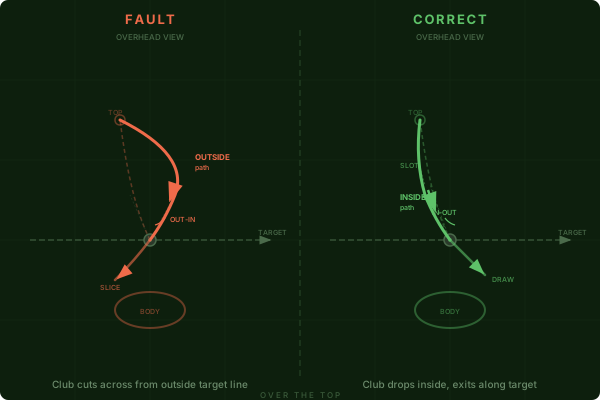
What Causes Over the Top
01Starting the Downswing With the Upper Body
In a proper downswing, the hips initiate the move toward the target, the torso follows, then the arms, then the club. When the shoulders and arms fire first — which happens when you try to hit at the ball rather than swing through it — the club gets thrown outward, over the top of the ideal swing plane.
This is the single most common cause. The cue that fixes it for most golfers is simple: feel like the downswing starts with your lead hip, not your hands.
02Hitting at the Ball Instead of Through It
Golf is counterintuitive. The ball is on the ground in front of you, so your instinct is to swing the club down at it. This creates a steep, outside-in path. Tour players describe the feel as swinging out to the right (for right-handers) — which produces an inside-out path and a draw.
Until you internalize this, your brain will keep overriding your body. Drills that exaggerate the inside path are essential for retraining.
03A Backswing That Forces Compensation
If your backswing is too flat (club wrapped around your body) or too upright (club pointing at the sky), the downswing has to compensate. A very flat backswing makes it easy to get stuck inside and flip the club over the top to recover. A very upright backswing gives the club nowhere to drop, so it comes down on the same steep path.
Check your backswing plane first. At the top, the club shaft should roughly point at or parallel to the target line. If it is dramatically off, fix the backswing before working on the downswing.
04Grip Pressure and Tension
Tight hands and forearms make it nearly impossible to shallow the club in transition. The wrists need to be soft enough to let the club drop into the slot under gravity and centrifugal force. When grip pressure is high, the arms take over the downswing and the club stays on its steep path.
Try gripping the club at a 3 or 4 out of 10. If that feels dangerously loose, you have been gripping too hard.
How to Fix Over the Top — Step by Step
Feel — Headcover Gate Drill
Place a headcover just outside and behind the ball. If you come over the top, you will hit the headcover on the downswing. This gives you instant feedback. Make slow swings that miss the headcover to the inside.
Train — Drop the Arms Drill
Take the club to the top of your backswing and pause. From there, let your arms drop straight down while your hips start to rotate. The club should fall behind you, not out in front. Exaggerate this until the inside path feels natural.
Load — Right Field Drill
Imagine a baseball field. Try to hit the ball to right field (for right-handers). This forces an inside-out path. Start with half swings and gradually increase speed. The ball will start right and draw back — that is the correct path.
Play — One Thought Only
On the course, use one thought: start the downswing with the hips, not the hands. That is it. Do not think about club path, wrist angle, or face position. The hip-first move automatically shallows the club and brings it from the inside.
Do I Have Over the Top?
Answer these questions based on your most recent range session or video review.
Does your typical miss curve to the right (for right-handers) — a slice or fade?
On the range, do your divots point to the left of your target?
Do you feel like you are swinging hard but the ball does not go as far as it should?
When you place a headcover outside and behind the ball, do you hit it on the downswing?
Do you hit pulls to the left as often as slices to the right?
Drills
01Headcover Gate Drill
- 1.Place a headcover about 6 inches behind the ball and slightly outside the target line.
- 2.Take your normal address with a 7-iron.
- 3.Make a swing. If you come over the top, the club will hit the headcover on the way down.
- 4.Adjust your downswing path until you can miss the headcover consistently.
- 5.The club should approach the ball from inside the target line, passing inside the headcover.
- 6.Start at half speed and increase as you can clear the gate 10 times in a row.
The club dropping behind you in transition, then approaching the ball from the inside. It should feel like you are swinging away from the headcover.
Manipulating the path with your hands. The path change should come from sequencing (hips first), not from steering the club with your arms.
02Towel Under Trail Arm Drill
- 1.Tuck a folded hand towel under your trail armpit at address.
- 2.Make half-speed swings keeping the towel in place through impact.
- 3.If you come over the top, the trail elbow flies away from the body and the towel drops.
- 4.The towel forces the trail elbow to stay connected, which naturally shallows the club.
- 5.Once you can keep the towel in place at half speed, work up to three-quarter speed.
Your trail elbow tucking into your side on the downswing. The club feels like it drops into a slot behind you.
Pinching the towel so tightly that you restrict your backswing. It should rest lightly — the correct path keeps it in place naturally.
03Two-Tee Path Drill
- 1.Tee up a ball normally. Place a second tee 3 inches behind and 2 inches outside the first tee.
- 2.The goal is to swing the club between the two tees — approaching from inside.
- 3.If you clip the outer tee, your path is still outside-in.
- 4.Hit 20 balls, noting how many times you clear both tees cleanly.
- 5.Aim for 15 out of 20 clean passes before moving to full speed.
Like you are swinging out to the right of the target. The ball should start slightly right and curve back left (a draw).
Flipping the hands to close the face. If the ball starts right and stays right, the path is correct but the face is open — that is a grip issue, not a path issue.
04Split Grip Drill
- 1.Grip the club with a 2-inch gap between your hands (split grip).
- 2.Make slow backswings to the top, then start the downswing with your hips.
- 3.The split grip makes it physically difficult to throw the club over the top.
- 4.You will feel the club naturally shallow and drop into the inside slot.
- 5.Do 15 reps without a ball, then hit 10 balls at slow speed with a normal grip.
A pronounced shallowing of the club shaft in transition. The trail hand feels like it is pulling the club down and behind you.
Rushing through the transition. The split grip drill only works at slow speed. Speed up too early and the old pattern takes over.
Or enter your email and we will send you a formatted PDF with all 4 drills.
We will email you the PDF link. No spam, ever.
Over the Top — Drill Card
coachharvey.ai/faults/over-the-top
1. Headcover Gate Drill
Equipment: Headcover or small towel · Reps: 3 sets of 10 swings
- Place a headcover about 6 inches behind the ball and slightly outside the target line.
- Take your normal address with a 7-iron.
- Make a swing. If you come over the top, the club will hit the headcover on the way down.
- Adjust your downswing path until you can miss the headcover consistently.
- The club should approach the ball from inside the target line, passing inside the headcover.
- Start at half speed and increase as you can clear the gate 10 times in a row.
Feel: The club dropping behind you in transition, then approaching the ball from the inside. It should feel like you are swinging away from the headcover.
Avoid: Manipulating the path with your hands. The path change should come from sequencing (hips first), not from steering the club with your arms.
2. Towel Under Trail Arm Drill
Equipment: Hand towel · Reps: 20 half-speed swings
- Tuck a folded hand towel under your trail armpit at address.
- Make half-speed swings keeping the towel in place through impact.
- If you come over the top, the trail elbow flies away from the body and the towel drops.
- The towel forces the trail elbow to stay connected, which naturally shallows the club.
- Once you can keep the towel in place at half speed, work up to three-quarter speed.
Feel: Your trail elbow tucking into your side on the downswing. The club feels like it drops into a slot behind you.
Avoid: Pinching the towel so tightly that you restrict your backswing. It should rest lightly — the correct path keeps it in place naturally.
3. Two-Tee Path Drill
Equipment: Two tees and a mid-iron · Reps: 20 balls
- Tee up a ball normally. Place a second tee 3 inches behind and 2 inches outside the first tee.
- The goal is to swing the club between the two tees — approaching from inside.
- If you clip the outer tee, your path is still outside-in.
- Hit 20 balls, noting how many times you clear both tees cleanly.
- Aim for 15 out of 20 clean passes before moving to full speed.
Feel: Like you are swinging out to the right of the target. The ball should start slightly right and curve back left (a draw).
Avoid: Flipping the hands to close the face. If the ball starts right and stays right, the path is correct but the face is open — that is a grip issue, not a path issue.
4. Split Grip Drill
Equipment: Any mid-iron · Reps: 15 slow-motion swings (no ball)
- Grip the club with a 2-inch gap between your hands (split grip).
- Make slow backswings to the top, then start the downswing with your hips.
- The split grip makes it physically difficult to throw the club over the top.
- You will feel the club naturally shallow and drop into the inside slot.
- Do 15 reps without a ball, then hit 10 balls at slow speed with a normal grip.
Feel: A pronounced shallowing of the club shaft in transition. The trail hand feels like it is pulling the club down and behind you.
Avoid: Rushing through the transition. The split grip drill only works at slow speed. Speed up too early and the old pattern takes over.
Common Misdiagnoses
You think it is over the top, but it might be an open clubface
An outside-in path and an open clubface both produce slices, but the fix is completely different. If your divots point left of target but the ball starts left and curves right, it is the face. If the ball starts straight and curves right, it is path. Film down the line and check your divot direction — left-pointing divots confirm over the top.
Read about Open Clubface →You think it is over the top, but it might be a flat backswing plane
A very flat backswing can force an over-the-top recovery. If you fix the downswing without fixing the backswing, the improvement will not last. Check your backswing at the top — the shaft should point roughly at the target. If it wraps way around behind you, fix the plane first.
Read about Swing Plane →How You Know It’s Fixed
The club drops into the slot from the inside and you start drawing the ball or hitting straight pulls instead of slices.
Frequently Asked Questions
What causes an over-the-top golf swing?
The most common cause is starting the downswing with the upper body and arms instead of the lower body. When the shoulders fire before the hips, the club gets thrown outward over the ideal swing plane. Other causes include trying to hit at the ball, excessive grip pressure, and a backswing plane that forces a compensating move.
Can you fix over the top without lessons?
Yes. The headcover gate drill and towel-under-arm drill give you instant feedback on your path without needing a coach present. However, video is essential — you cannot feel an over-the-top move while it is happening. Film yourself down the line and compare your club position at the start of the downswing to a tour player.
Does over the top always cause a slice?
No. An over-the-top path with a closed clubface produces a pull — the ball starts left and stays left (for right-handers). The path determines the start direction, and the face relative to the path determines the curve. Many golfers with over-the-top moves alternate between slices and pulls.
How long does it take to fix an over-the-top swing?
Most golfers can see measurable path improvement within 1-2 weeks of focused drill work (3 sessions per week). However, the old pattern will return under pressure on the course for another 4-6 weeks. Consistent practice with the drills keeps the new path ingrained.
Why does my over-the-top move get worse when I swing harder?
Swinging harder engages the upper body more aggressively, which is exactly what causes over the top. The fix is counterintuitive: swing easier with the arms and faster with the hips. Power in golf comes from sequencing and rotation, not from arm speed.
Practice This Fault
Structured plans and routines that specifically target over the top.
Related Faults
These flaws often appear alongside over the top and may share a root cause.
Find out if over the top is affecting your game
Upload a swing. Coach Harvey reads every frame, calls the fault driving everything else, and remembers the session for the next answer.
Analyze a swing →