Open Clubface: How to Fix Open Clubface in Your Golf Swing
Impact·Reviewed April 20, 2026·By Coach Harvey - AI Golf Coach
The clubface is not square to the target at impact — either open (pointing right) causing pushes/slices, or closed (pointing left) causing pulls/hooks. To fix it: return the clubface square to the target at impact. Check alignment at address and maintain face angle through the stroke.
An open clubface at impact means the face is pointing to the right of the target (for right-handers) at the moment of contact. This sends the ball right of the intended line and often adds slice spin. The clubface is responsible for 75-85% of the ball's start direction (roughly 75% for irons, up to 85% for the driver) — making face angle the single most important factor in accuracy.
Open clubface is different from an outside-in path (over the top), though both cause slices. A golfer can have a perfect swing path and still slice if the face is open. Conversely, a golfer with an over-the-top path can hit straight pulls if the face is closed. Face and path are independent variables.
The most common cause is a weak grip — the hands rotated too far to the left on the club (for right-handers). Strengthening the grip so you can see 2-3 knuckles on the lead hand at address squares the face without requiring any swing change.
Coach Harvey identifies open clubface automatically from your swing video and gives you one focused fix.
Analyze a swing →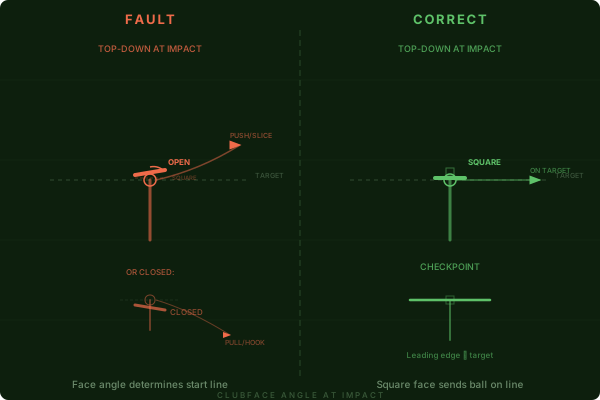
What Causes Open Clubface
01Weak Grip Position
A weak grip — where the hands are rotated too far to the left on the club (for right-handers) — makes it physically difficult to return the face to square at impact. The face starts open at address and stays open through the swing.
Check your lead hand at address: you should see 2-3 knuckles. If you see only 1, the grip is weak. Rotate both hands slightly clockwise (for right-handers) until 2-3 knuckles are visible.
02Lack of Forearm Rotation
The forearms need to rotate through impact to square the clubface. When the forearms stay static — often from tension or a steering instinct — the face stays in its address position or opens further. The rotation does not need to be dramatic; a few degrees of forearm rotation through impact is sufficient.
Practice the toe-up to toe-up drill: at hip height on the backswing, the toe should point up. At hip height on the follow-through, the toe should point up again. This ensures proper rotation.
03Steering Instead of Releasing
Golfers who try to steer the ball toward the target hold off the release through impact. This prevents the clubface from closing naturally and produces an open face at contact. The instinct to control direction actually makes direction worse.
The fix is trusting the release. Aim the clubface at address and let the swing happen. The face squares itself when the arms release naturally.
How to Fix Open Clubface — Step by Step
Feel — Grip Check
At address, verify 2-3 knuckles are visible on your lead hand and the V between your thumb and forefinger points at your trail shoulder. This is the neutral-to-strong grip that promotes a square face.
Train — Toe-Up to Toe-Up Drill
Make half swings and check the toe position at hip height on both sides. Backswing: toe points up. Follow-through: toe points up. This ensures proper forearm rotation through impact.
Load — Impact Tape
Apply impact tape or foot spray to the clubface. Hit 10 balls and check the pattern. A consistently centered strike with a square face will produce a centered mark. Off-center toward the heel suggests an open face.
Play — Aim and Trust
On the course, aim the clubface at your intermediate target at address and make no conscious effort to control the face during the swing. Trust the grip and the release to return the face to square.
Do I Have Open Clubface?
Answer these questions based on your most recent range session or video review.
Does your ball consistently start to the right of your target (for right-handers)?
At address, can you see fewer than 2 knuckles on your lead hand?
Do you slice the ball more than any other miss?
At hip height on the follow-through, does the clubface point at the sky instead of at you?
Drills
01Grip Position Check
- 1.Hold the club in your lead hand in front of you.
- 2.Look down at the back of your lead hand — count visible knuckles.
- 3.You should see 2-3 knuckles. If you see only 1, the grip is too weak.
- 4.Rotate the hand clockwise (for right-handers) until 2-3 knuckles show.
- 5.Add the trail hand so the V between thumb and forefinger points at your trail shoulder.
- 6.This neutral-to-strong grip promotes a square clubface at impact.
The club sitting more in the fingers than the palm. The lead wrist may feel slightly rotated compared to your old grip.
Gripping in the palm. A palm grip weakens the position and makes it harder to square the face. The club should run diagonally across the fingers.
02Toe-Up to Toe-Up Drill
- 1.Take a mid-iron and make a half backswing, stopping at hip height.
- 2.Check the toe of the club — it should point roughly at the sky (toe up).
- 3.Swing through to hip height on the follow-through and stop.
- 4.The toe should again point at the sky (toe up).
- 5.If the toe points at the target on the follow-through, you did not rotate enough — the face is open.
- 6.Repeat 20 times, then hit balls at half speed checking the positions.
The forearms rotating naturally through impact. It is not a forced flip — it is a gentle rotation that squares the face.
Rolling the wrists aggressively. The rotation should be subtle — a few degrees. Excessive rotation closes the face and produces hooks.
03Glove Logo Drill
- 1.Wear your golf glove and take your address position.
- 2.Note where the glove logo faces at address (it should face the target).
- 3.Make a swing and freeze at impact.
- 4.The glove logo should still face the target at impact — not the sky (open) or the ground (closed).
- 5.If the logo faces the sky, your face is open. Work on the grip and forearm rotation.
The back of the lead hand facing the target through impact. This correlates directly with a square clubface.
Flipping the hands to make the logo face the ground. That closes the face too much. The logo should face the target — square, not closed.
04Headcover Release Drill
- 1.Hold a headcover in your trail hand at address position.
- 2.Make a backswing motion and throw the headcover toward the target.
- 3.The headcover should fly straight at the target with a slight counterclockwise rotation.
- 4.If it flies to the right, you are not releasing. If it flies left, you are over-releasing.
- 5.This drill trains the feel of a proper release without the complexity of a golf club.
A natural release of the trail hand toward the target. The throwing motion is the same as the release in a golf swing.
Throwing across your body. The headcover should go at the target, not left of it. A straight throw equals a square release.
Or enter your email and we will send you a formatted PDF with all 4 drills.
We will email you the PDF link. No spam, ever.
Open Clubface — Drill Card
coachharvey.ai/faults/open-clubface
1. Grip Position Check
Equipment: Any club · Reps: Check before every session
- Hold the club in your lead hand in front of you.
- Look down at the back of your lead hand — count visible knuckles.
- You should see 2-3 knuckles. If you see only 1, the grip is too weak.
- Rotate the hand clockwise (for right-handers) until 2-3 knuckles show.
- Add the trail hand so the V between thumb and forefinger points at your trail shoulder.
- This neutral-to-strong grip promotes a square clubface at impact.
Feel: The club sitting more in the fingers than the palm. The lead wrist may feel slightly rotated compared to your old grip.
Avoid: Gripping in the palm. A palm grip weakens the position and makes it harder to square the face. The club should run diagonally across the fingers.
2. Toe-Up to Toe-Up Drill
Equipment: Any mid-iron · Reps: 20 half swings
- Take a mid-iron and make a half backswing, stopping at hip height.
- Check the toe of the club — it should point roughly at the sky (toe up).
- Swing through to hip height on the follow-through and stop.
- The toe should again point at the sky (toe up).
- If the toe points at the target on the follow-through, you did not rotate enough — the face is open.
- Repeat 20 times, then hit balls at half speed checking the positions.
Feel: The forearms rotating naturally through impact. It is not a forced flip — it is a gentle rotation that squares the face.
Avoid: Rolling the wrists aggressively. The rotation should be subtle — a few degrees. Excessive rotation closes the face and produces hooks.
3. Glove Logo Drill
Equipment: Golf glove, any club · Reps: 15 practice swings
- Wear your golf glove and take your address position.
- Note where the glove logo faces at address (it should face the target).
- Make a swing and freeze at impact.
- The glove logo should still face the target at impact — not the sky (open) or the ground (closed).
- If the logo faces the sky, your face is open. Work on the grip and forearm rotation.
Feel: The back of the lead hand facing the target through impact. This correlates directly with a square clubface.
Avoid: Flipping the hands to make the logo face the ground. That closes the face too much. The logo should face the target — square, not closed.
4. Headcover Release Drill
Equipment: Headcover · Reps: 20 throws
- Hold a headcover in your trail hand at address position.
- Make a backswing motion and throw the headcover toward the target.
- The headcover should fly straight at the target with a slight counterclockwise rotation.
- If it flies to the right, you are not releasing. If it flies left, you are over-releasing.
- This drill trains the feel of a proper release without the complexity of a golf club.
Feel: A natural release of the trail hand toward the target. The throwing motion is the same as the release in a golf swing.
Avoid: Throwing across your body. The headcover should go at the target, not left of it. A straight throw equals a square release.
Common Misdiagnoses
You think it is an open clubface, but it might be over the top
Both cause slices but for different reasons. An open face starts the ball right; an over-the-top path puts cut spin on the ball. Check the divot direction: if divots point left but the ball starts right, it is the face. If divots point left and the ball starts left then curves right, it is the path.
Read about Over the Top →You think it is an open clubface, but it might be a weak grip
A weak grip is the most common cause of an open clubface. They are the same problem viewed from different perspectives. If you fix the grip (2-3 knuckles visible) and the face squares up, the grip was the root cause. If the face stays open with a correct grip, the issue is forearm rotation.
Read about Weak Grip →How You Know It’s Fixed
The face returns square at impact, your start line becomes predictable, and slices turn into straight shots or draws.
Frequently Asked Questions
What causes an open clubface at impact?
The three most common causes are a weak grip (hands rotated too far left), lack of forearm rotation through impact, and steering the club instead of releasing it. Of these, the grip is the most common and the easiest to fix.
How much does the clubface affect ball direction?
The clubface is responsible for approximately 75-85% of the ball's initial start direction — roughly 75% for irons and up to 85% for the driver (per TrackMan data). The swing path accounts for the remainder. This means face angle matters far more than path for where the ball starts.
Can I fix an open face without changing my grip?
Sometimes. Improving forearm rotation through impact can square the face with an existing grip. However, if the grip is significantly weak (fewer than 2 knuckles visible), no amount of rotation will consistently square the face. Fix the grip first, then refine the rotation.
Does an open clubface always cause a slice?
No. An open face with an inside-out path produces a push-fade — the ball starts right and curves slightly more right. An open face with a square path produces a straight push. An open face with an outside-in path produces the classic slice. The miss shape depends on the relationship between face and path.
Practice This Fault
Structured plans and routines that specifically target open clubface.
Related Faults
These flaws often appear alongside open clubface and may share a root cause.
Find out if open clubface is affecting your game
Upload a swing. Coach Harvey reads every frame, calls the fault driving everything else, and remembers the session for the next answer.
Analyze a swing →