Loss of Posture: How to Fix Loss of Posture in Your Golf Swing
Impact·Reviewed April 20, 2026·By Coach Harvey - AI Golf Coach
Loss of posture changes your swing arc mid-swing
Standing up or changing spine angle during the swing, causing inconsistent contact and topped shots. To fix it: maintain your spine angle from address through impact. Feel like your chest stays over the ball.
Loss of posture means your spine angle changes during the swing — typically standing up through impact. You set a spine angle at address, but by the time you reach the ball, that angle has increased. The club is now farther from the ground than it was at setup, producing thin shots, topped balls, and inconsistent contact.
Loss of posture is closely related to early extension but they are not the same thing. Early extension is the hips moving forward; loss of posture is the spine straightening. They often appear together, but the fix depends on which one is primary.
The root cause is usually physical: weak core muscles that cannot hold the spine angle under the rotational load of the golf swing. The body takes the easy path — standing up — because maintaining the angle requires isometric core strength. A few weeks of targeted core work often fixes the problem permanently.
Coach Harvey identifies loss of posture automatically from your swing video and gives you one focused fix.
Analyze a swing →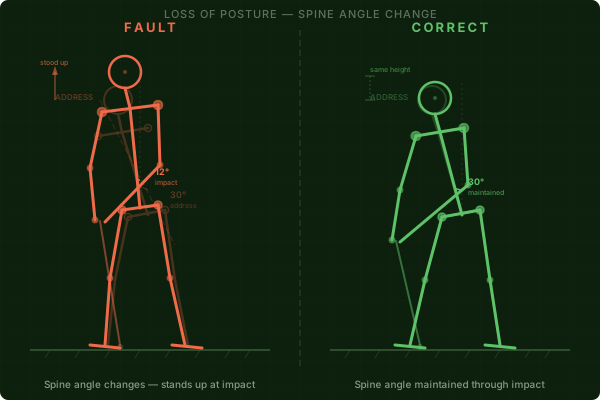
What Causes Loss of Posture
01Standing Too Tall at Address
If you start without enough hip hinge, you have no angle to maintain. Golfers who address the ball with a nearly vertical spine are already close to standing up — any small change makes contact inconsistent.
Check your setup in a mirror: there should be a clear angle between your thighs and torso (hip hinge). Your arms should hang naturally from your shoulders, not reach for the ball.
02Hip Thrust Toward the Ball
Early extension (hips moving toward the ball) pushes the upper body upward because the body is a connected chain. When the hips push forward, the spine has to straighten to maintain balance. This is the most common cause of loss of posture.
If you fix early extension first and posture improves, the hips were the root cause. If posture still deteriorates after fixing the hips, the spine angle is the independent problem.
03Weak Core Under Rotational Load
Maintaining your spine angle through a full-speed golf swing requires isometric core strength — the ability to hold a position while forces act on it. When the core is weak, the body stands up because the muscles cannot hold the angle.
This is especially true at higher swing speeds. Golfers who lose posture more with the driver than with wedges have a core strength issue — the longer club creates more force that the core must resist.
04Anxiety and Ball-Watching
The desire to see where the ball goes causes many golfers to lift their head and chest before impact. This straightens the spine prematurely. The fix is trusting the swing and keeping the eyes down through impact.
A simple discipline: listen for the ball landing before you look up. This keeps the chest down and the spine angle intact through the critical impact zone.
How to Fix Loss of Posture — Step by Step
Feel — Forehead on Wall Drill
Bend into golf posture and rest your forehead against a wall (use a towel for comfort). Make slow practice swings keeping your forehead on the wall. This physically prevents standing up and trains the feeling of maintained posture.
Train — Mirror Posture Check
Hit balls in front of a mirror or glass door. At address, note your spine angle. Make swings checking that the angle looks the same at impact. Video from face-on is even better — pause at address and impact to compare.
Load — Core Stability Circuit
Add a 5-minute core circuit to your warm-up: 30-second plank, 10 dead bugs, 10 bird dogs. This activates the muscles that hold your spine angle under load. Do this before every practice session.
Play — Chest Over the Ball
On the course, use one thought: keep your chest over the ball through impact. This cue maintains the spine angle without requiring you to think about mechanics. The ball is already gone by the time you stand up — standing up sooner adds nothing.
Do I Have Loss of Posture?
Answer these questions based on your most recent range session or video review.
When you compare your spine angle at address versus impact on video, has it increased (stood up)?
Do you hit thin shots or top the ball more often with longer clubs?
Do you feel yourself rising up during the downswing?
Are your divots inconsistent — sometimes deep, sometimes nonexistent?
Does your posture deteriorate more when you swing harder?
Drills
01Forehead on Wall Drill
- 1.Fold a towel and place it on a wall at a height that matches your forehead when in golf posture.
- 2.Rest your forehead against the towel and take your golf posture.
- 3.Make slow backswing and downswing motions without a club.
- 4.Your forehead must stay in contact with the towel through impact.
- 5.If your forehead lifts off the towel, you stood up — that is loss of posture.
- 6.Once consistent without a club, hold a short iron and repeat at slow speed.
Your spine angle staying constant from address through impact. Your body rotates around a fixed spine, not through a changing one.
Pressing your head into the wall with force. Light contact is enough. Too much pressure creates neck tension.
02Tush Line Drill
- 1.Set up to a ball with your backside about 2 inches from a wall or chair.
- 2.Make a swing. Your backside should stay near the reference throughout.
- 3.If your backside moves away from the reference on the downswing, you lost posture (stood up).
- 4.If your backside pushes into the reference, you have early extension (different issue).
- 5.The goal is for the distance between your backside and the reference to stay constant.
Your hips rotating in place rather than thrusting forward or lifting up. The spine angle stays locked.
Setting up too close to the wall. Leave 2 inches of clearance so you have room to rotate without the wall interfering with your turn.
03Slow Motion Video Check
- 1.Set your phone on a tripod at waist height, face-on.
- 2.Hit 10 balls at three-quarter speed, filming in slow motion.
- 3.Review each swing. Pause at address and note your spine angle.
- 4.Scrub to impact. Is the spine angle the same or has it increased (stood up)?
- 5.Draw a mental line along your spine at address. At impact, the spine should be on or very near that line.
Nothing during filming — swing normally. The video is diagnostic.
Exaggerating your posture to look good on camera. The video needs to show your real pattern.
04Plank Hold Pre-Round
- 1.Get into a forearm plank position — elbows under shoulders, body straight.
- 2.Hold for 30 seconds, focusing on keeping the spine neutral (no sag, no pike).
- 3.Rest 15 seconds and repeat twice more.
- 4.This activates the isometric core muscles that hold your spine angle during the swing.
- 5.Do this before every practice session and round as part of your warm-up.
Your deep core muscles engaging — the same muscles that stabilize your spine during the swing.
Holding your breath. Breathe normally throughout the plank. The goal is controlled stability, not maximum effort.
Or enter your email and we will send you a formatted PDF with all 4 drills.
We will email you the PDF link. No spam, ever.
Loss of Posture — Drill Card
coachharvey.ai/faults/loss-of-posture
1. Forehead on Wall Drill
Equipment: Wall and a towel · Reps: 20 slow-motion practice swings
- Fold a towel and place it on a wall at a height that matches your forehead when in golf posture.
- Rest your forehead against the towel and take your golf posture.
- Make slow backswing and downswing motions without a club.
- Your forehead must stay in contact with the towel through impact.
- If your forehead lifts off the towel, you stood up — that is loss of posture.
- Once consistent without a club, hold a short iron and repeat at slow speed.
Feel: Your spine angle staying constant from address through impact. Your body rotates around a fixed spine, not through a changing one.
Avoid: Pressing your head into the wall with force. Light contact is enough. Too much pressure creates neck tension.
2. Tush Line Drill
Equipment: Alignment stick and a wall or chair · Reps: 3 sets of 10 swings
- Set up to a ball with your backside about 2 inches from a wall or chair.
- Make a swing. Your backside should stay near the reference throughout.
- If your backside moves away from the reference on the downswing, you lost posture (stood up).
- If your backside pushes into the reference, you have early extension (different issue).
- The goal is for the distance between your backside and the reference to stay constant.
Feel: Your hips rotating in place rather than thrusting forward or lifting up. The spine angle stays locked.
Avoid: Setting up too close to the wall. Leave 2 inches of clearance so you have room to rotate without the wall interfering with your turn.
3. Slow Motion Video Check
Equipment: Phone on a tripod, face-on angle · Reps: 10 swings, review each
- Set your phone on a tripod at waist height, face-on.
- Hit 10 balls at three-quarter speed, filming in slow motion.
- Review each swing. Pause at address and note your spine angle.
- Scrub to impact. Is the spine angle the same or has it increased (stood up)?
- Draw a mental line along your spine at address. At impact, the spine should be on or very near that line.
Feel: Nothing during filming — swing normally. The video is diagnostic.
Avoid: Exaggerating your posture to look good on camera. The video needs to show your real pattern.
4. Plank Hold Pre-Round
Equipment: None (flat surface) · Reps: 3 x 30-second holds before each session
- Get into a forearm plank position — elbows under shoulders, body straight.
- Hold for 30 seconds, focusing on keeping the spine neutral (no sag, no pike).
- Rest 15 seconds and repeat twice more.
- This activates the isometric core muscles that hold your spine angle during the swing.
- Do this before every practice session and round as part of your warm-up.
Feel: Your deep core muscles engaging — the same muscles that stabilize your spine during the swing.
Avoid: Holding your breath. Breathe normally throughout the plank. The goal is controlled stability, not maximum effort.
Common Misdiagnoses
You think it is loss of posture, but it might be early extension
Loss of posture (spine straightening) and early extension (hips thrusting forward) often appear together. Film down the line: if the hips move toward the ball before the spine straightens, early extension is the root cause. If the spine straightens while the hips stay back, it is independent loss of posture.
Read about Early Extension →You think it is loss of posture, but it might be head movement
If your head lifts before impact, it could be loss of posture (whole spine changes) or just head movement (peeking). Check whether your belt buckle position changes — if the belt stays in place but the head lifts, it is head movement. If the belt rises too, it is loss of posture.
Read about Head Movement →How You Know It’s Fixed
Your spine angle at impact looks nearly identical to your spine angle at address, and divots become more consistent.
Frequently Asked Questions
What causes loss of posture in a golf swing?
The most common causes are weak core muscles, standing too tall at address, early extension (hips thrusting forward), and lifting the head to watch the ball. The core muscles need isometric strength to hold the spine angle under the rotational forces of the swing.
Is loss of posture the same as standing up?
Yes — standing up is the common description of loss of posture. It means your spine angle at impact is more upright than it was at address. The technical term is loss of posture; standing up is the layman's description of the same thing.
Can loss of posture cause back pain?
When the spine angle changes rapidly under load, the vertebrae experience uneven compression. Over time, this is associated with lower back discomfort, especially when combined with early extension. Maintaining a consistent spine angle distributes forces more evenly and may reduce strain.
How do I maintain my spine angle through impact?
Focus on keeping your chest over the ball through impact. Do not think about your spine directly — the chest cue achieves the same result. Support this with core stability exercises (planks, dead bugs) so the muscles can hold the angle under load.
Does loss of posture get worse with longer clubs?
Usually, yes. Longer clubs create more centrifugal force, which the core must resist. If the core is not strong enough, the body stands up more with the driver than with a wedge. This is why some golfers hit wedges well but struggle with longer clubs.
Practice This Fault
Structured plans and routines that specifically target loss of posture.
Related Faults
These flaws often appear alongside loss of posture and may share a root cause.
Find out if loss of posture is affecting your game
Upload a swing. Coach Harvey reads every frame, calls the fault driving everything else, and remembers the session for the next answer.
Analyze a swing →