Inconsistent Tempo: How to Fix Inconsistent Tempo in Your Golf Swing
Putting·Reviewed April 20, 2026·By Coach Harvey - AI Golf Coach
Jerky, uneven rhythm through the stroke with sudden speed changes, causing inconsistent contact and distance control. To fix it: maintain a smooth, even tempo throughout the stroke. A 2:1 backstroke-to-downstroke ratio is ideal for most players.
Inconsistent tempo means the rhythm and pace of your stroke changes from swing to swing. One putt is smooth and slow, the next is quick and jerky. Without a consistent tempo, distance control becomes guesswork because the same backstroke length produces different speeds each time.
Research by John Novosel (Tour Tempo) found that tour players maintain a remarkably consistent tempo ratio — roughly 3:1 for the full swing and 2:1 for putting. Amateurs vary wildly. The tempo itself does not need to be fast or slow, but it needs to be the same every time.
The fix is building a reference. Most golfers have never practiced tempo directly — they practice mechanics and hope tempo comes along for the ride. A metronome or counting system gives you a repeatable rhythm that eliminates the guessing.
Coach Harvey identifies inconsistent tempo automatically from your swing video and gives you one focused fix.
Analyze a swing →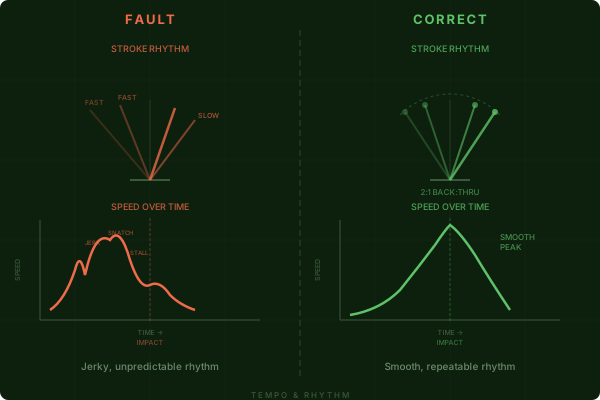
What Causes Inconsistent Tempo
01No Metronome Reference
Without an external tempo reference, every stroke starts from scratch. The golfer has to feel the right speed each time, and feel is unreliable — it changes with confidence, nerves, fatigue, and wind.
A metronome app set to 72-76 bpm for putting gives you a consistent beat. Backstroke on one beat, forward stroke on the next. Once the tempo is ingrained (about 2 weeks of daily practice), the metronome becomes internal.
02Mental Tension Over Short Putts
Short putts create anxiety, and anxiety speeds up the stroke. The golfer snatches the putter back and jabs at the ball. The tempo completely changes from the smooth stroke used on longer putts.
Building a pre-putt routine that is identical for 3-footers and 30-footers is the fix. Same routine, same tempo, same commitment. The length of the backstroke changes, not the speed.
03Inconsistent Backstroke Length
When the backstroke length is unpredictable, the forward stroke has to adjust — speeding up or slowing down to compensate. This creates a different tempo for every putt. Matching backstroke length to distance consistently gives the forward stroke a reliable launch point.
Practice distance ladders: 10 feet, 20 feet, 30 feet, controlling distance only by changing backstroke length, never stroke speed.
How to Fix Inconsistent Tempo — Step by Step
Feel — Count in Your Head
Count 'one' on the backstroke, 'two' on the forward stroke. Same count speed every time. This gives you an internal rhythm reference that travels with you to the course.
Train — Metronome Practice
Set a metronome to 76 bpm. Backstroke on one beat, forward stroke on the next. Hit 30 putts at various distances, changing backstroke length but never tempo. The metronome eliminates variation.
Load — Distance Ladder
Set tees at 10, 20, and 30 feet. Hit 5 putts to each distance. The tempo stays identical — only the backstroke length changes. This trains your body to control distance with length, not speed.
Play — Same Routine, Every Putt
On the course, use the same pre-putt routine for every putt regardless of length. Same number of practice strokes, same timing, same commitment. The routine is the tempo anchor.
Do I Have Inconsistent Tempo?
Answer these questions based on your most recent range session or video review.
Do you putt with a different speed or rhythm on short putts versus long putts?
Is your distance control on lag putts unpredictable?
Do you rush your stroke under pressure?
Have you ever practiced with a metronome?
Drills
01Metronome Putting Drill
- 1.Set a metronome app to 76 bpm.
- 2.Address the ball. Start the backstroke on one beat, start the forward stroke on the next beat.
- 3.Hit 10 putts from 5 feet, 10 from 10 feet, 10 from 20 feet.
- 4.The tempo stays the same for all distances. Only the backstroke length changes.
- 5.If you are early or late on a beat, the tempo is inconsistent — reset and try again.
A pendulum-like rhythm that is the same speed regardless of putt length. Long putts have a bigger pendulum, not a faster one.
Speeding up the metronome for short putts. The whole point is that the tempo never changes. Short putts use a shorter backstroke at the same speed.
02Distance Ladder Drill
- 1.Set tees at 10, 20, and 30 feet on a straight putt.
- 2.Hit 5 putts to 10 feet, focusing on matching your tempo to each putt.
- 3.Move to 20 feet. Same tempo — longer backstroke.
- 4.Move to 30 feet. Same tempo — even longer backstroke.
- 5.Count 'one-two' in your head for each putt. The counting speed never changes.
Distance changing from backstroke length, not from stroke speed. The rhythm is identical for all three distances.
Trying to hit 30-footers harder. Speed comes from a longer backstroke at the same tempo, not from accelerating the stroke.
03Eyes Closed Tempo Drill
- 1.Set up a putt and take your address position.
- 2.Close your eyes and make the stroke.
- 3.Without visual input, you become more aware of the stroke's rhythm.
- 4.Hit 5 putts from 5 feet, 5 from 10 feet, 5 from 15 feet — all with eyes closed.
- 5.Note whether the tempo feels the same at each distance. Adjust until it does.
Pure awareness of the stroke rhythm without visual distraction. The tempo should feel like a metronome.
Peeking. The point is to remove visual input so you can focus entirely on tempo.
04Practice Stroke Match Drill
- 1.Take one practice stroke next to the ball at the tempo you want.
- 2.Step up to the ball and replicate that exact tempo.
- 3.The practice stroke and the real stroke should be identical in speed and length.
- 4.If the real stroke feels different from the practice stroke, you changed tempo at address. Reset.
- 5.After 20 putts, you should be able to match practice and real strokes consistently.
The real stroke being a copy of the practice stroke. No change in rhythm, speed, or commitment.
Taking multiple practice strokes and picking a different one each time. Take one practice stroke, match it, and go.
Or enter your email and we will send you a formatted PDF with all 4 drills.
We will email you the PDF link. No spam, ever.
Inconsistent Tempo — Drill Card
coachharvey.ai/faults/inconsistent-tempo
1. Metronome Putting Drill
Equipment: Metronome app (76 bpm), putter · Reps: 30 putts
- Set a metronome app to 76 bpm.
- Address the ball. Start the backstroke on one beat, start the forward stroke on the next beat.
- Hit 10 putts from 5 feet, 10 from 10 feet, 10 from 20 feet.
- The tempo stays the same for all distances. Only the backstroke length changes.
- If you are early or late on a beat, the tempo is inconsistent — reset and try again.
Feel: A pendulum-like rhythm that is the same speed regardless of putt length. Long putts have a bigger pendulum, not a faster one.
Avoid: Speeding up the metronome for short putts. The whole point is that the tempo never changes. Short putts use a shorter backstroke at the same speed.
2. Distance Ladder Drill
Equipment: Putter, 5 balls, tees for markers · Reps: 15 putts (5 at each distance)
- Set tees at 10, 20, and 30 feet on a straight putt.
- Hit 5 putts to 10 feet, focusing on matching your tempo to each putt.
- Move to 20 feet. Same tempo — longer backstroke.
- Move to 30 feet. Same tempo — even longer backstroke.
- Count 'one-two' in your head for each putt. The counting speed never changes.
Feel: Distance changing from backstroke length, not from stroke speed. The rhythm is identical for all three distances.
Avoid: Trying to hit 30-footers harder. Speed comes from a longer backstroke at the same tempo, not from accelerating the stroke.
3. Eyes Closed Tempo Drill
Equipment: Putter, 3 balls · Reps: 15 putts from various distances
- Set up a putt and take your address position.
- Close your eyes and make the stroke.
- Without visual input, you become more aware of the stroke's rhythm.
- Hit 5 putts from 5 feet, 5 from 10 feet, 5 from 15 feet — all with eyes closed.
- Note whether the tempo feels the same at each distance. Adjust until it does.
Feel: Pure awareness of the stroke rhythm without visual distraction. The tempo should feel like a metronome.
Avoid: Peeking. The point is to remove visual input so you can focus entirely on tempo.
4. Practice Stroke Match Drill
Equipment: Putter · Reps: 20 putts
- Take one practice stroke next to the ball at the tempo you want.
- Step up to the ball and replicate that exact tempo.
- The practice stroke and the real stroke should be identical in speed and length.
- If the real stroke feels different from the practice stroke, you changed tempo at address. Reset.
- After 20 putts, you should be able to match practice and real strokes consistently.
Feel: The real stroke being a copy of the practice stroke. No change in rhythm, speed, or commitment.
Avoid: Taking multiple practice strokes and picking a different one each time. Take one practice stroke, match it, and go.
Common Misdiagnoses
You think it is inconsistent tempo, but it might be deceleration
Deceleration is a subset of tempo problems — it is consistently slow at the wrong time. If your tempo is consistent but you still lose distance, check whether you decelerate through impact. The metronome will not fix deceleration if the backstroke is too long.
Read about Deceleration →You think it is inconsistent tempo, but it might be grip pressure
Tight grip pressure creates tension that disrupts rhythm. If your forearms feel tense at address, try lightening the grip before working on tempo. Loose hands often restore natural rhythm without needing tempo drills.
Read about Grip Pressure →How You Know It’s Fixed
Same-distance putts produce same-speed strokes, and lag-putting distance control improves dramatically.
Frequently Asked Questions
What is the ideal putting tempo?
There is no single ideal tempo — it varies by player. What matters is consistency. Most tour players putt at a 2:1 ratio (backstroke twice as long as forward stroke in time). A metronome at 72-76 bpm works well for most golfers. The specific bpm matters less than using the same one every time.
Does tempo affect distance control?
Tempo is the single biggest factor in distance control. When tempo is consistent, distance is controlled by backstroke length alone — a simple, repeatable variable. When tempo varies, distance becomes a function of two variables (length and speed), which is exponentially harder to control.
How long does it take to build consistent tempo?
About 2 weeks of daily metronome practice (10 minutes per day). After that, most golfers can maintain the tempo without the metronome. Monthly check-ins with the metronome prevent drift.
Does tempo matter in the full swing?
Yes. Tour players maintain a 3:1 tempo ratio in the full swing — the backswing takes three times as long as the downswing. Amateurs often have a 1:1 ratio (rushing the backswing). Slowing the backswing to a 3:1 ratio improves sequence, contact, and consistency.
Practice This Fault
Structured plans and routines that specifically target inconsistent tempo.
Related Faults
These flaws often appear alongside inconsistent tempo and may share a root cause.
Find out if inconsistent tempo is affecting your game
Upload a swing. Coach Harvey reads every frame, calls the fault driving everything else, and remembers the session for the next answer.
Analyze a swing →