Head Movement: How to Fix Head Movement in Your Golf Swing
Impact·Reviewed April 20, 2026·By Coach Harvey - AI Golf Coach
Head movement is the most visible swing fault on camera
Excessive lateral or vertical head movement during the swing disrupts the swing center and leads to inconsistent contact. To fix it: keep your head steady with minimal lateral or vertical movement throughout the swing. Eyes stay fixed on the ball.
Excessive head movement — lateral, vertical, or both — during the golf swing shifts your swing center and makes consistent contact nearly impossible. When your head moves, the bottom of your swing arc moves with it. The result is fat shots, thin shots, and topped balls with no consistent pattern.
A small amount of head movement is natural and even desirable. Tour players allow their head to drift slightly away from the target on the backswing and rotate through on the follow-through. The problem is when the head moves significantly before impact — particularly lifting up to peek at the ball flight or lunging toward the target.
The fix is simpler than most golfers expect. Head movement is almost always a symptom of something else: poor core stability, over-aggressive weight shift, or anxiety about the result. Address the root cause and the head stays still on its own.
Coach Harvey identifies head movement automatically from your swing video and gives you one focused fix.
Analyze a swing →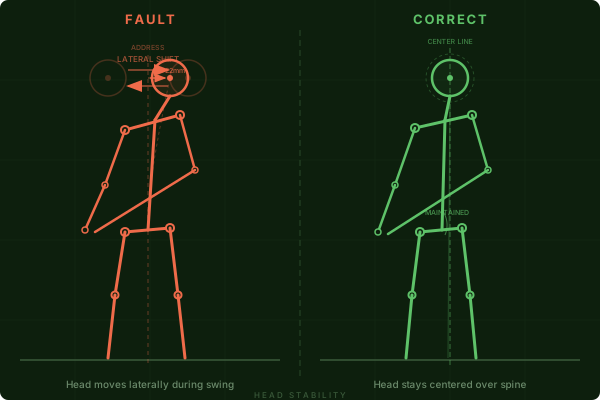
What Causes Head Movement
01Lunging Into the Ball
The most common cause of head movement is trying to hit the ball harder by driving the upper body toward the target on the downswing. This shifts the swing center forward, causing the club to bottom out before the ball — fat shots — or catch the ball on the upswing — thin shots.
The impulse to lunge comes from the arms, not the lower body. A properly sequenced downswing starts from the ground up. When golfers try to add power with the upper body, the head goes with it.
02Peeking at Ball Flight
Lifting the head to watch the ball before impact is one of the oldest faults in golf. It is driven by curiosity and anxiety — you want to see where the ball is going before you have finished hitting it.
When you lift your head early, your spine angle changes, your shoulders tilt, and the club path shifts upward. The ball gets topped or thinned. Ironically, the golfers who peek the most are the ones who most need to keep their eyes down because their contact is already inconsistent.
03Weak Core Stability
Your head is the top of a kinetic chain. If the core — the link between lower body and upper body — is weak or disengaged, rotational forces during the swing will push the head around. A strong core acts as a stabilizer, keeping the spine angle and head position steady.
Golfers who sit at a desk all day often have inhibited core muscles. Simple plank holds, dead bugs, and bird dogs done 3 times a week can dramatically improve head stability within 2-3 weeks.
04Excessive Lateral Weight Shift
Some golfers confuse weight transfer with lateral sliding. When the entire body slides laterally — rather than rotating — the head travels with it. The head should stay roughly centered while the weight moves underneath it.
Film yourself face-on and draw a vertical line from the top of your head at address. If your head moves outside that line during the backswing or downswing, you are sliding rather than turning.
How to Fix Head Movement — Step by Step
Feel — Hat Brim Drill
Address the ball with a cap on. Pick a spot on the ground in front of you that the brim points at. Make slow swings keeping the brim pointed at that spot through impact. This builds the sensation of a quiet head without thinking about mechanics.
Train — Alignment Stick Frame
Have a friend hold an alignment stick horizontally just touching the top of your head at address. Make half swings without bumping the stick. Start with wedges and work up to longer clubs as the pattern becomes natural.
Load — Impact Bag Focus
Hit an impact bag or heavy cushion with a mid-iron. Focus on keeping your eyes on the point of contact through the strike. The resistance of the bag slows everything down and makes head movement obvious.
Play — Listen for the Ball
On the course, make one commitment: listen for the ball landing before you look up. This single thought keeps your head down through impact and eliminates the peek. Trust your swing and let your ears tell you where the ball went.
Do I Have Head Movement?
Answer these questions based on your most recent range session or video review.
When you film your swing face-on, does the top of your head move more than 2 inches from address to impact?
Do you frequently top the ball or hit thin shots?
Do you find yourself looking up to see the ball before you have finished your swing?
Do your playing partners tell you to keep your head down?
Is your contact inconsistent — fat one shot, thin the next — with no clear pattern?
Drills
01Hat Brim Drill
- 1.Wear a hat with a brim and take your normal address position.
- 2.Notice where the brim points — pick a spot on the ground as your reference.
- 3.Make a slow backswing. The brim should stay pointed at or very near that spot.
- 4.Swing through to impact. The brim should not lift or shift significantly until after the ball is gone.
- 5.On the follow-through, the brim will naturally move — that is fine. The key window is address through impact.
- 6.Repeat 20 times at slow speed, then gradually increase to three-quarter swings.
Your eyes staying locked on the ball position. The swing happens around a fixed center point — your head.
Tensing your neck trying to hold your head still. The head should be quiet, not rigid. Let it float in place naturally.
02Alignment Stick Frame
- 1.Have a partner hold an alignment stick horizontally so it just touches the top of your head at address.
- 2.Alternatively, rig a stick between two alignment rods stuck in the ground at head height.
- 3.Make half swings with a 7-iron. Your head should not bump the stick upward or slide away from it.
- 4.If you bump it going back, you are swaying. If you bump it going through, you are lunging.
- 5.Start at 50% speed and increase only when you can make 10 consecutive swings without contact.
Light pressure on the top of your head from the stick. Your body rotating underneath a fixed point.
Ducking your head down to avoid the stick. Maintain your normal posture — the goal is to keep your height constant, not to crouch.
03Face-On Video Check
- 1.Set your phone on a tripod at waist height, face-on (looking directly at your chest).
- 2.Hit 5 balls with a mid-iron at normal speed.
- 3.In playback, pause at address and draw a mental line from the top of your head straight down.
- 4.Scrub through the swing frame by frame. Your head should stay within a 2-inch box from address through impact.
- 5.Note which direction the head moves: up (peeking), forward (lunging), or laterally (swaying).
- 6.This tells you which cause to address with the drills above.
Nothing during the drill — this is a diagnostic tool. The video reveals what you cannot feel.
Trying to keep your head still during the filmed swings. Swing normally so the video shows your actual pattern.
04Eyes on the Tee Drill
- 1.Tee up a ball on a low tee with a mid-iron.
- 2.After you strike the ball, keep your eyes on the tee. Do not look up.
- 3.Hold your finish for 2 seconds with your eyes still on the tee.
- 4.Only after the 2-second hold, look up to find your ball.
- 5.This trains the habit of staying down through impact and breaks the peek reflex.
A sense of patience through impact. The ball is already gone — there is no benefit to looking up early.
Restricting your follow-through. Your body should still rotate fully — only your eyes stay down. Do not stop your swing to hold your head still.
Or enter your email and we will send you a formatted PDF with all 4 drills.
We will email you the PDF link. No spam, ever.
Head Movement — Drill Card
coachharvey.ai/faults/head-movement
1. Hat Brim Drill
Equipment: Baseball cap or golf hat · Reps: 20 slow-motion swings
- Wear a hat with a brim and take your normal address position.
- Notice where the brim points — pick a spot on the ground as your reference.
- Make a slow backswing. The brim should stay pointed at or very near that spot.
- Swing through to impact. The brim should not lift or shift significantly until after the ball is gone.
- On the follow-through, the brim will naturally move — that is fine. The key window is address through impact.
- Repeat 20 times at slow speed, then gradually increase to three-quarter swings.
Feel: Your eyes staying locked on the ball position. The swing happens around a fixed center point — your head.
Avoid: Tensing your neck trying to hold your head still. The head should be quiet, not rigid. Let it float in place naturally.
2. Alignment Stick Frame
Equipment: Alignment stick and a partner (or a tripod) · Reps: 3 sets of 10 half-swings
- Have a partner hold an alignment stick horizontally so it just touches the top of your head at address.
- Alternatively, rig a stick between two alignment rods stuck in the ground at head height.
- Make half swings with a 7-iron. Your head should not bump the stick upward or slide away from it.
- If you bump it going back, you are swaying. If you bump it going through, you are lunging.
- Start at 50% speed and increase only when you can make 10 consecutive swings without contact.
Feel: Light pressure on the top of your head from the stick. Your body rotating underneath a fixed point.
Avoid: Ducking your head down to avoid the stick. Maintain your normal posture — the goal is to keep your height constant, not to crouch.
3. Face-On Video Check
Equipment: Phone on a tripod, face-on angle · Reps: Film 5 swings, review each one
- Set your phone on a tripod at waist height, face-on (looking directly at your chest).
- Hit 5 balls with a mid-iron at normal speed.
- In playback, pause at address and draw a mental line from the top of your head straight down.
- Scrub through the swing frame by frame. Your head should stay within a 2-inch box from address through impact.
- Note which direction the head moves: up (peeking), forward (lunging), or laterally (swaying).
- This tells you which cause to address with the drills above.
Feel: Nothing during the drill — this is a diagnostic tool. The video reveals what you cannot feel.
Avoid: Trying to keep your head still during the filmed swings. Swing normally so the video shows your actual pattern.
4. Eyes on the Tee Drill
Equipment: Tees and a mid-iron · Reps: 20 balls
- Tee up a ball on a low tee with a mid-iron.
- After you strike the ball, keep your eyes on the tee. Do not look up.
- Hold your finish for 2 seconds with your eyes still on the tee.
- Only after the 2-second hold, look up to find your ball.
- This trains the habit of staying down through impact and breaks the peek reflex.
Feel: A sense of patience through impact. The ball is already gone — there is no benefit to looking up early.
Avoid: Restricting your follow-through. Your body should still rotate fully — only your eyes stay down. Do not stop your swing to hold your head still.
Common Misdiagnoses
You think it is head movement, but it might be sway
Head movement and sway often appear together, but sway is the cause and head movement is the effect. If your hips slide laterally on the backswing, your head will follow. Fix the sway first — film down the line and watch whether your trail hip slides or rotates. If the hip slides, address sway and the head movement may resolve on its own.
Read about Sway →You think it is head movement, but it might be loss of posture
If your head moves upward (not laterally), you may be losing your spine angle rather than moving your head independently. Loss of posture means your entire spine straightens through the swing. Check whether your belt buckle moves toward the ball — if so, it is loss of posture driving the head up, not the other way around.
Read about Loss of Posture →How You Know It’s Fixed
On video, your head finishes within an inch of where it started until well after the ball is gone.
Frequently Asked Questions
Should your head stay perfectly still in the golf swing?
No. A perfectly rigid head creates tension that hurts your swing. Tour players allow 1-2 inches of drift away from the target on the backswing and natural rotation through the follow-through. The key is that the head stays quiet from the start of the downswing through impact — that is the critical window for consistent contact.
Does keeping your head down cause other swing problems?
It can if taken too literally. Actively holding your head down restricts your shoulder turn and can cause a reverse pivot. The better cue is to keep your eyes on the ball position — not to press your chin into your chest. Your head should be quiet and relaxed, not locked in place.
Why do I top the ball when I try to keep my head still?
You are probably tensing your neck and shoulders, which restricts your turn and changes your swing arc. Instead of trying to hold your head still, focus on maintaining your spine angle. The head stays quiet as a byproduct of good posture, not as an independent action.
Can head movement cause a slice?
Indirectly, yes. When the head moves toward the target on the downswing (lunging), it tends to steepen the swing path and open the clubface at impact — both of which promote a slice. Fix the lunge and the slice often improves.
How do I check for head movement without a coach?
Film yourself face-on with your phone on a tripod. In slow-motion playback, pause at address and note where the top of your head is. Scrub through to impact — if your head has moved more than a couple of inches in any direction, you have excessive movement. Coach Harvey can also detect this automatically from video.
Related Faults
These flaws often appear alongside head movement and may share a root cause.
Find out if head movement is affecting your game
Upload a swing. Coach Harvey reads every frame, calls the fault driving everything else, and remembers the session for the next answer.
Analyze a swing →