Grip Pressure: How to Fix Grip Pressure in Your Golf Swing
Setup·Reviewed April 20, 2026·By Coach Harvey - AI Golf Coach
Gripping the club too tightly creates tension in the hands, wrists, and forearms, killing feel and preventing a smooth, free-flowing stroke. To fix it: hold the club with light pressure — about a 3 or 4 on a scale of 10. Feel the weight of the clubhead throughout the stroke.
Grip pressure refers to how tightly you hold the club. Most amateurs grip far too hard — a 7 or 8 on a scale of 10 when they should be at a 3 or 4. Excessive grip pressure creates tension in the hands, wrists, and forearms, which kills feel, restricts wrist hinge, and prevents a free-flowing release through impact.
The effects cascade through the entire swing. Tight hands prevent proper wrist hinge on the backswing, which reduces lag. Tense forearms prevent the club from releasing naturally through impact, which leaves the face open. The grip pressure you choose at address determines the upper limit of how well you can swing.
The fix is learning that light pressure does not mean losing control of the club. You can hold the club securely at a 3 out of 10 — it will not fly out of your hands. The clubhead actually feels heavier with light pressure, which improves awareness and tempo.
Coach Harvey identifies grip pressure automatically from your swing video and gives you one focused fix.
Analyze a swing →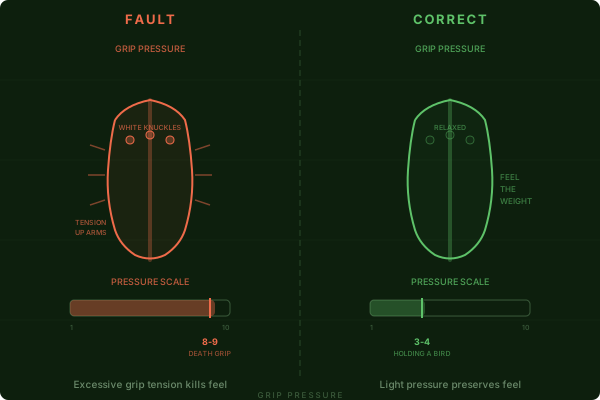
What Causes Grip Pressure
01Fear of Losing Control
The most common cause is the fear that the club will fly out of your hands. This fear is unfounded — the centrifugal force of the swing pulls the club into your hands, not out of them. You could hold a club at a 2 out of 10 at address and the swing force would tighten the grip automatically.
Test this: make a slow practice swing at 50% speed with the lightest grip you can manage. The club stays secure. Now increase to full speed — it still stays secure because the physics of the swing keep it in place.
02Tension From the Previous Shot
Grip pressure increases after a bad shot. The golfer grips tighter as a subconscious response to frustration or the desire to control the next shot better. But tighter grip produces worse results, which creates more frustration and even tighter grip — a vicious cycle.
Building a grip pressure check into your pre-shot routine breaks this cycle. Before every shot, consciously set the pressure to a 3 or 4.
03Trying to Hit Harder
When golfers want to hit the ball farther, they grip harder. This feels powerful but produces the opposite result: the tense muscles restrict the swing speed and prevent proper release. A loose grip with relaxed forearms actually produces more clubhead speed than a death grip.
Watch tour players on TV — their arms look relaxed through impact. That relaxation is what allows the club to whip through the hitting zone at maximum speed.
How to Fix Grip Pressure — Step by Step
Feel — Clubhead Awareness Drill
Hold the club with your lightest possible grip and make slow practice swings. Feel the weight of the clubhead throughout the swing. If you cannot feel the clubhead, the grip is too tight.
Train — 3-Out-of-10 Check
Before every shot in practice, rate your grip pressure. If it is above a 4, lighten it. Make this check part of your pre-shot routine until it becomes automatic.
Load — Relaxed Forearm Swings
Hit 20 balls with a conscious focus on keeping the forearms relaxed. The arms should feel soft and heavy, not tense and rigid. Note the increase in clubhead speed on the launch monitor or by ball flight.
Play — Waggle to Reset
On the course, use a gentle waggle of the club before every shot. The waggle resets grip pressure — you cannot waggle with a death grip. If the waggle feels stiff, lighten the grip and waggle again.
Do I Have Grip Pressure?
Answer these questions based on your most recent range session or video review.
Rate your grip pressure at address on a scale of 1-10. Is it above 5?
Do your forearms feel tense during the swing?
Can you feel the weight of the clubhead during your swing?
Does your grip pressure increase after a bad shot?
Drills
01Clubhead Awareness Drill
- 1.Hold the club as lightly as possible — like holding a bird.
- 2.Make slow practice swings at about 30% speed.
- 3.Focus on feeling the weight of the clubhead throughout the entire swing.
- 4.At the top of the backswing, you should feel the clubhead pulling on your hands.
- 5.Through impact, the clubhead should feel heavy and fast.
- 6.If you cannot feel the clubhead at any point, your grip is still too tight.
The weight of the clubhead pulling on your hands. The club should feel like it has momentum of its own.
Speeding up the swing before you can feel the clubhead. Stay at slow speed until the awareness is clear, then gradually increase.
02Squeeze and Release Drill
- 1.Grip the club as tightly as you can — a 10 out of 10.
- 2.Hold for 5 seconds and notice the tension in your hands, forearms, and shoulders.
- 3.Release to a 3 out of 10. Notice the contrast — the relaxation, the awareness of the clubhead.
- 4.Make a practice swing at the 3 level.
- 5.This contrast drill recalibrates your sense of what light pressure feels like.
A dramatic difference between the 10 and the 3. The 3 should feel dangerously light — that means it is about right.
Settling at a 5 or 6, thinking it is a 3. Most golfers' internal scale is miscalibrated. True light pressure feels like the club might slip — it will not.
03Waggle Reset Drill
- 1.At address, waggle the club gently 2-3 times.
- 2.The waggle should feel loose and free. If it feels stiff, your grip is too tight.
- 3.After the waggle, check your grip pressure. It should be a 3 or 4.
- 4.If it is higher, waggle again until it drops to the correct level.
- 5.Build the waggle into your pre-shot routine as a grip pressure reset.
A free, relaxed hand-and-arm connection to the club. The waggle is easy and fluid.
A mechanical, forced waggle. The waggle should be natural — like shaking water off your hands. If it is rigid, the grip is too tight.
04Hit Balls With Loose Grip
- 1.Set your grip pressure to a 3 out of 10 before each shot.
- 2.Hit 20 balls with a 7-iron at normal speed.
- 3.Note the ball flight and distance compared to your normal (tighter) grip.
- 4.Most golfers are surprised: the ball goes as far or farther with light grip pressure.
- 5.The lighter grip allows fuller wrist hinge, better release, and more clubhead speed.
The club whipping through impact. The release is faster and freer than with a tight grip.
Tightening the grip at impact. The tendency is to grip harder as the club approaches the ball. Consciously keep the pressure at 3 through the entire swing.
Or enter your email and we will send you a formatted PDF with all 4 drills.
We will email you the PDF link. No spam, ever.
Grip Pressure — Drill Card
coachharvey.ai/faults/grip-pressure
1. Clubhead Awareness Drill
Equipment: Any club · Reps: 20 slow practice swings
- Hold the club as lightly as possible — like holding a bird.
- Make slow practice swings at about 30% speed.
- Focus on feeling the weight of the clubhead throughout the entire swing.
- At the top of the backswing, you should feel the clubhead pulling on your hands.
- Through impact, the clubhead should feel heavy and fast.
- If you cannot feel the clubhead at any point, your grip is still too tight.
Feel: The weight of the clubhead pulling on your hands. The club should feel like it has momentum of its own.
Avoid: Speeding up the swing before you can feel the clubhead. Stay at slow speed until the awareness is clear, then gradually increase.
2. Squeeze and Release Drill
Equipment: Any club · Reps: 10 reps before each practice session
- Grip the club as tightly as you can — a 10 out of 10.
- Hold for 5 seconds and notice the tension in your hands, forearms, and shoulders.
- Release to a 3 out of 10. Notice the contrast — the relaxation, the awareness of the clubhead.
- Make a practice swing at the 3 level.
- This contrast drill recalibrates your sense of what light pressure feels like.
Feel: A dramatic difference between the 10 and the 3. The 3 should feel dangerously light — that means it is about right.
Avoid: Settling at a 5 or 6, thinking it is a 3. Most golfers' internal scale is miscalibrated. True light pressure feels like the club might slip — it will not.
3. Waggle Reset Drill
Equipment: Any club · Reps: Before every shot in practice
- At address, waggle the club gently 2-3 times.
- The waggle should feel loose and free. If it feels stiff, your grip is too tight.
- After the waggle, check your grip pressure. It should be a 3 or 4.
- If it is higher, waggle again until it drops to the correct level.
- Build the waggle into your pre-shot routine as a grip pressure reset.
Feel: A free, relaxed hand-and-arm connection to the club. The waggle is easy and fluid.
Avoid: A mechanical, forced waggle. The waggle should be natural — like shaking water off your hands. If it is rigid, the grip is too tight.
4. Hit Balls With Loose Grip
Equipment: 7-iron, range balls · Reps: 20 balls
- Set your grip pressure to a 3 out of 10 before each shot.
- Hit 20 balls with a 7-iron at normal speed.
- Note the ball flight and distance compared to your normal (tighter) grip.
- Most golfers are surprised: the ball goes as far or farther with light grip pressure.
- The lighter grip allows fuller wrist hinge, better release, and more clubhead speed.
Feel: The club whipping through impact. The release is faster and freer than with a tight grip.
Avoid: Tightening the grip at impact. The tendency is to grip harder as the club approaches the ball. Consciously keep the pressure at 3 through the entire swing.
Common Misdiagnoses
You think it is grip pressure, but it might be casting
Tight grip can prevent proper wrist hinge, which looks like casting on video. Lighten the grip first and see if lag improves. If it does, grip was the root cause. If you still cast with light grip, the sequencing issue is independent.
Read about Casting / Early Release →You think it is grip pressure, but it might be inconsistent tempo
Tension from tight grip can cause jerky tempo. If your tempo smooths out when you lighten your grip, grip pressure was causing the tempo issue. If tempo remains inconsistent with light grip, work on tempo directly.
Read about Inconsistent Tempo →How You Know It’s Fixed
Hands and forearms feel relaxed at address, the clubhead feels heavy, and your tempo smooths out automatically.
Frequently Asked Questions
How tightly should you hold a golf club?
About a 3 or 4 on a scale of 1 to 10, where 10 is the tightest you can squeeze. Most pros sit at a 3-4. This feels dangerously light to most amateurs, but the centrifugal force of the swing actually tightens the grip automatically during the downswing.
Can grip pressure affect distance?
Yes. Tight grip restricts wrist hinge and prevents full release through impact, both of which reduce clubhead speed. Golfers who lighten their grip often gain 5-10 yards immediately because the club releases more freely.
Does grip pressure cause a slice?
It can. Tight forearms prevent the club from releasing through impact, leaving the face open. If the face does not close properly, the ball starts right or curves right. Lightening the grip allows the natural release that squares the face.
Should grip pressure be the same for all clubs?
Generally yes — a 3-4 for all clubs. Some golfers lighten slightly for putting (2-3) and wedges. The key is consistency. If grip pressure varies from club to club, feel and distance control vary with it.
Practice This Fault
Structured plans and routines that specifically target grip pressure.
Related Faults
These flaws often appear alongside grip pressure and may share a root cause.
Find out if grip pressure is affecting your game
Upload a swing. Coach Harvey reads every frame, calls the fault driving everything else, and remembers the session for the next answer.
Analyze a swing →