Flat Shoulder Turn: How to Fix Flat Shoulder Turn in Your Golf Swing
Backswing·Reviewed April 20, 2026·By Coach Harvey - AI Golf Coach
A flat shoulder turn limits backswing depth and power
Shoulders rotate too level instead of tilting, leading to a shallow swing plane and inconsistent contact. To fix it: tilt the lead shoulder down toward the ball on the backswing. Shoulders work perpendicular to spine angle.
A flat shoulder turn means the shoulders rotate too level — parallel to the ground — instead of tilting perpendicular to the spine angle. In a correct backswing, the lead shoulder works down toward the ball while the trail shoulder works up and behind. When the turn is flat, neither happens.
The result is a shallow swing plane, a restricted backswing, and a loss of power. Golfers with a flat shoulder turn often struggle to get the club to parallel at the top, feel like they cannot make a full turn, and hit weak shots that lack compression.
The fix starts at address. If there is no spine tilt at setup, there is no axis for the shoulders to tilt around. Establishing proper posture at address — with the spine tilted away from the target slightly — gives the shoulders a track to follow.
Coach Harvey identifies flat shoulder turn automatically from your swing video and gives you one focused fix.
Analyze a swing →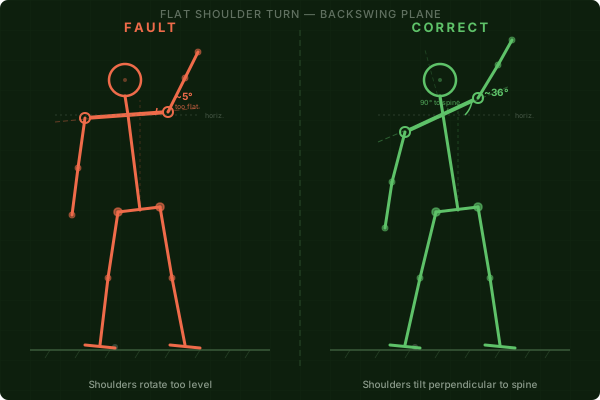
What Causes Flat Shoulder Turn
01Lack of Spine Tilt at Address
The shoulders can only tilt if the spine is angled. When a golfer stands too upright at address with a vertical spine, the only option is to turn the shoulders level. The spine needs a slight lateral tilt — trail shoulder lower than lead — to create the axis for proper shoulder tilt.
This tilt happens naturally when you grip the club with the trail hand below the lead hand. If it does not, check that you are not standing too tall or reaching for the ball.
02Sweeping Takeaway
Golfers who try to take the club back low and wide often develop a flat shoulder turn. The cue to keep the club low forces the shoulders to rotate level rather than tilt. A proper takeaway involves the lead shoulder working down as the arms move back.
The fix is to feel the lead shoulder pointing at the ball at the top of the backswing. If the lead shoulder points at the horizon, the turn is too flat.
03Confusing Level Rotation With Golf Rotation
Many golfers come from sports where level rotation is correct — baseball, tennis, hockey. In golf, the spine is tilted forward at address, so rotation must happen around that tilted axis. What feels like tilting in golf would feel like rotating in those other sports.
The adjustment is mental: golf rotation is not like turning your head to look behind you. It is more like tilting your lead shoulder toward the ground while the trail shoulder goes up.
How to Fix Flat Shoulder Turn — Step by Step
Feel — Club Across Shoulders
Hold a club across your shoulders at address. Make a backswing turn and check where the shaft points. It should point at the ball or just in front of it. If it points at the horizon, your turn is too flat.
Train — Lead Shoulder to Chin
Make backswings with the goal of touching your lead shoulder to your chin. This exaggerates the tilt and trains the correct movement pattern. Start without a ball and add one after 20 reps.
Load — Mirror Checkpoints
Practice in front of a mirror. At the top of the backswing, your lead shoulder should be lower than your trail shoulder, and the club shaft should be on plane. Use the mirror for 10 reps, then hit 10 balls keeping the same feel.
Play — One Cue: Shoulder Down
On the course, think lead shoulder down on the backswing. That is your only thought. The tilt creates depth, and depth creates power.
Do I Have Flat Shoulder Turn?
Answer these questions based on your most recent range session or video review.
When you hold a club across your shoulders and turn back, does the shaft point at the horizon instead of at the ball?
Do you feel like you cannot make a full backswing turn?
Is your typical ball flight weak and lacks compression?
At the top of your backswing, are your shoulders roughly level with each other?
Drills
01Club Across Shoulders Drill
- 1.Hold a club across your shoulders with both arms crossed over your chest.
- 2.Take your golf posture with proper hip hinge.
- 3.Make a slow backswing turn.
- 4.At the top, check where the shaft end (near your lead shoulder) points.
- 5.It should point at the ball or just in front of it on the ground.
- 6.If it points at the horizon or above, your turn is too flat. Tilt the lead shoulder down more.
Your lead shoulder working down toward the ball while the trail shoulder works up and behind you.
Dipping your whole body down. Only the shoulders tilt — your hip height stays constant.
02Wall Tilt Drill
- 1.Stand in golf posture with your back about 6 inches from a wall.
- 2.Cross your arms and make a backswing turn.
- 3.Your trail shoulder should move back and slightly up toward the wall.
- 4.Your lead shoulder should move down and away from the wall.
- 5.If both shoulders stay at the same height, your turn is flat.
- 6.The wall gives you a reference point to feel the vertical separation between shoulders.
Vertical separation between the shoulders at the top of the backswing. The trail shoulder is higher than the lead.
Leaning sideways to create the tilt. The tilt comes from rotation around your spine angle, not from lateral bending.
03Lead Shoulder to Ball Drill
- 1.Take your normal address with a 7-iron.
- 2.On the backswing, focus on pointing your lead shoulder at the ball.
- 3.At the top, the lead shoulder should be clearly lower than the trail shoulder.
- 4.Swing through and hit the ball. Note the improved compression.
- 5.If the ball flight is more penetrating, the tilt is working.
Depth in the backswing. The turn feels complete and powerful, not short and restricted.
Over-tilting to the point where you lose balance. The tilt should match your spine angle — about 30-40 degrees from vertical.
04Mirror Feedback Drill
- 1.Stand facing a mirror in your golf posture (face-on view).
- 2.Make a slow backswing and freeze at the top.
- 3.Check the mirror: the lead shoulder should be lower than the trail shoulder.
- 4.The club (if you are holding one) should be roughly on plane — pointing at the target line.
- 5.Make 10 reps, adjusting tilt until the mirror shows the correct position.
A wider, deeper backswing than you are used to. Flat-turn golfers often feel like they are over-tilting when they first get it right.
Only practicing in front of the mirror. Use the mirror for 10 reps, then move away and hit 10 balls trying to replicate the feel. You need to internalize the position without visual feedback.
Or enter your email and we will send you a formatted PDF with all 4 drills.
We will email you the PDF link. No spam, ever.
Flat Shoulder Turn — Drill Card
coachharvey.ai/faults/flat-shoulder-turn
1. Club Across Shoulders Drill
Equipment: Any club · Reps: 20 slow backswings
- Hold a club across your shoulders with both arms crossed over your chest.
- Take your golf posture with proper hip hinge.
- Make a slow backswing turn.
- At the top, check where the shaft end (near your lead shoulder) points.
- It should point at the ball or just in front of it on the ground.
- If it points at the horizon or above, your turn is too flat. Tilt the lead shoulder down more.
Feel: Your lead shoulder working down toward the ball while the trail shoulder works up and behind you.
Avoid: Dipping your whole body down. Only the shoulders tilt — your hip height stays constant.
2. Wall Tilt Drill
Equipment: Wall or door frame · Reps: 3 sets of 15 reps
- Stand in golf posture with your back about 6 inches from a wall.
- Cross your arms and make a backswing turn.
- Your trail shoulder should move back and slightly up toward the wall.
- Your lead shoulder should move down and away from the wall.
- If both shoulders stay at the same height, your turn is flat.
- The wall gives you a reference point to feel the vertical separation between shoulders.
Feel: Vertical separation between the shoulders at the top of the backswing. The trail shoulder is higher than the lead.
Avoid: Leaning sideways to create the tilt. The tilt comes from rotation around your spine angle, not from lateral bending.
3. Lead Shoulder to Ball Drill
Equipment: Any mid-iron · Reps: 20 balls at three-quarter speed
- Take your normal address with a 7-iron.
- On the backswing, focus on pointing your lead shoulder at the ball.
- At the top, the lead shoulder should be clearly lower than the trail shoulder.
- Swing through and hit the ball. Note the improved compression.
- If the ball flight is more penetrating, the tilt is working.
Feel: Depth in the backswing. The turn feels complete and powerful, not short and restricted.
Avoid: Over-tilting to the point where you lose balance. The tilt should match your spine angle — about 30-40 degrees from vertical.
4. Mirror Feedback Drill
Equipment: Full-length mirror or glass door · Reps: 10 slow-motion backswings
- Stand facing a mirror in your golf posture (face-on view).
- Make a slow backswing and freeze at the top.
- Check the mirror: the lead shoulder should be lower than the trail shoulder.
- The club (if you are holding one) should be roughly on plane — pointing at the target line.
- Make 10 reps, adjusting tilt until the mirror shows the correct position.
Feel: A wider, deeper backswing than you are used to. Flat-turn golfers often feel like they are over-tilting when they first get it right.
Avoid: Only practicing in front of the mirror. Use the mirror for 10 reps, then move away and hit 10 balls trying to replicate the feel. You need to internalize the position without visual feedback.
Common Misdiagnoses
You think it is a flat shoulder turn, but it might be a swing plane issue
A flat shoulder turn and a flat swing plane often coexist, but the shoulder turn is the cause and the plane is the effect. Fix the shoulder tilt first — if the club gets on plane after that, the plane was never the independent problem.
Read about Swing Plane →You think it is a flat shoulder turn, but it might be sway
Sway and flat shoulder turn can feel similar because both restrict the backswing. If your hips slide laterally, you are swaying. If your hips stay stable but your shoulders turn level, it is a flat shoulder turn. Film face-on and check the hips first.
Read about Sway →How You Know It’s Fixed
Lead shoulder tilts down toward the ball at the top of the backswing, and the swing matches the angle of the shaft at address.
Frequently Asked Questions
What does a flat shoulder turn look like?
A flat shoulder turn looks like the shoulders rotating level to the ground rather than tilting. At the top of the backswing, both shoulders are at roughly the same height. In a correct turn, the lead shoulder is significantly lower than the trail shoulder, and the shaft points at the ball.
Does shoulder tilt create more power?
Yes. Proper shoulder tilt creates a deeper backswing coil and puts the club on a better plane. This translates to more stored energy and a more efficient downswing path. Many golfers see meaningful distance gains once the shoulder tilt is corrected, especially with longer clubs.
Can a flat shoulder turn cause topped shots?
Yes. A flat turn tends to produce a shallow, sweeping swing that catches the ball thin or tops it entirely. The club never gets deep enough to compress the ball against the ground.
How much should the shoulders tilt in the backswing?
The shoulders should tilt perpendicular to your spine angle. For most golfers, this means the lead shoulder is about 30-40 degrees lower than the trail shoulder at the top of the backswing. The exact amount depends on your setup posture.
Practice This Fault
Structured plans and routines that specifically target flat shoulder turn.
Related Faults
These flaws often appear alongside flat shoulder turn and may share a root cause.
Find out if flat shoulder turn is affecting your game
Upload a swing. Coach Harvey reads every frame, calls the fault driving everything else, and remembers the session for the next answer.
Analyze a swing →