Early Extension: How to Fix Early Extension in Your Golf Swing
Downswing·Reviewed April 20, 2026·By Coach Harvey - AI Golf Coach
67% of amateur golfers have early extension (TPI)
Hips thrust toward the ball during the downswing instead of rotating, causing thin and fat shots. To fix it: maintain your spine angle through impact. Hips rotate rather than thrust forward.
Early extension is the number-one swing fault among amateur golfers. It happens when your hips thrust toward the ball during the downswing instead of rotating behind you. The result: your body runs out of room, your arms have nowhere to go, and you compensate with your hands — producing thin shots, fat shots, blocks, and hooks with no predictable pattern.
If you have ever felt like you are "standing up" through the ball, or your lower back aches after a range session, early extension is the most likely culprit. The Titleist Performance Institute (TPI) found that roughly 67% of amateurs exhibit this fault, making it more common than slicing.
The good news: early extension is fixable. It is a movement pattern, not a physical limitation for most golfers. The drills below attack the root causes — hip mobility, setup posture, and sequencing — so the fix sticks on the course, not just on the range.
Coach Harvey identifies early extension automatically from your swing video and gives you one focused fix.
Analyze a swing →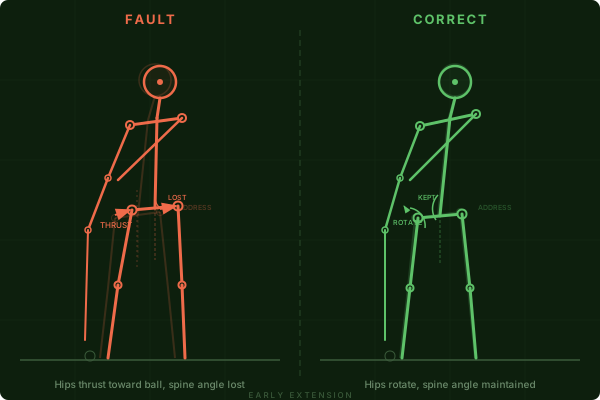
What Causes Early Extension
01Limited Hip Internal Rotation
Your hips need roughly 45 degrees of internal rotation on each side to clear properly in the downswing. When that range of motion is restricted — from sitting at a desk all day, tight hip flexors, or lack of mobility work — your body finds the path of least resistance: pushing the hips forward instead of rotating them.
A simple seated rotation test can tell you if this is your primary cause. Sit on the edge of a chair with your feet flat, then rotate each knee inward. If one side barely moves, that is the side limiting your turn.
02Poor Setup Posture
Standing too tall at address — not enough hip hinge, knees too straight, weight on the heels — makes it physically difficult to maintain your spine angle through the swing. Your body has to move somewhere, and forward is the easiest direction.
Check your setup in a mirror: you should see a clear bend from the hips (not the waist), knees slightly flexed, and weight balanced between the balls and middle of your feet. If your arms are reaching for the ball, you are too far away and will compensate by extending toward it.
03Sequencing — Upper Body Fires First
In a properly sequenced downswing, the lower body leads: hips rotate first, then the torso, then the arms, then the club. When the upper body fires before the lower body — often from trying to hit the ball hard — the hips stall and get pushed forward by the torso.
This is why early extension often gets worse when you swing harder. The harder you try, the more your upper body takes over, and the further your hips push toward the ball. The fix is counterintuitive: slow down the arms and let the lower body lead.
04Weak Glutes and Core
Rotating the hips under load — which is what the downswing demands — requires glute and core strength. When those muscles are weak or inactive, your body compensates by extending the hips forward (a stronger, more familiar movement pattern for most people) instead of rotating them.
This is especially common in golfers who sit for long hours. The glutes become inhibited, the hip flexors shorten, and the body defaults to extension. A few weeks of targeted activation work (glute bridges, clamshells, planks) can make the rotation pattern feel natural again.
How to Fix Early Extension — Step by Step
Feel — Wall Drill
Stand with your tailbone touching a wall at address posture. Make slow practice swings keeping your tailbone on the wall through impact. This teaches your body what proper hip rotation feels like versus hip thrust. Do 20 reps daily for two weeks before adding a club.
Train — Chair Drill
Set a chair or stool behind your trail hip at address. During the downswing, your trail hip should rotate around the chair, not push it forward. Start with half swings and gradually work up to full speed. The chair provides instant feedback.
Load — Band Drill
Place a mini resistance band around your knees. The band forces your knees to work outward, which activates the glutes and makes hip rotation the natural movement pattern. Hit balls at 70% speed with the band on until rotation feels automatic.
Play — On-Course Thought
On the course, keep one simple thought: clear the left hip, do not push it. Before each swing, make one slow practice turn with your hips rotating behind you. That is your only swing thought for the round. Do not try to fix multiple things at once.
Do I Have Early Extension?
Answer these questions based on your most recent range session or video review.
When you film your swing down the line, do your hips move toward the ball during the downswing?
Do you frequently hit thin shots or top the ball?
Do you experience lower back pain after practice sessions?
At impact, can you see space between your belt and where it was at address (on video)?
When you try to swing harder, do your misses get worse, not better?
Drills
01Wall Drill
- 1.Stand in your golf posture with your tailbone lightly touching a wall behind you.
- 2.Cross your arms over your chest (no club needed).
- 3.Make a slow backswing turn — your tailbone stays on the wall.
- 4.Start the downswing by rotating your lead hip away from the wall. Your tailbone must stay in contact.
- 5.Rotate through to a full finish. At no point should your tailbone leave the wall.
- 6.If your tailbone leaves the wall on the downswing, you are extending. Slow down and reset.
Your hips rotating behind you, not pushing forward. It should feel like your belt buckle turns to face the target while your backside stays back.
Leaning your upper body against the wall. Only the tailbone touches. Keep your spine angle the same as your golf posture.
02Chair Drill
- 1.Place a chair or stool so it just touches your trail hip at address.
- 2.Take your normal golf posture with a mid-iron.
- 3.Make a half-speed backswing — the chair stays in position.
- 4.On the downswing, your trail hip should rotate around the edge of the chair, not push it forward.
- 5.If you bump the chair forward, you extended. Reset and try again slower.
- 6.Gradually increase speed as you can complete the rotation without moving the chair.
Your trail hip moving backward and around, creating space for your arms to drop into the slot.
Swaying away from the chair on the backswing. Your hip should rotate in place, not slide away and then crash back into it.
03Resistance Band Drill
- 1.Loop a mini resistance band around both knees, just above the kneecaps.
- 2.Take your normal address position — you should feel light tension in the band.
- 3.Hit balls at 70% speed. The band forces your knees outward, which activates the glutes.
- 4.Focus on maintaining the band tension through impact. If the band goes slack, your knees collapsed inward (a sign of extension).
- 5.After 20 balls, remove the band and hit 10 more. The rotation pattern should feel more natural.
Your glutes firing through the downswing. The band makes hip rotation the path of least resistance instead of hip thrust.
Using a band that is too tight — it should create awareness, not restrict your swing. You should still be able to make a full turn.
04Towel Under Arms Drill
- 1.Fold a hand towel and tuck it under both armpits at address.
- 2.Make half-speed swings with a short iron, keeping the towel in place.
- 3.The towel forces your arms to stay connected to your body rotation.
- 4.If you extend toward the ball, the towel drops because your body stops rotating and your arms disconnect.
- 5.Once you can keep the towel in place at half speed, gradually increase to three-quarter speed.
Your arms and body moving together as one unit. The rotation of your body powers the swing, not an independent arm movement.
Squeezing the towel so tight that your shoulders tense up. It should rest lightly in place — if your rotation is correct, it stays naturally.
Or enter your email and we will send you a formatted PDF with all 4 drills.
We will email you the PDF link. No spam, ever.
Early Extension — Drill Card
coachharvey.ai/faults/early-extension
1. Wall Drill
Equipment: Wall or door frame · Reps: 3 sets of 20 reps daily
- Stand in your golf posture with your tailbone lightly touching a wall behind you.
- Cross your arms over your chest (no club needed).
- Make a slow backswing turn — your tailbone stays on the wall.
- Start the downswing by rotating your lead hip away from the wall. Your tailbone must stay in contact.
- Rotate through to a full finish. At no point should your tailbone leave the wall.
- If your tailbone leaves the wall on the downswing, you are extending. Slow down and reset.
Feel: Your hips rotating behind you, not pushing forward. It should feel like your belt buckle turns to face the target while your backside stays back.
Avoid: Leaning your upper body against the wall. Only the tailbone touches. Keep your spine angle the same as your golf posture.
2. Chair Drill
Equipment: A chair, stool, or alignment stick behind the trail hip · Reps: 3 sets of 10 swings at 50% speed
- Place a chair or stool so it just touches your trail hip at address.
- Take your normal golf posture with a mid-iron.
- Make a half-speed backswing — the chair stays in position.
- On the downswing, your trail hip should rotate around the edge of the chair, not push it forward.
- If you bump the chair forward, you extended. Reset and try again slower.
- Gradually increase speed as you can complete the rotation without moving the chair.
Feel: Your trail hip moving backward and around, creating space for your arms to drop into the slot.
Avoid: Swaying away from the chair on the backswing. Your hip should rotate in place, not slide away and then crash back into it.
3. Resistance Band Drill
Equipment: Mini resistance band (medium tension) · Reps: 20 balls at 70% swing speed
- Loop a mini resistance band around both knees, just above the kneecaps.
- Take your normal address position — you should feel light tension in the band.
- Hit balls at 70% speed. The band forces your knees outward, which activates the glutes.
- Focus on maintaining the band tension through impact. If the band goes slack, your knees collapsed inward (a sign of extension).
- After 20 balls, remove the band and hit 10 more. The rotation pattern should feel more natural.
Feel: Your glutes firing through the downswing. The band makes hip rotation the path of least resistance instead of hip thrust.
Avoid: Using a band that is too tight — it should create awareness, not restrict your swing. You should still be able to make a full turn.
4. Towel Under Arms Drill
Equipment: A hand towel · Reps: 2 sets of 15 half-speed swings
- Fold a hand towel and tuck it under both armpits at address.
- Make half-speed swings with a short iron, keeping the towel in place.
- The towel forces your arms to stay connected to your body rotation.
- If you extend toward the ball, the towel drops because your body stops rotating and your arms disconnect.
- Once you can keep the towel in place at half speed, gradually increase to three-quarter speed.
Feel: Your arms and body moving together as one unit. The rotation of your body powers the swing, not an independent arm movement.
Avoid: Squeezing the towel so tight that your shoulders tense up. It should rest lightly in place — if your rotation is correct, it stays naturally.
Common Misdiagnoses
You think it is early extension, but it might be loss of posture
Early extension is the hips moving toward the ball. Loss of posture is the spine angle changing (standing up). They look similar but the fix is different. Film down the line: if your hips push forward, it is early extension. If your head rises and spine straightens but hips stay back, it is loss of posture.
Read about Loss of Posture →You think it is early extension, but it might be casting
Casting (early release of wrist angle) can cause early extension as a compensation. If you release the club early, your body has to stand up to make room. Check your wrist angle halfway down — if the club has already released to a straight line with your lead arm, casting is the root cause and early extension is the effect.
Read about Casting / Early Release →How You Know It’s Fixed
Your hips clear behind you instead of thrusting toward the ball, and you maintain spine angle from address through the strike.
Frequently Asked Questions
Can early extension cause back pain?
Early extension is associated with increased lower back stress because the hips push forward instead of rotating, compressing the lower spine through impact. Over hundreds of swings, this repeated compression may contribute to lower back discomfort, especially on the trail side. Many golfers report that fixing early extension reduces or eliminates their golf-related back pain.
Is early extension the same as standing up in the golf swing?
Not exactly. Standing up (loss of posture) means your spine angle increases through the swing. Early extension specifically means the hips move toward the ball. They often appear together, but early extension is a hip-thrust pattern while standing up is a spine-angle change. You can have one without the other.
What percentage of golfers have early extension?
According to the Titleist Performance Institute (TPI), approximately 67% of amateur golfers exhibit early extension. It is the single most common swing fault, ahead of over-the-top and loss of posture. Among tour players, early extension is rare because proper hip rotation is a prerequisite for elite ball striking.
Can you fix early extension without a coach?
Yes, but video feedback is essential. You cannot feel early extension while it is happening — it has to be seen. Film your swing down the line, compare your hip position at address versus impact, and use the wall drill and chair drill to build the correct movement pattern. An AI coach like Coach Harvey can also identify it automatically from video.
How long does it take to fix early extension?
Most golfers see improvement in 2 to 4 weeks of focused practice (3-4 sessions per week with the drills above). However, the fix needs to be maintained — if you stop the mobility and drill work, the pattern can return. Building it into your warm-up routine makes the change permanent.
Does early extension cause a slice or a hook?
Early extension can cause both. When the hips thrust forward, the club path becomes unpredictable. The most common pattern is a two-way miss: blocks to the right when the face stays open, and hooks to the left when the hands flip the face closed to compensate. The inconsistency is the signature — you never know which miss is coming.
Practice This Fault
Structured plans and routines that specifically target early extension.
Related Faults
These flaws often appear alongside early extension and may share a root cause.
Find out if early extension is affecting your game
Upload a swing. Coach Harvey reads every frame, calls the fault driving everything else, and remembers the session for the next answer.
Analyze a swing →