Chicken Wing: How to Fix Chicken Wing in Your Golf Swing
Impact·Reviewed April 20, 2026·By Coach Harvey - AI Golf Coach
Chicken wing robs extension and compresses distance
Lead arm bends and lifts through impact, causing loss of extension and inconsistent strikes. To fix it: maintain extension in the lead arm through impact. Arms stay connected to the body turn.
Chicken wing is the collapsing of the lead arm through impact — the elbow bends and lifts away from the body instead of staying extended and connected. It looks like a chicken flapping its wing, hence the name. The result is a loss of width, power, and consistency through the hitting zone.
Golfers with chicken wing typically hit weak fades, have inconsistent contact, and lose significant distance because the swing arc shrinks at the worst possible moment. The lead arm should stay extended through impact and into the follow-through, maintaining the wide arc that generates clubhead speed.
Chicken wing is almost always caused by the body stalling through impact. When rotation stops, the arms have to go somewhere — and the lead elbow bends outward to compensate. Fix the rotation and the arm stays extended naturally.
Coach Harvey identifies chicken wing automatically from your swing video and gives you one focused fix.
Analyze a swing →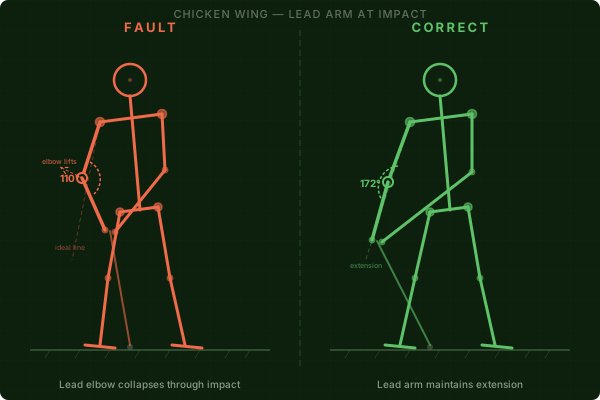
What Causes Chicken Wing
01Body Rotation Stops at Impact
The primary cause of chicken wing is the body stalling through the hitting zone. When the hips and torso stop rotating, the arms run past the body and the lead elbow has to bend to avoid pulling the shot left. The arm collapse is a compensation, not the root problem.
Tour players rotate aggressively through impact — their belt buckle faces the target at the finish. Amateurs who chicken-wing often have their belt buckle still facing the ball at impact because rotation has stalled.
02Trying to Lift the Ball
Golfers who try to help the ball into the air often bend the lead arm upward through impact. The instinct is to scoop or lift, which breaks the lead arm's extension. The ball gets loft from the clubface, not from an upward arm movement.
If you struggle to trust the club's loft, this is likely contributing to your chicken wing. The fix is hitting punch shots that force a low, compressed flight — proving that the ball gets airborne without help.
03Tight Lead Shoulder
Limited flexibility in the lead shoulder can physically prevent full arm extension through impact. When the shoulder is tight, the body finds a shortcut: bending the elbow to reduce the stretch. This is especially common in golfers over 50 or those with desk jobs.
A simple doorway stretch for the lead shoulder — 30 seconds, three times daily — can improve extension within two weeks.
How to Fix Chicken Wing — Step by Step
Feel — Glove Under Arm Drill
Tuck a glove or small towel under your lead armpit. Make half swings keeping it in place through impact. If the towel drops, your arm disconnected from your body — the start of chicken wing. This builds the connected feeling.
Train — Punch Shot Practice
Hit 30 punch shots with a 7-iron, finishing with your hands at chest height. The abbreviated finish forces the arms to stay extended through impact because there is no follow-through to hide a collapse in. Focus on a crisp, compressed strike.
Load — Rotate Through Impact
Hit balls focusing on one thing: get your belt buckle facing the target at the finish. When the body keeps rotating, the arms stay connected and extended naturally. The chicken wing disappears because the cause (stalling) is gone.
Play — Finish Facing the Target
On the course, your only swing thought is to finish with your chest facing the target. This single cue keeps the body rotating and the lead arm extended. Do not think about your arm — think about your body.
Do I Have Chicken Wing?
Answer these questions based on your most recent range session or video review.
When you film your swing face-on, does your lead elbow bend outward through impact?
Do you hit weak fades or slices that lack distance?
At the finish, is your lead arm bent rather than extended?
Does a towel tucked under your lead armpit drop during the swing?
Do you feel like your body stops rotating through impact?
Drills
01Towel Connection Drill
- 1.Tuck a folded hand towel under your lead armpit at address.
- 2.Make half-speed swings with a short iron, keeping the towel in place through impact.
- 3.If the towel drops during the downswing or at impact, your lead arm disconnected.
- 4.The towel forces the arm to stay connected to the body rotation.
- 5.Gradually increase speed once you can keep the towel in place 15 times consecutively.
Your lead arm and body moving as one unit. The rotation powers the swing, not an independent arm movement.
Squeezing the towel so tight that your shoulder tenses. It should rest lightly — correct rotation keeps it in place.
02Punch Shot Drill
- 1.Set up normally with a 7-iron.
- 2.Make a three-quarter backswing and swing through, but stop the follow-through at chest height.
- 3.At the finish, both arms should be extended — no bent lead elbow.
- 4.The ball should fly lower than normal with a penetrating flight.
- 5.If you cannot keep the lead arm straight at the finish point, slow down.
Extension through the ball. The arms reach out toward the target after impact, not up toward the sky.
Decelerating to hit the punch. The swing should be compact but still accelerating through impact.
03Cross-Arm Rotation Drill
- 1.Cross your arms over your chest without a club.
- 2.Take your golf posture and make a backswing turn.
- 3.On the downswing, focus on rotating your belt buckle all the way to face the target.
- 4.Feel how aggressively the torso needs to rotate through impact.
- 5.The rotation should feel continuous — no stall point at the ball.
- 6.After 20 reps, pick up a club and replicate the same rotation speed.
Continuous rotation from backswing through finish. The body never stops turning — it pulls the arms through.
Stopping at the ball. The ball is not the finish line — the target is. Rotate past the ball, not to it.
04Lead Arm Extension Check
- 1.Set up your phone face-on to film your swing.
- 2.Hit 10 balls at three-quarter speed.
- 3.Review each swing in slow motion. Pause when the club is at waist height in the follow-through.
- 4.Your lead arm should be straight and extended, not bent at the elbow.
- 5.Note which swings had good extension and which had chicken wing — correlate with body rotation.
Nothing specific during the drill — this is diagnostic. Let the video show you the truth.
Trying to keep the arm straight by locking the elbow. Extension should come from rotation, not from rigidity.
Or enter your email and we will send you a formatted PDF with all 4 drills.
We will email you the PDF link. No spam, ever.
Chicken Wing — Drill Card
coachharvey.ai/faults/chicken-wing
1. Towel Connection Drill
Equipment: Hand towel or headcover · Reps: 3 sets of 15 half-speed swings
- Tuck a folded hand towel under your lead armpit at address.
- Make half-speed swings with a short iron, keeping the towel in place through impact.
- If the towel drops during the downswing or at impact, your lead arm disconnected.
- The towel forces the arm to stay connected to the body rotation.
- Gradually increase speed once you can keep the towel in place 15 times consecutively.
Feel: Your lead arm and body moving as one unit. The rotation powers the swing, not an independent arm movement.
Avoid: Squeezing the towel so tight that your shoulder tenses. It should rest lightly — correct rotation keeps it in place.
2. Punch Shot Drill
Equipment: 7-iron, range balls · Reps: 30 balls
- Set up normally with a 7-iron.
- Make a three-quarter backswing and swing through, but stop the follow-through at chest height.
- At the finish, both arms should be extended — no bent lead elbow.
- The ball should fly lower than normal with a penetrating flight.
- If you cannot keep the lead arm straight at the finish point, slow down.
Feel: Extension through the ball. The arms reach out toward the target after impact, not up toward the sky.
Avoid: Decelerating to hit the punch. The swing should be compact but still accelerating through impact.
3. Cross-Arm Rotation Drill
Equipment: None · Reps: 20 practice swings
- Cross your arms over your chest without a club.
- Take your golf posture and make a backswing turn.
- On the downswing, focus on rotating your belt buckle all the way to face the target.
- Feel how aggressively the torso needs to rotate through impact.
- The rotation should feel continuous — no stall point at the ball.
- After 20 reps, pick up a club and replicate the same rotation speed.
Feel: Continuous rotation from backswing through finish. The body never stops turning — it pulls the arms through.
Avoid: Stopping at the ball. The ball is not the finish line — the target is. Rotate past the ball, not to it.
4. Lead Arm Extension Check
Equipment: Any mid-iron, phone for video · Reps: 10 balls, review each on video
- Set up your phone face-on to film your swing.
- Hit 10 balls at three-quarter speed.
- Review each swing in slow motion. Pause when the club is at waist height in the follow-through.
- Your lead arm should be straight and extended, not bent at the elbow.
- Note which swings had good extension and which had chicken wing — correlate with body rotation.
Feel: Nothing specific during the drill — this is diagnostic. Let the video show you the truth.
Avoid: Trying to keep the arm straight by locking the elbow. Extension should come from rotation, not from rigidity.
Common Misdiagnoses
You think it is chicken wing, but it might be casting
Casting (early release) and chicken wing often appear together. If the wrists release early, the arms have to bend to compensate. Check your lag at hip height on the downswing — if the club has already released, casting is the root cause. Fix the lag first and the chicken wing may resolve.
Read about Casting / Early Release →You think it is chicken wing, but it might be early extension
When the hips thrust toward the ball (early extension), the body stalls and the arms bend to compensate. If your hips move toward the ball before impact, early extension is causing the stall that causes the chicken wing. Fix the hips first.
Read about Early Extension →How You Know It’s Fixed
Your lead arm stays extended through impact, the club exits low and left, and the high finish you used to get from the bent arm disappears.
Frequently Asked Questions
What causes chicken wing in golf?
The primary cause is the body stalling its rotation through impact. When the hips and torso stop turning, the lead arm has to bend to avoid pulling the shot. Other causes include trying to lift the ball, tight lead shoulder flexibility, and casting.
Does chicken wing cause a slice?
Often, yes. When the lead arm collapses, the clubface tends to stay open through impact, producing a weak fade or slice. The loss of extension also reduces clubhead speed, making the slice even more pronounced.
How do I keep my lead arm straight through impact?
Do not focus on the arm — focus on body rotation. When the body keeps rotating through impact, the lead arm stays extended naturally. The towel-under-arm drill builds the connected feeling. Trying to consciously straighten the arm creates tension and makes the problem worse.
Can chicken wing cause fat shots?
Yes. When the lead arm bends, the effective length of the club changes, which alters where the swing bottoms out. The inconsistency in arc length causes alternating fat and thin contact.
Is some lead arm bend normal after impact?
Yes — the lead arm naturally folds in the follow-through well after impact. The problem is when the arm bends before or at impact. Through impact and to waist height in the follow-through, the arm should be extended. After that, folding is natural and correct.
Related Faults
These flaws often appear alongside chicken wing and may share a root cause.
Find out if chicken wing is affecting your game
Upload a swing. Coach Harvey reads every frame, calls the fault driving everything else, and remembers the session for the next answer.
Analyze a swing →