Casting / Early Release: How to Fix Casting / Early Release in Your Golf Swing
Downswing·Reviewed April 20, 2026·By Coach Harvey - AI Golf Coach
Casting dumps stored energy before the ball — losing distance and compression
Releasing wrist hinge too early in the downswing, losing lag and power. To fix it: maintain wrist angle deep into the downswing. Hands lead the clubhead through impact.
Casting — also called early release — is the premature release of wrist hinge on the downswing. Instead of maintaining the angle between the lead arm and the club shaft deep into the downswing, the wrists unhinge early, throwing the clubhead at the ball. The result is a dramatic loss of lag, power, and compression.
Golfers who cast typically hit the ball higher than expected with less distance, take shallow divots (or no divot at all), and struggle to compress their irons. The ball pops up instead of launching with a penetrating flight. On a launch monitor, the difference between a cast swing and a lag-preserving swing shows up clearly in ball speed and smash factor.
Casting is almost always a sequencing problem, not a strength problem. The fix is learning to let the body lead and the hands follow. When the hips and torso pull the arms down, the wrist angle is preserved naturally — no conscious effort required.
Coach Harvey identifies casting / early release automatically from your swing video and gives you one focused fix.
Analyze a swing →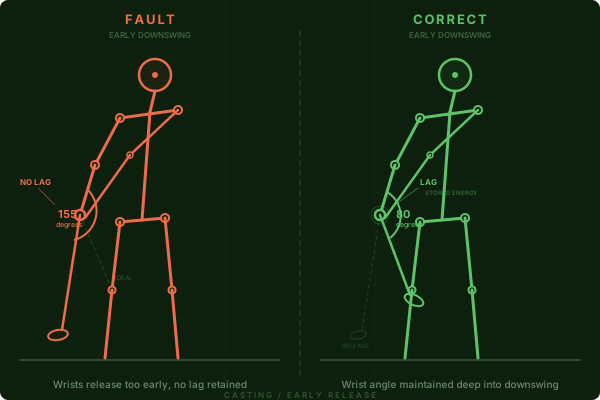
What Causes Casting / Early Release
01Trying to Scoop the Ball Into the Air
The most common cause of casting is the instinct to help the ball get airborne. Golfers see the ball on the ground and subconsciously try to lift it by flipping the wrists upward through impact. This releases the wrist hinge far too early.
The irony is that scooping adds loft and produces a higher, shorter shot. To hit the ball higher with more distance, you need to compress it with a descending blow — the opposite of what instinct tells you to do.
02Tension in the Hands and Forearms
Tight hands and forearms kill wrist hinge. When the grip is too tight, the wrists become rigid and cannot maintain their angle under the centrifugal force of the downswing. The angle releases early because the muscles are fighting each other.
Try this test: hold a club at address and have someone try to pull it from your hands. If they cannot budge it, your grip is too tight. A 3-4 out of 10 pressure allows the wrists to stay soft and hinged.
03Arms Beating the Body to the Ball
When the arms outrace the body rotation, the wrists release early because there is nothing to maintain the lag. Lag is a byproduct of sequence — when the body leads, the arms trail, and the club trails the arms. Break that chain, and the wrists unhinge.
This is why casting often gets worse under pressure. When you try to hit the ball hard, the arms speed up, the sequence breaks, and the wrists dump all the stored energy too soon.
04No Wrist Set in the Backswing
You cannot maintain an angle that was never created. Some golfers take the club back with stiff wrists and never establish a proper hinge. By the top of the backswing, there is no angle to lose — the club is already in a straight line with the arms.
Check your top position: the shaft should form roughly a 90-degree angle with your lead forearm. If it is 120 degrees or more, you need to set the wrists earlier in the backswing.
How to Fix Casting / Early Release — Step by Step
Feel — Pump Drill
Take the club to the top, then start the downswing and stop when your hands reach hip height. Check that the wrist angle is still intact. Repeat 3 times, then swing through on the fourth. This builds the feeling of maintaining lag into the hitting zone.
Train — Lag Towel Drill
Swing a towel instead of a club. The towel only makes a snap sound if you maintain lag and release late. If you cast (release early), the towel flops with no snap. Chase the snap sound at the bottom of the arc.
Load — Impact Position Drill
Start at impact position: hands ahead of the ball, shaft leaning forward, weight on the lead side. Hit chip shots from this position. The preset impact forces hands-ahead contact and trains your body to recognize what proper compression feels like.
Play — Hands Lead the Clubhead
On the course, use one thought: the hands reach the ball before the clubhead does. This single cue promotes forward shaft lean at impact and prevents the early release. Do not think about holding lag — just lead with the hands.
Do I Have Casting / Early Release?
Answer these questions based on your most recent range session or video review.
Do your iron shots fly higher than expected with less distance than the club should produce?
Do you take little or no divot with your irons?
When you film your swing, is the shaft in a straight line with your lead arm before impact?
Do you feel like you are hitting the ball with your arms rather than your body?
Do you struggle to compress the ball and get a penetrating ball flight?
Drills
01Pump Drill
- 1.Take your normal backswing to the top.
- 2.Start the downswing and stop when your hands reach hip height. Check that the wrist angle is still 90 degrees.
- 3.Return to the top. Repeat the pump two more times.
- 4.On the fourth move down, swing through and hit the ball.
- 5.The three pumps train the feel of maintaining lag. The fourth rep applies it.
- 6.If the angle releases during the pumps, slow down. The goal is to feel the lag, not to force it.
The club shaft still angled back toward the sky when your hands are at hip height. It should feel like the clubhead is lagging behind your hands.
Consciously holding the wrist angle with muscle tension. Lag is maintained by sequence — the body pulls the arms, which pulls the club. It is not a grip-and-hold action.
02Towel Snap Drill
- 1.Fold a bath towel lengthwise and grip one end like a golf club.
- 2.Make a full swing motion. Listen for the snap sound.
- 3.The towel only snaps if you maintain lag and release at the bottom of the arc.
- 4.If you cast (release early), the towel makes no sound — it just flops.
- 5.Experiment with timing. You will find the snap happens when you let the towel go at the last moment, not when you throw it from the top.
- 6.Once you can snap the towel consistently, pick up a club and replicate the timing.
A whip-like release at the bottom of the arc. The energy builds gradually and releases all at once — the same pattern you want in your golf swing.
Trying to speed up your arms to create the snap. The snap comes from sequence and timing, not from arm speed. Let the body rotate and the towel will snap on its own.
03Impact Position Chips
- 1.Set up to a ball with a pitching wedge.
- 2.Before swinging, preset your impact position: shift 70% of weight to the lead foot, press the handle forward so the shaft leans toward the target, hands ahead of the ball.
- 3.From this preset position, make a small backswing and chip the ball.
- 4.The ball should launch low and run — a sign of forward shaft lean and compression.
- 5.Hit 30 chips, maintaining the preset position. Then gradually lengthen the backswing to half swings.
The ball compressing off the face with a crisp click. Divots should start in front of the ball, not behind it.
Flipping the hands to help the ball into the air. Trust the loft — the preset forward lean still produces enough height for a chip shot. The urge to scoop is exactly what you are retraining.
04Split Hand Lag Drill
- 1.Grip the club with your lead hand in the normal position and your trail hand about 4 inches lower on the shaft.
- 2.Make slow backswings and downswings without hitting a ball.
- 3.The split grip exaggerates the feeling of lag because the trail hand can feel the angle independently.
- 4.Focus on the trail hand maintaining its angle as the arms come down.
- 5.After 15 reps, return to a normal grip and make 10 slow swings keeping the same feel.
The trail hand holding the club at an angle while the arms move down. It should feel like the trail wrist stays cupped or hinged until the hands pass the trail thigh.
Forcing the angle with muscle tension. If your forearms burn, you are gripping too hard. Lag should feel effortless when the sequence is right.
Or enter your email and we will send you a formatted PDF with all 4 drills.
We will email you the PDF link. No spam, ever.
Casting / Early Release — Drill Card
coachharvey.ai/faults/casting
1. Pump Drill
Equipment: Any mid-iron · Reps: 3 sets of 10 (pump 3 times, swing on 4th)
- Take your normal backswing to the top.
- Start the downswing and stop when your hands reach hip height. Check that the wrist angle is still 90 degrees.
- Return to the top. Repeat the pump two more times.
- On the fourth move down, swing through and hit the ball.
- The three pumps train the feel of maintaining lag. The fourth rep applies it.
- If the angle releases during the pumps, slow down. The goal is to feel the lag, not to force it.
Feel: The club shaft still angled back toward the sky when your hands are at hip height. It should feel like the clubhead is lagging behind your hands.
Avoid: Consciously holding the wrist angle with muscle tension. Lag is maintained by sequence — the body pulls the arms, which pulls the club. It is not a grip-and-hold action.
2. Towel Snap Drill
Equipment: A bath towel · Reps: 20 swings
- Fold a bath towel lengthwise and grip one end like a golf club.
- Make a full swing motion. Listen for the snap sound.
- The towel only snaps if you maintain lag and release at the bottom of the arc.
- If you cast (release early), the towel makes no sound — it just flops.
- Experiment with timing. You will find the snap happens when you let the towel go at the last moment, not when you throw it from the top.
- Once you can snap the towel consistently, pick up a club and replicate the timing.
Feel: A whip-like release at the bottom of the arc. The energy builds gradually and releases all at once — the same pattern you want in your golf swing.
Avoid: Trying to speed up your arms to create the snap. The snap comes from sequence and timing, not from arm speed. Let the body rotate and the towel will snap on its own.
3. Impact Position Chips
Equipment: Pitching wedge, range balls · Reps: 30 chip shots
- Set up to a ball with a pitching wedge.
- Before swinging, preset your impact position: shift 70% of weight to the lead foot, press the handle forward so the shaft leans toward the target, hands ahead of the ball.
- From this preset position, make a small backswing and chip the ball.
- The ball should launch low and run — a sign of forward shaft lean and compression.
- Hit 30 chips, maintaining the preset position. Then gradually lengthen the backswing to half swings.
Feel: The ball compressing off the face with a crisp click. Divots should start in front of the ball, not behind it.
Avoid: Flipping the hands to help the ball into the air. Trust the loft — the preset forward lean still produces enough height for a chip shot. The urge to scoop is exactly what you are retraining.
4. Split Hand Lag Drill
Equipment: Any mid-iron · Reps: 15 slow swings without a ball
- Grip the club with your lead hand in the normal position and your trail hand about 4 inches lower on the shaft.
- Make slow backswings and downswings without hitting a ball.
- The split grip exaggerates the feeling of lag because the trail hand can feel the angle independently.
- Focus on the trail hand maintaining its angle as the arms come down.
- After 15 reps, return to a normal grip and make 10 slow swings keeping the same feel.
Feel: The trail hand holding the club at an angle while the arms move down. It should feel like the trail wrist stays cupped or hinged until the hands pass the trail thigh.
Avoid: Forcing the angle with muscle tension. If your forearms burn, you are gripping too hard. Lag should feel effortless when the sequence is right.
Common Misdiagnoses
You think it is casting, but it might be early extension
Casting and early extension often appear together, but which caused which matters. If your body extends toward the ball first and then the hands release, early extension is the root cause — your body is making room for the cast. Film down the line: if the hips thrust forward before the wrists release, fix the hips first.
Read about Early Extension →You think it is casting, but it might be a flat swing plane
A flat swing plane can make it look like you are casting when you are actually stuck inside and flipping to recover. Check your backswing plane: if the club wraps flat around your body, the downswing has no room to drop into the slot and the wrists release early as a survival mechanism. Fix the plane first.
Read about Swing Plane →How You Know It’s Fixed
You feel the lag through impact, divots come from in front of the ball, and ball flight gets noticeably more compressed.
Frequently Asked Questions
What is casting in golf?
Casting is the premature release of the wrist angle on the downswing. Instead of maintaining lag — the angle between the lead arm and the club shaft — until near impact, the wrists unhinge early, throwing the clubhead at the ball from the top of the swing. It is also called early release.
How much distance does casting cost?
Casting typically costs 15-20 yards per club compared to a swing that maintains lag. The distance loss comes from two sources: reduced clubhead speed (energy is released too early) and reduced compression (the club arrives at impact with less forward shaft lean).
How do I know if I am casting?
Film your swing face-on and pause when your hands are at hip height on the downswing. The shaft should still form an angle with your lead arm. If the shaft and arm are in a straight line, you have already released — that is casting. Another sign: shallow or nonexistent divots with irons.
Can casting cause thin shots?
Yes. When you cast, the club reaches its lowest point earlier in the arc — often before the ball. The clubhead is already on its way back up at impact, catching the ball thin. This is why golfers who cast hit irons thin and take divots behind the ball (or no divot at all).
Is lag something you create or something that happens?
Lag happens naturally when the downswing sequence is correct. If the hips lead, the torso follows, and the arms trail — the wrist angle is maintained by inertia, not muscle. Trying to consciously hold lag often creates tension that makes it worse. Focus on sequence, not on holding an angle.
Practice This Fault
Structured plans and routines that specifically target casting / early release.
Related Faults
These flaws often appear alongside casting / early release and may share a root cause.
Find out if casting / early release is affecting your game
Upload a swing. Coach Harvey reads every frame, calls the fault driving everything else, and remembers the session for the next answer.
Analyze a swing →