Abbreviated Follow-Through: How to Fix Abbreviated Follow-Through in Your Golf Swing
Finish·Reviewed April 20, 2026·By Coach Harvey - AI Golf Coach
Cutting the swing short after impact instead of completing to a full, balanced finish. Energy is absorbed by the body rather than released through the ball. To fix it: swing through to a full finish — belt buckle facing the target, weight on the lead foot, club wrapped around the body, balanced.
An abbreviated follow-through means the swing stops short after impact instead of finishing in a full, balanced position. The arms decelerate before the club fully releases, the body stops rotating, and the finish position is cramped rather than extended. While impact has already occurred, the follow-through reflects what happened before impact — if the follow-through is short, the swing decelerated into the ball.
Many golfers dismiss the follow-through as cosmetic, but it is diagnostic. A short follow-through means the body or arms applied the brakes before impact, which reduces clubhead speed at the critical moment. The ball does not know what happens after impact, but the deceleration that causes a short follow-through starts before impact.
The fix is not to artificially extend the follow-through. It is to fix the underlying cause — usually tension, deceleration, or restricted rotation — which naturally produces a fuller finish.
Coach Harvey identifies abbreviated follow-through automatically from your swing video and gives you one focused fix.
Analyze a swing →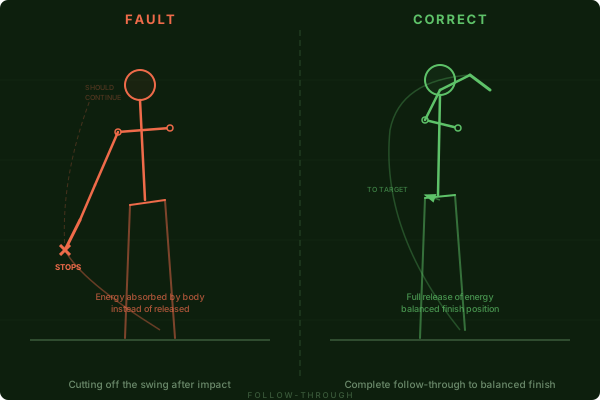
What Causes Abbreviated Follow-Through
01Deceleration Through Impact
The most common cause of a short follow-through is deceleration — the golfer slows the club before impact. This happens with chip shots, pitch shots, and full swings when the golfer is steering or guiding the ball. The deceleration starts before impact and continues after, producing the abbreviated finish.
A proper swing accelerates through impact. The fastest point of the clubhead arc should be at or just past the ball. If you are decelerating into the ball, the follow-through has nowhere to go.
02Tension in the Arms and Shoulders
Tight muscles restrict range of motion. If the arms, shoulders, or torso are tense, the swing runs into resistance after impact and stops. The tension acts like a brake, preventing the club from swinging through to a full finish.
Compare a tense swing to a relaxed one: the relaxed swing flows through impact and finishes high and complete. The tense swing stops as if it hit a wall. Relaxation is not weakness — it is what allows the club to swing freely.
03Restricted Hip Rotation
The follow-through requires the hips to rotate fully toward the target. If the hips stop rotating — due to tightness, balance issues, or habit — the upper body runs into the stopped hips and the swing dies. A full finish requires the belt buckle to face the target.
Hip mobility limitations are common, especially in older golfers. Simple hip rotation stretches before practice can add significant range to the follow-through.
How to Fix Abbreviated Follow-Through — Step by Step
Feel — Swing to the Finish Drill
Make practice swings with the sole goal of reaching a full, balanced finish. Do not hit a ball. Focus only on the finish position: weight on the lead foot, belt buckle facing the target, hands high, trail shoulder pointing at the target. Get comfortable in this position.
Train — Finish and Hold
Hit balls and hold your finish for 5 seconds after every shot. Judge the shot by the finish, not the ball flight. A full, balanced finish means the swing was committed. A cramped finish means something decelerated.
Load — Swoosh Drill
Turn the club upside down and grip it near the clubhead. Make full swings and listen for the swoosh sound. The swoosh should occur at or past where the ball would be. If the swoosh is before the ball position, you are decelerating. Move the swoosh forward by swinging through, not at, the ball.
Play — Commit to Every Shot
On the course, make a commitment before every swing: you will swing through the ball to a full finish regardless of the result. A committed swing to a bad target is better than a decelerated swing to a good target. Commitment prevents the steering instinct that causes deceleration.
Do I Have Abbreviated Follow-Through?
Answer these questions based on your most recent range session or video review.
Does your follow-through finish below shoulder height?
Can you hold your finish position for 3 seconds without losing balance?
Do you feel like your swing stops rather than flows through the ball?
On chip and pitch shots, do you decelerate into impact?
Drills
01Finish and Hold Drill
- 1.Hit a ball with your normal swing.
- 2.Hold the finish position for a full 5 seconds.
- 3.Check: weight on lead foot, belt buckle facing target, hands high, balanced.
- 4.Rate the finish on a scale of 1-5. Was it full or did it stop short?
- 5.Repeat, trying to get every finish to a 4 or 5.
- 6.If you cannot hold the finish, the swing lost balance — slow down and find the speed at which you can hold it.
A full rotation where the body unwinds completely. The finish should feel like a relaxed, complete motion — not a forced pose.
Posing artificially. The finish should be the natural result of a full swing, not something you manufacture after impact. If the finish feels forced, the swing needs more flow, not more effort at the end.
02Swoosh Drill
- 1.Turn the club upside down so you grip near the clubhead.
- 2.Make a full swing and listen for the swoosh sound the shaft makes.
- 3.The swoosh should occur at or past where the ball would be.
- 4.If the swoosh happens before the ball position, you are decelerating.
- 5.Focus on making the swoosh as loud as possible past the ball position.
- 6.This trains the feel of accelerating through impact rather than decelerating into it.
Maximum speed happening past the ball position, not at it. The club should feel like it is speeding up through the hitting zone.
Swinging harder. The swoosh drill is about timing, not effort. A smooth swing with correct timing will swoosh louder than a hard swing with poor timing.
03Towel Whip Drill
- 1.Roll up a hand towel and grip one end like a golf club.
- 2.Make a full swing motion. The towel should snap or whip through impact.
- 3.If the towel just flops limply, you are not accelerating through.
- 4.The towel provides immediate feedback: acceleration whips it, deceleration drops it.
- 5.Once you can consistently snap the towel, pick up a club and replicate the feeling.
The towel snapping through the impact zone. This requires smooth acceleration, not a hard jerk. Flow and timing produce the snap.
Muscling the towel. Tension prevents the snap. Stay relaxed and let the speed come from the body's rotation, not the arms' force.
04Three-Quarter to Full Progression
- 1.Hit 10 balls at three-quarter speed with a focus on a complete follow-through.
- 2.At three-quarter speed, balance is easier and the follow-through is more natural.
- 3.Then hit 10 balls at full speed, maintaining the same complete follow-through.
- 4.If the follow-through shortens at full speed, dial the speed back until the follow-through stays full.
- 5.Find the maximum speed at which you can still finish fully, then practice there.
The follow-through is the same whether at three-quarter or full speed. Speed increases but the finish does not change.
Jumping from three-quarter to 100%. Build up gradually: 75%, 80%, 85%, 90%, until you find the point where the follow-through shortens. Practice just below that point.
Or enter your email and we will send you a formatted PDF with all 4 drills.
We will email you the PDF link. No spam, ever.
Abbreviated Follow-Through — Drill Card
coachharvey.ai/faults/abbreviated-follow-through
1. Finish and Hold Drill
Equipment: Any club, range balls · Reps: 20 balls, hold each finish for 5 seconds
- Hit a ball with your normal swing.
- Hold the finish position for a full 5 seconds.
- Check: weight on lead foot, belt buckle facing target, hands high, balanced.
- Rate the finish on a scale of 1-5. Was it full or did it stop short?
- Repeat, trying to get every finish to a 4 or 5.
- If you cannot hold the finish, the swing lost balance — slow down and find the speed at which you can hold it.
Feel: A full rotation where the body unwinds completely. The finish should feel like a relaxed, complete motion — not a forced pose.
Avoid: Posing artificially. The finish should be the natural result of a full swing, not something you manufacture after impact. If the finish feels forced, the swing needs more flow, not more effort at the end.
2. Swoosh Drill
Equipment: Any club (gripped upside down) · Reps: 20 swings
- Turn the club upside down so you grip near the clubhead.
- Make a full swing and listen for the swoosh sound the shaft makes.
- The swoosh should occur at or past where the ball would be.
- If the swoosh happens before the ball position, you are decelerating.
- Focus on making the swoosh as loud as possible past the ball position.
- This trains the feel of accelerating through impact rather than decelerating into it.
Feel: Maximum speed happening past the ball position, not at it. The club should feel like it is speeding up through the hitting zone.
Avoid: Swinging harder. The swoosh drill is about timing, not effort. A smooth swing with correct timing will swoosh louder than a hard swing with poor timing.
3. Towel Whip Drill
Equipment: Hand towel · Reps: 15 swings
- Roll up a hand towel and grip one end like a golf club.
- Make a full swing motion. The towel should snap or whip through impact.
- If the towel just flops limply, you are not accelerating through.
- The towel provides immediate feedback: acceleration whips it, deceleration drops it.
- Once you can consistently snap the towel, pick up a club and replicate the feeling.
Feel: The towel snapping through the impact zone. This requires smooth acceleration, not a hard jerk. Flow and timing produce the snap.
Avoid: Muscling the towel. Tension prevents the snap. Stay relaxed and let the speed come from the body's rotation, not the arms' force.
4. Three-Quarter to Full Progression
Equipment: Any iron, range balls · Reps: 10 at three-quarter, 10 at full
- Hit 10 balls at three-quarter speed with a focus on a complete follow-through.
- At three-quarter speed, balance is easier and the follow-through is more natural.
- Then hit 10 balls at full speed, maintaining the same complete follow-through.
- If the follow-through shortens at full speed, dial the speed back until the follow-through stays full.
- Find the maximum speed at which you can still finish fully, then practice there.
Feel: The follow-through is the same whether at three-quarter or full speed. Speed increases but the finish does not change.
Avoid: Jumping from three-quarter to 100%. Build up gradually: 75%, 80%, 85%, 90%, until you find the point where the follow-through shortens. Practice just below that point.
Common Misdiagnoses
You think it is an abbreviated follow-through, but it might be deceleration
These are closely related — deceleration causes the abbreviated follow-through. But deceleration can be the independent issue. If you consciously try to extend the follow-through but still lack power, the deceleration is happening before impact. Focus on the swoosh drill rather than the finish position.
Read about Deceleration →You think it is an abbreviated follow-through, but it might be grip pressure
Excessive grip pressure creates arm tension that restricts the follow-through. If your forearms feel tight during the swing, grip pressure is the root cause. Lighten the grip and the follow-through often extends naturally without any other change.
Read about Grip Pressure →How You Know It’s Fixed
You hold the finish in balance, the ball comes off with full speed, and distance becomes more consistent.
Frequently Asked Questions
Does the follow-through matter if the ball is already gone?
The follow-through itself does not affect the ball (contact has already occurred), but it reflects what happened before impact. A short follow-through means the swing decelerated into the ball, which absolutely affects the shot. Fix the deceleration and the follow-through fixes itself.
What does a proper follow-through look like?
A full follow-through has: weight on the lead foot (90%+), belt buckle facing the target, hands finishing high near the lead ear, trail shoulder pointing at the target, and the golfer balanced and comfortable. It should look effortless, not forced.
Can you have too much follow-through?
Not really. An overextended follow-through is extremely rare. What golfers sometimes mistake for too much follow-through is actually loss of balance from swinging too hard. A balanced, full follow-through at controlled speed is always better than a short, controlled follow-through.
Why do I decelerate on chip shots?
Fear of hitting the ball too far. Golfers take too long a backswing for the shot, then realize mid-downswing that they have too much speed, so they decelerate. The fix: shorten the backswing and accelerate through. A short backswing with acceleration produces better contact than a long backswing with deceleration.
Practice This Fault
Structured plans and routines that specifically target abbreviated follow-through.
Related Faults
These flaws often appear alongside abbreviated follow-through and may share a root cause.
Find out if abbreviated follow-through is affecting your game
Upload a swing. Coach Harvey reads every frame, calls the fault driving everything else, and remembers the session for the next answer.
Analyze a swing →